


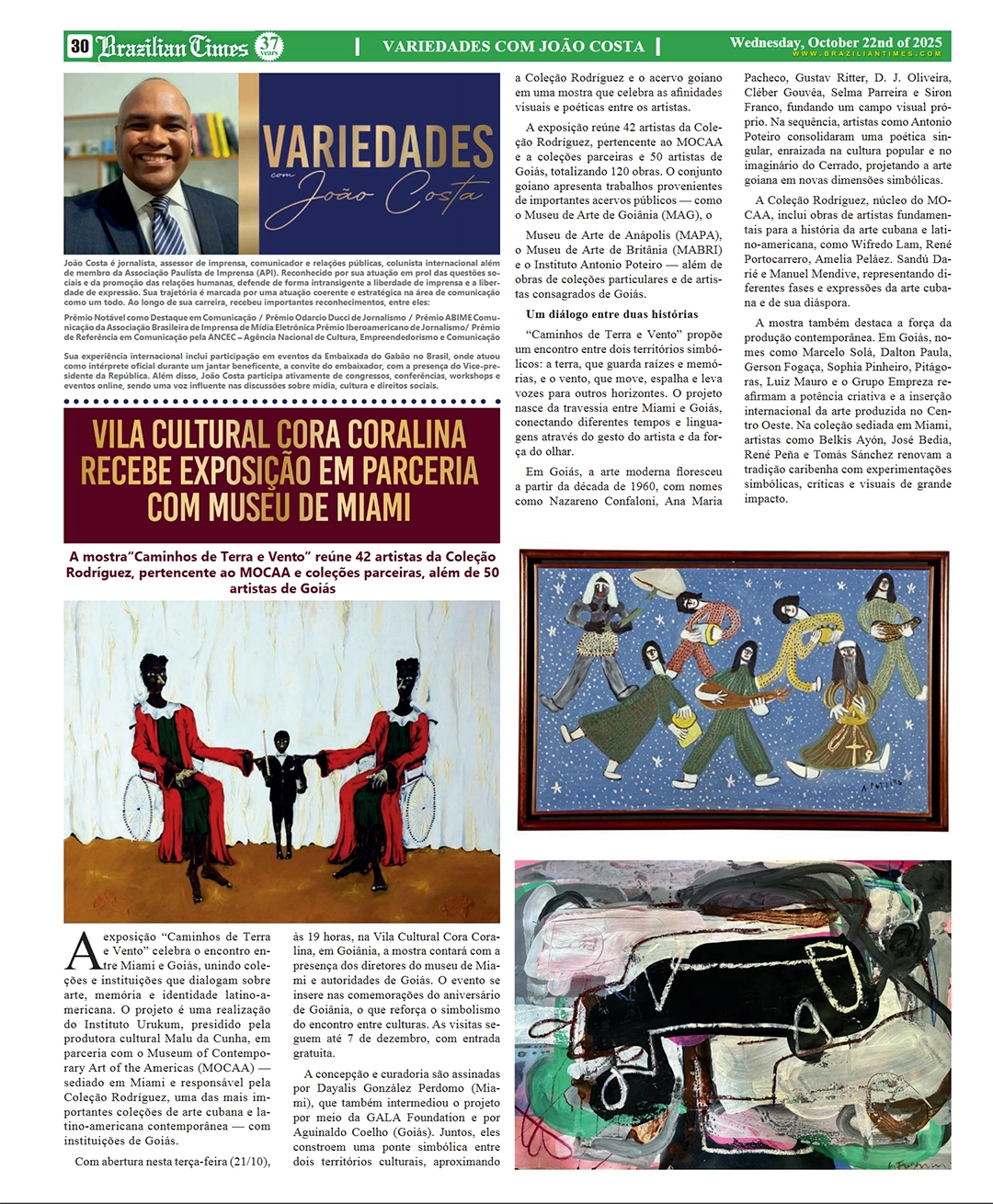
The Brazilian Times, one of the leading Portuguese-language publications in the United States, has featured the exhibition Caminhos de Terra e Vento (Paths of Earth and Wind) as a landmark cultural exchange between Miami and the Brazilian state of Goiás. The article, penned by journalist João Costa, underscores the exhibition’s unique ability to unite institutions, artists, and audiences across the Americas through a shared artistic vision.
Hosted at Vila Cultural Cora Coralina in Goiânia, the exhibition brings together more than 120 works by artists from the Rodríguez Collection—housed at the Museum of Contemporary Art of the Americas (MOCAA), Miami—and from Goiás’ most prestigious museums and collections. Curated by Dayalis González Perdomo and Aguinaldo Coelho, the project reflects a collaborative dialogue between rooted identity and creative mobility, a theme that resonates deeply in the current hemispheric art landscape.

The Brazilian Times article celebrates not only the scale of the exhibition but also its symbolic reach: the encounter of “two territories—earth and wind,” as the text describes, becomes a metaphor for cultural continuity and transformation. By featuring the project in its Variedades section, the publication places the exhibition within a broader conversation about art diplomacy and the role of cultural institutions in building inter-American understanding.
For the Museum of Contemporary Art of the Americas, this recognition strengthens Miami’s position as a key interlocutor in Latin American visual culture. It also affirms the strategic importance of partnerships that extend beyond borders, engaging communities and governments in meaningful cultural exchange.
The Brazilian Times feature marks another milestone in the growing visibility of Caminhos de Terra e Vento, following extensive media coverage throughout Brazil. Together, these publications amplify the exhibition’s central message: that art, when shared across geographies, becomes not only a language of beauty but an instrument of dialogue, memory, and diplomacy.

