


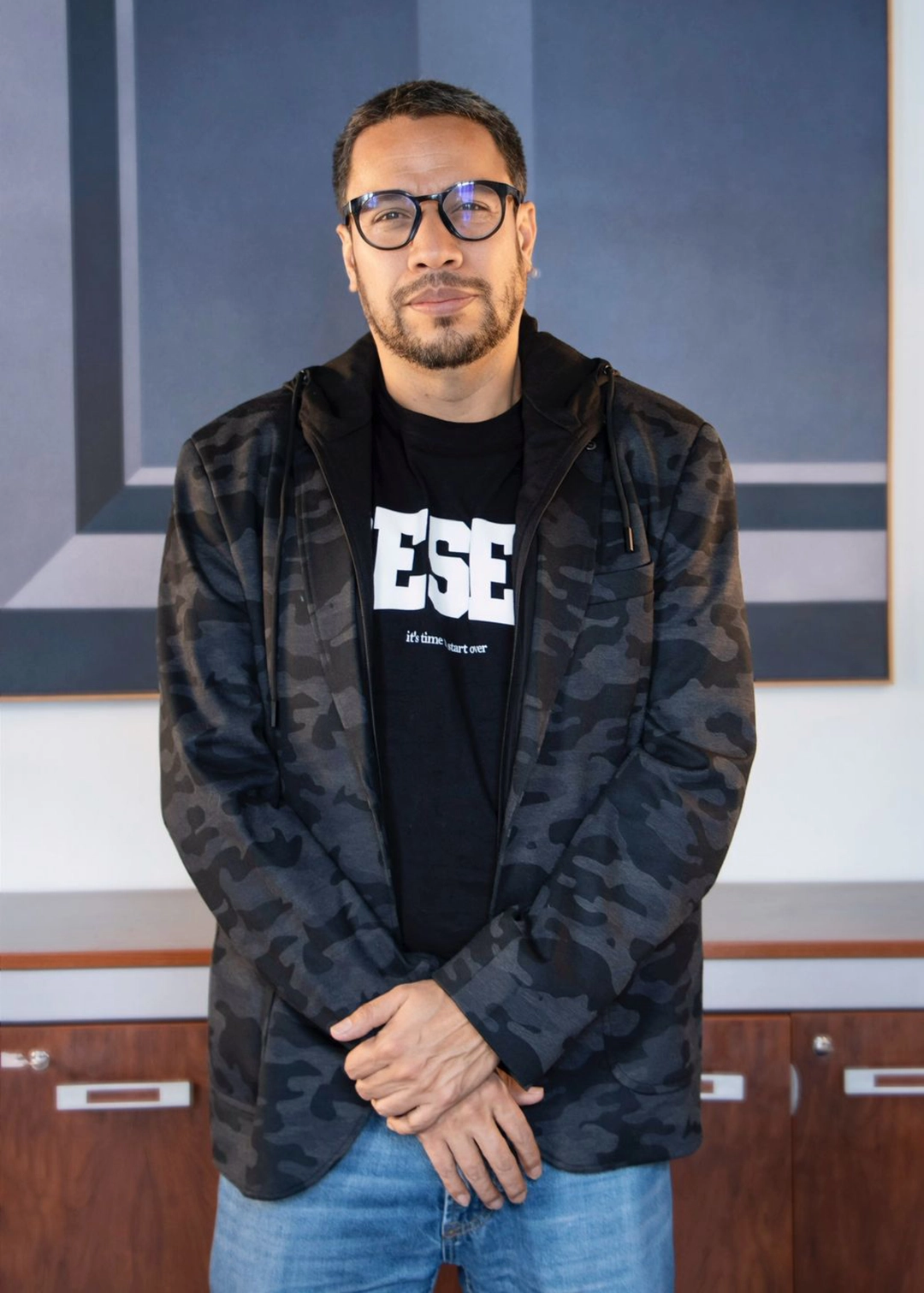
The Museum of Contemporary Art of the Americas (MoCAA) is pleased to sponsor and invite the public to a special talk and panel discussion—International Biennials as Sites of Confluence—to be held on Saturday, January 31, 2026, at 11:00 a.m. The program will feature Hernán Pacurucu Cárdenas, Executive Director of the International Biennial of Cuenca, one of the most significant contemporary art platforms in the Americas. The event will also include Ecuadorian visual artist Martín Cano, cultural manager Jesús Alberto Fuenmayor (founder and director of the Doral Art Fair), and Ivonne Ferrer (Vice Director of MoCAA and Director of the Fine Arts Ceramic Center). The dialogue will be moderated by Dayalis González, a Cuban cultural promoter and art historian.
Conceived as a public conversation, the encounter frames international biennials as spaces where perspectives, contexts, and tensions intersect—arenas in which narratives are constructed, hierarchies are questioned, and the cartography of contemporary art is continuously redefined. From this vantage point, Pacurucu will reflect on the role of biennials as sites of symbolic and professional validation for Hispano-American artists, particularly within a context shaped by persistent economic constraints, the scarcity of state-supported legitimizing institutions, and the absence of stable funding for artistic production. In such environments, biennials emerge as exceptional platforms through which artists gain visibility, critical recognition, and international circulation in territories where institutional support systems remain fragile or discontinuous.
Without relinquishing their curatorial and discursive ambitions, these platforms also function as compensatory mechanisms in response to the structural asymmetries that permeate the artistic field across South America as a whole, activating networks of legitimization, exchange, and projection that would be difficult to sustain elsewhere. In this sense, the discussion at MoCAA approaches the biennial not only as an exhibition format, but as a field of ongoing negotiation—one shaped by competing forces and by the need to continually reimagine how contemporary art is positioned, narrated, and sustained at a global scale.
Founded in 1987, the International Biennial of Cuenca has evolved over more than three decades from an event initially centered on painting into a plural, transdisciplinary model with strong international reach. In its most recent editions, the Biennial has reinforced its collaborative ethos and its commitment to open curatorial frameworks, establishing itself as a key reference point in contemporary debates surrounding the role of biennials and cultural institutions in the Global South.
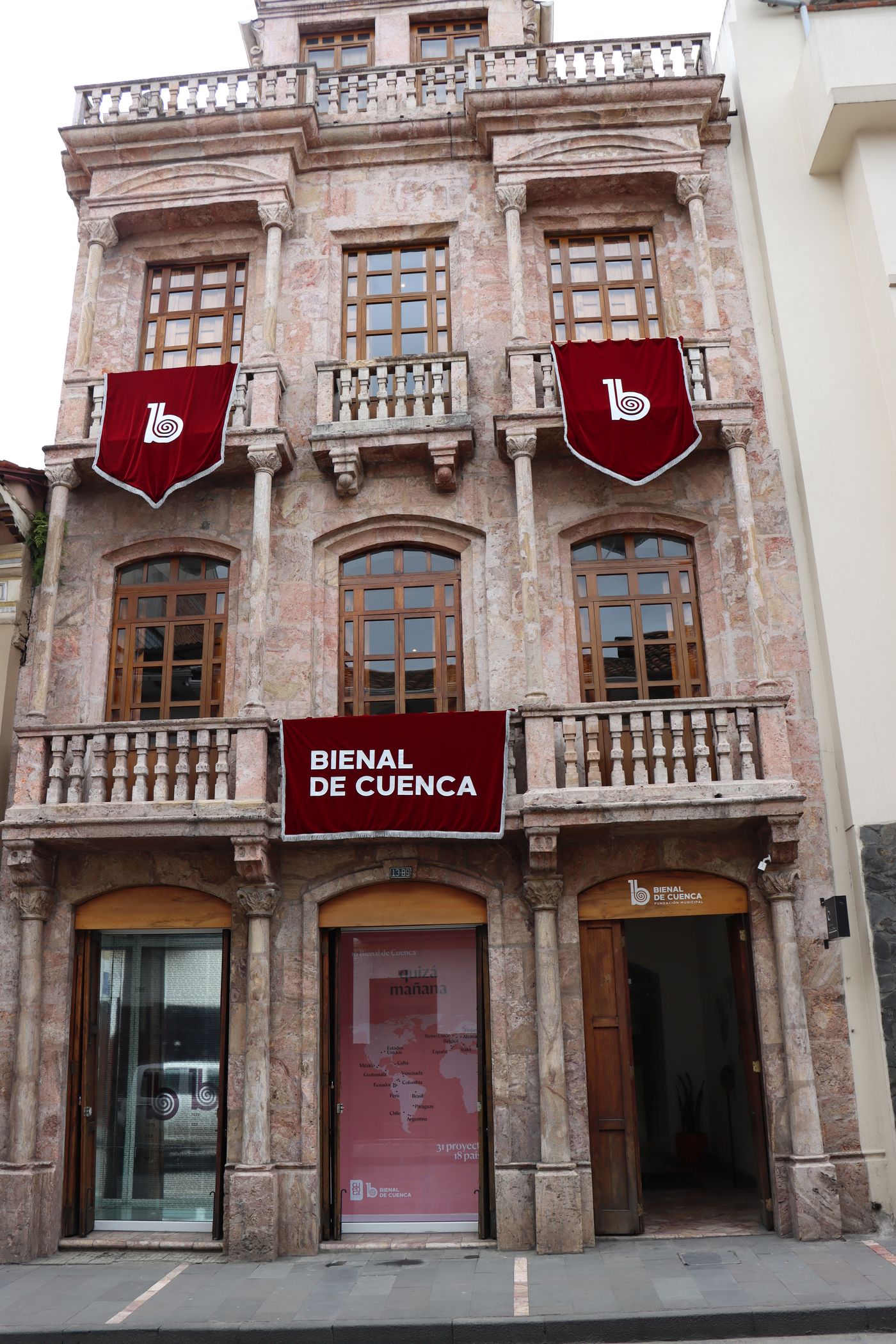
For the artistic community of South Florida, the conversation at MoCAA offers a direct opportunity to engage with one of the most robust curatorial experiences in the region, while fostering the exchange of ideas among artists, curators, and cultural managers. The encounter seeks to strengthen ties between Hispano-American contexts and the United States, encouraging dialogue, critical reflection, and the construction of cultural networks from a contemporary, regionally grounded perspective—anchored not in abstraction, but in the lived conditions that shape artistic production, circulation, and recognition.
Hernán Pacurucu Cárdenas is an art critic, curator, cultural researcher, and educator with an extensive trajectory across biennials, museums, and academic institutions in South America and beyond. He currently serves as Executive Director of the International Biennial of Cuenca and is President of the Ecuadorian chapter of the International Association of Art Critics (AICA). In parallel to his leadership of the Cuenca Biennial, he is also Co-Director and Co-Curator of the NOMADES Biennial, further extending his engagement with itinerant and transregional models of cultural production and exchange. His work consistently operates at the intersection of curatorial practice, critical theory, and cultural policy, with a sustained focus on contemporary art from Hispano-American contexts.
Pacurucu holds a Doctor Honoris Causa from Universidad Gestalt de México (2024) and is a doctoral candidate in Higher Education at Universidad Benito Juárez. He earned master’s degrees in Cultural Studies with a concentration in Art and Design and in Latin American Studies, and has completed advanced postgraduate training in art criticism, research design, and academic pedagogy. Alongside his curatorial work, he has maintained a long-standing commitment to teaching at both undergraduate and graduate levels, contributing to programs in visual arts, cultural studies, curatorship, and art pedagogy at several universities.
Throughout his career, Pacurucu has curated and participated in a wide range of biennials, triennials, and international exhibitions, and has served frequently as a juror, theorist, and invited speaker in major cultural forums. His critical writing—published widely and translated into multiple languages—has addressed contemporary artistic practices, institutional frameworks, and the political and symbolic conditions of art production in the region. Under his leadership, the Biennial of Cuenca has strengthened its role as a platform for critical reflection, international exchange, and the validation of artistic practices emerging from structurally complex cultural environments.
The panel will bring together voices that reflect the breadth of the region’s cultural ecosystem: Martín Cano (Ecuador), whose practice connects Ecuadorian visual culture to broader contemporary debates; Jesús Alberto Fuenmayor (Venezuela), a cultural manager whose work has activated platforms for visibility and circulation through the Doral Art Fair; and Ivonne Ferrer (Cuba), a Cuban artist and arts leader serving as Director of the Fine Arts Ceramic Center and Vice Director of MoCAA. The conversation will be moderated by Dayalis González (Cuba), an art historian and cultural promoter and Founder of GAIA Foundation, whose work has focused on cultural mediation and the strengthening of institutional and community-based cultural initiatives.
Event Information
Date: Saturday, January 31, 2026
Time: 11:00 a.m.
Location: Museum of Contemporary Art of the Americas (MoCAA), 12063 SW 131st Ave., Kendall, FL 33186
Parking: Free parking available
The program is presented with the participation and support of key partners connected to Cuenca and South Florida’s cultural landscape, including the Biennial of Cuenca and local cultural collaborators.

