


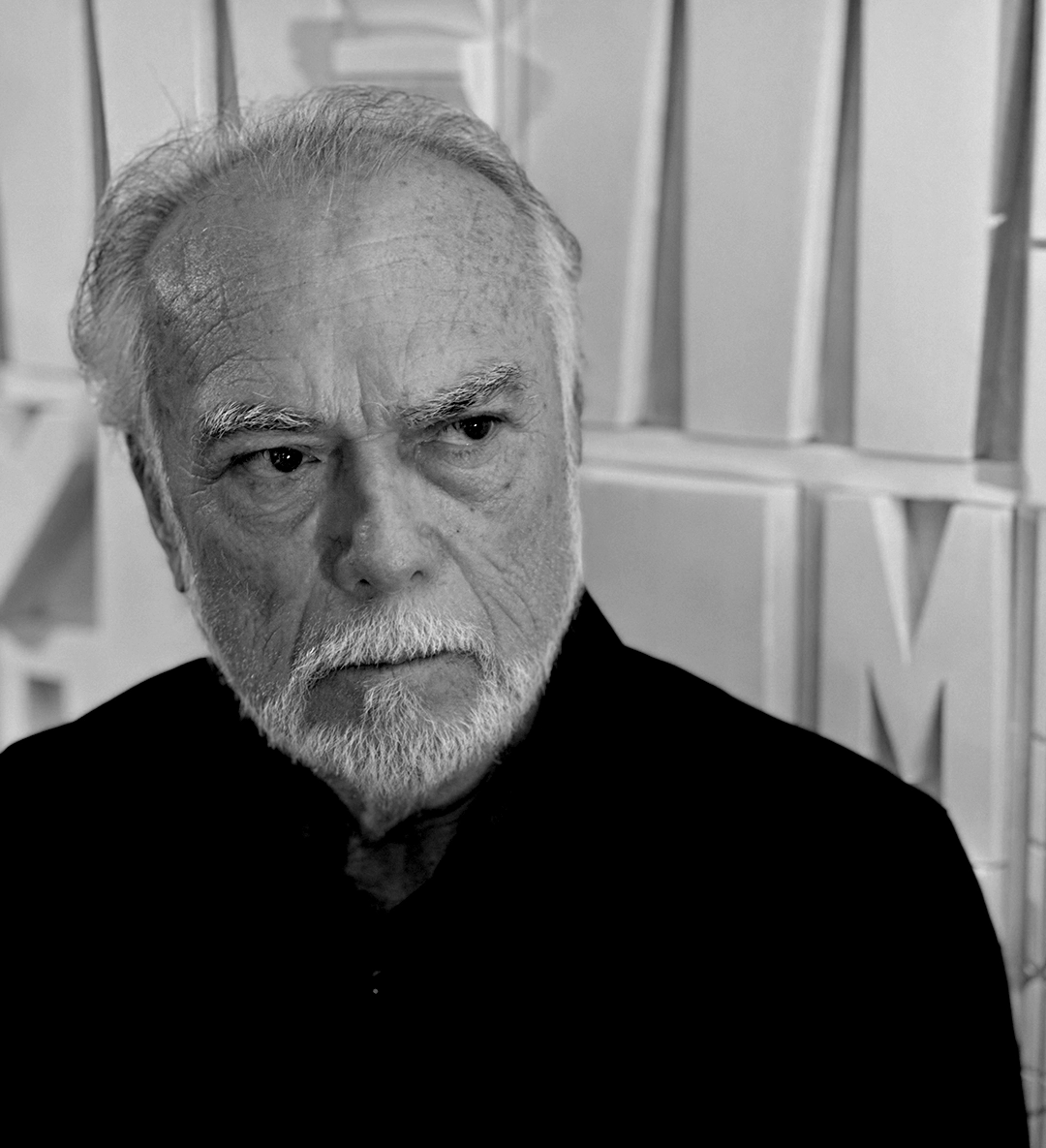

An exhibition that brings together the work of Venezuelan sculptor Jorge Salas and Uruguayan ceramist Mario Marinoni around a shared question. In what way does Latin American constructivism continue to interrogate, today, the very matter that gives it body?
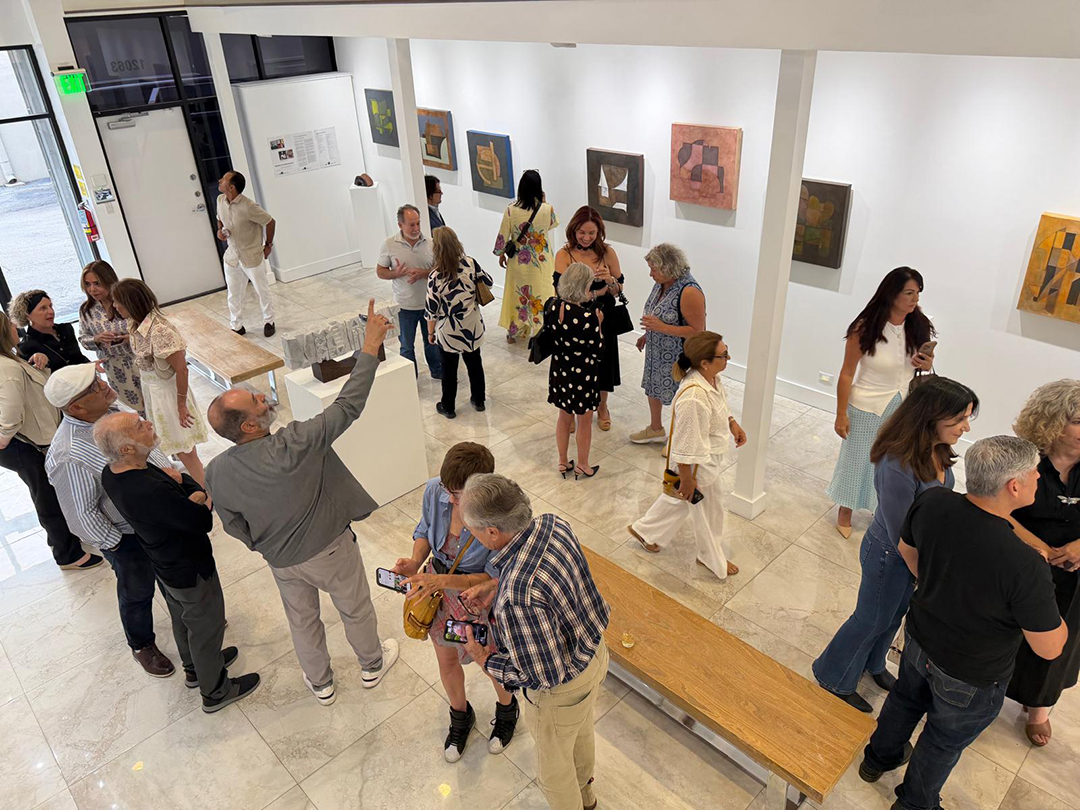
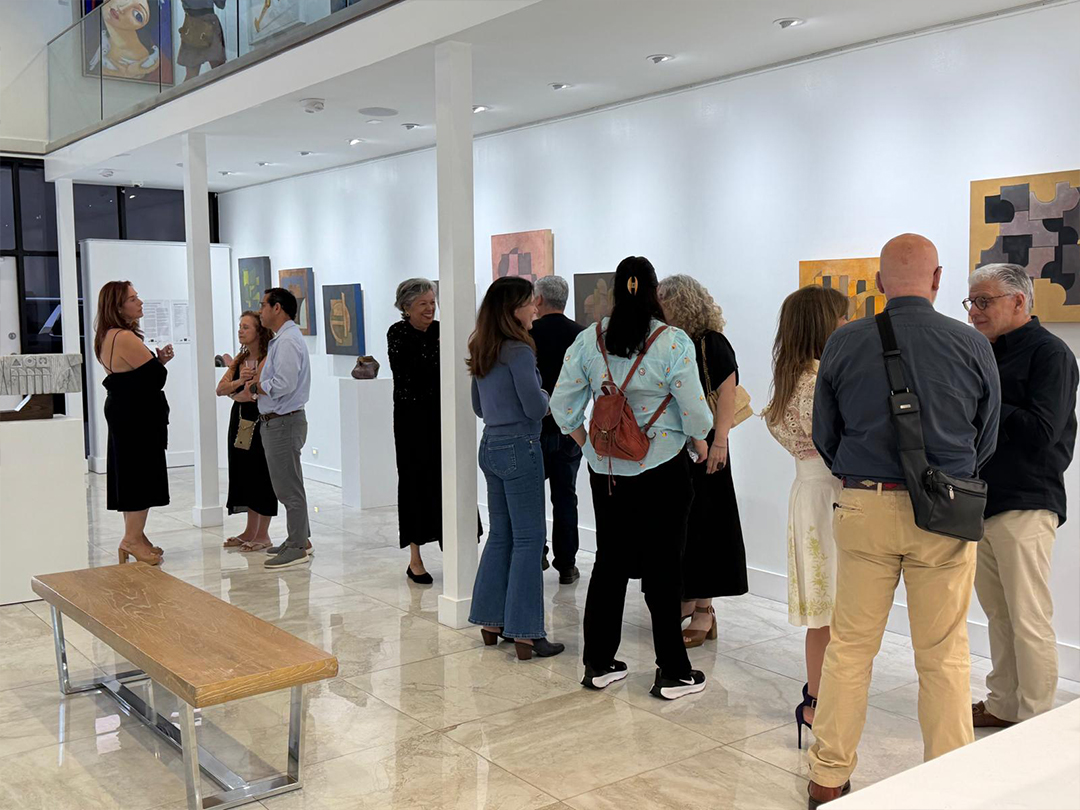
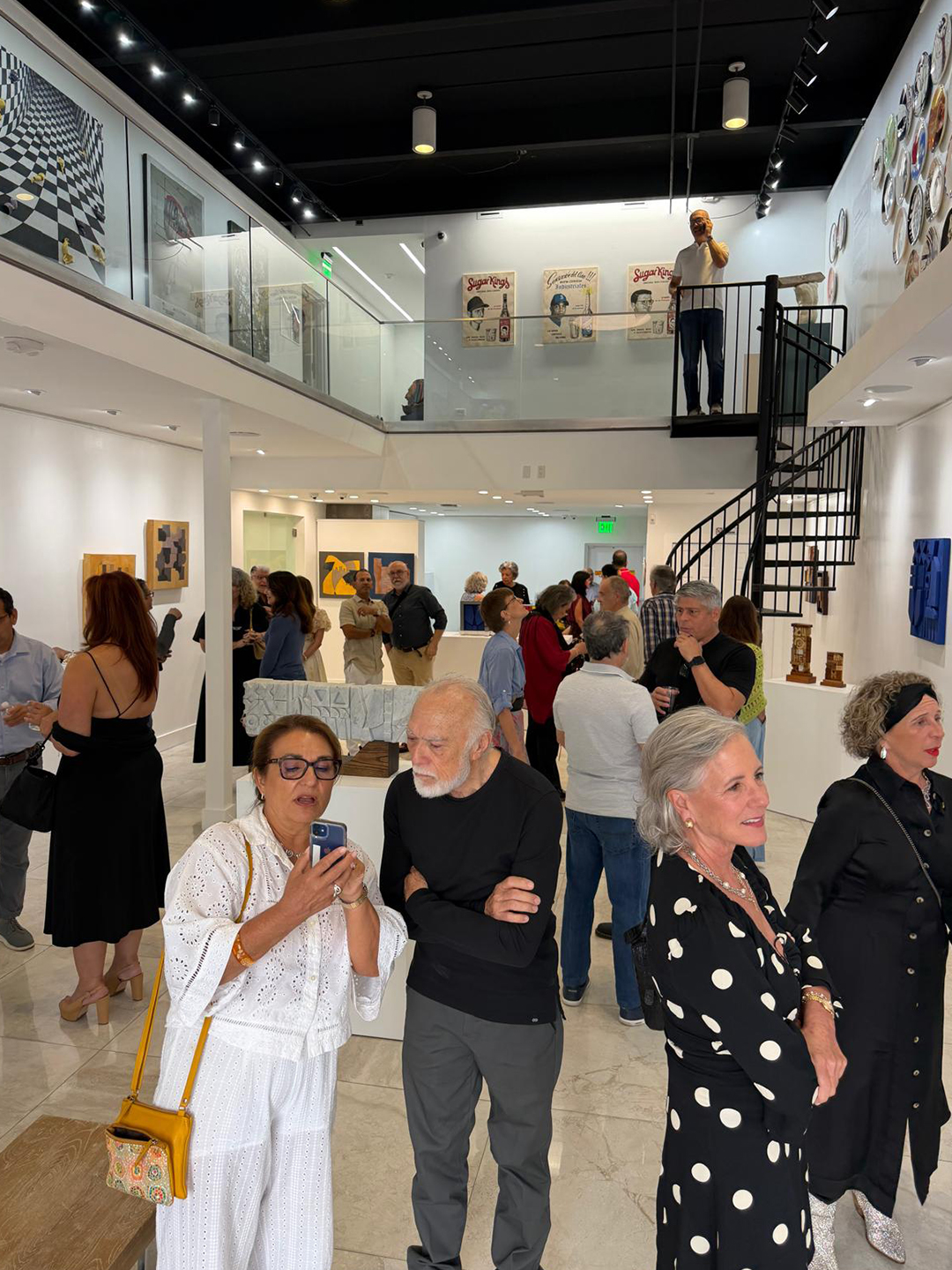
Kendall, Miami — May 9, 2026. The Museum of Contemporary Art of the Americas (MoCAA) opens on Friday, May 22 the exhibition Sentient Constructivism. Techniques and Materials, a Latin American Dialogue, featuring works by Jorge Salas and Mario Marinoni. The show will remain on view until June 12 in the museum's main gallery.
The exhibition departs from a curatorial intuition. Latin American constructivism, far from having been frozen into the historical grids of the twentieth-century avant-garde, continues to produce forms, continues to ask questions, and increasingly does so through the hand that touches matter. Salas and Marinoni embody that vitality through techniques and materials that appear distinct yet share, at heart, the same grammar.
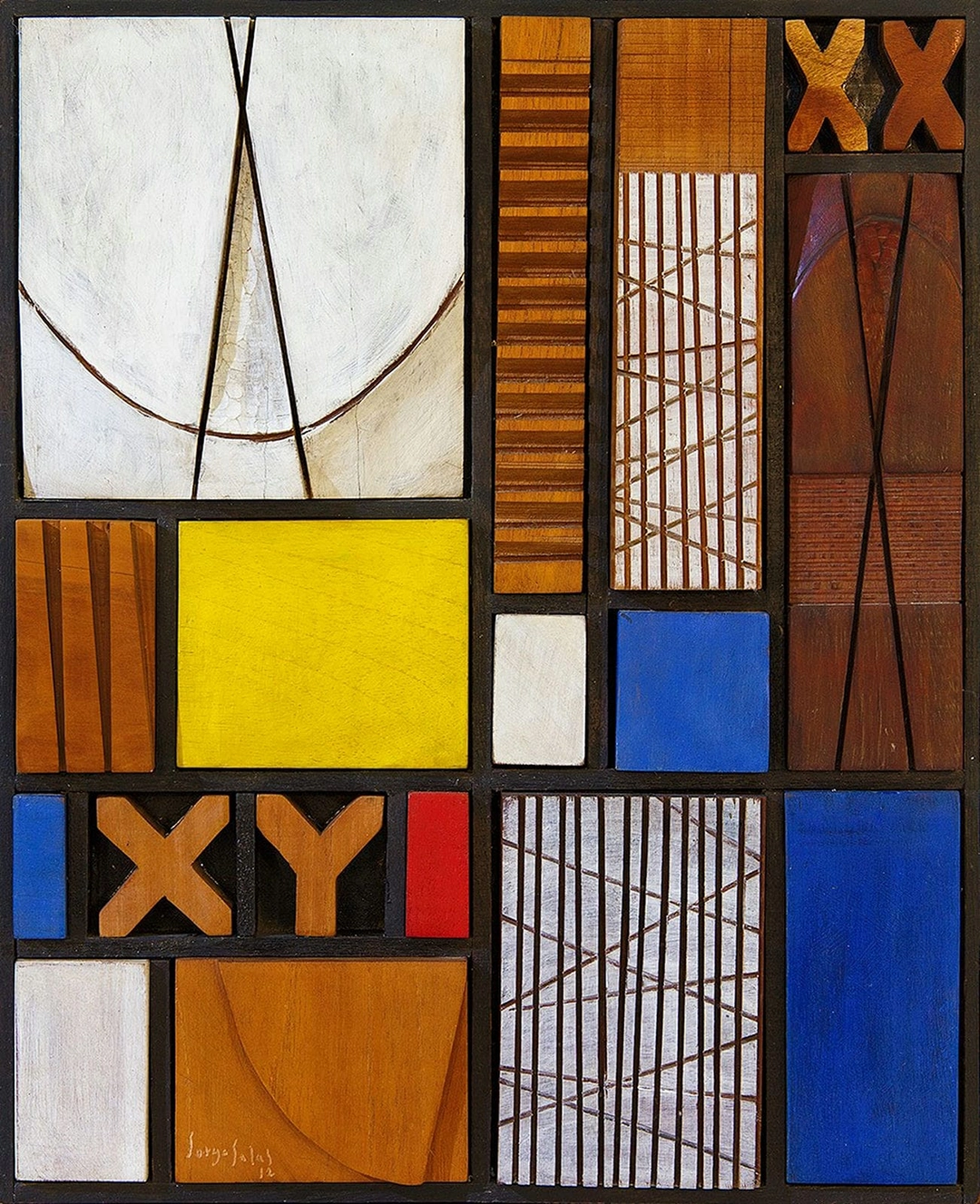
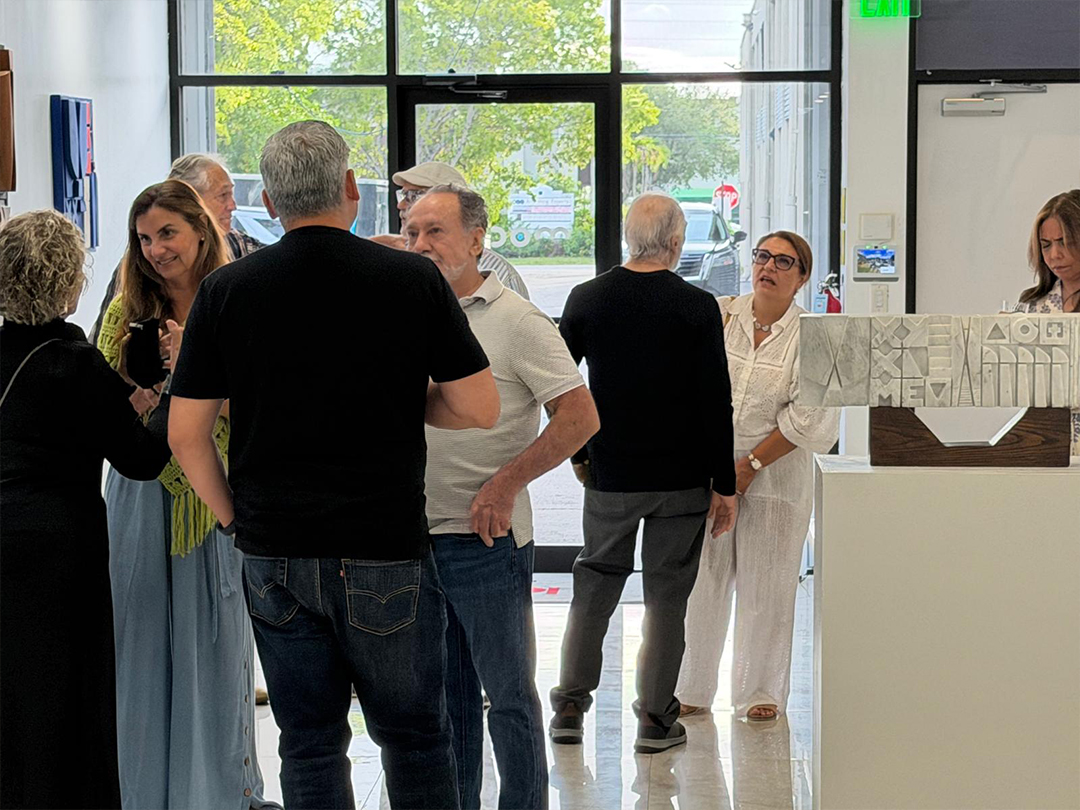
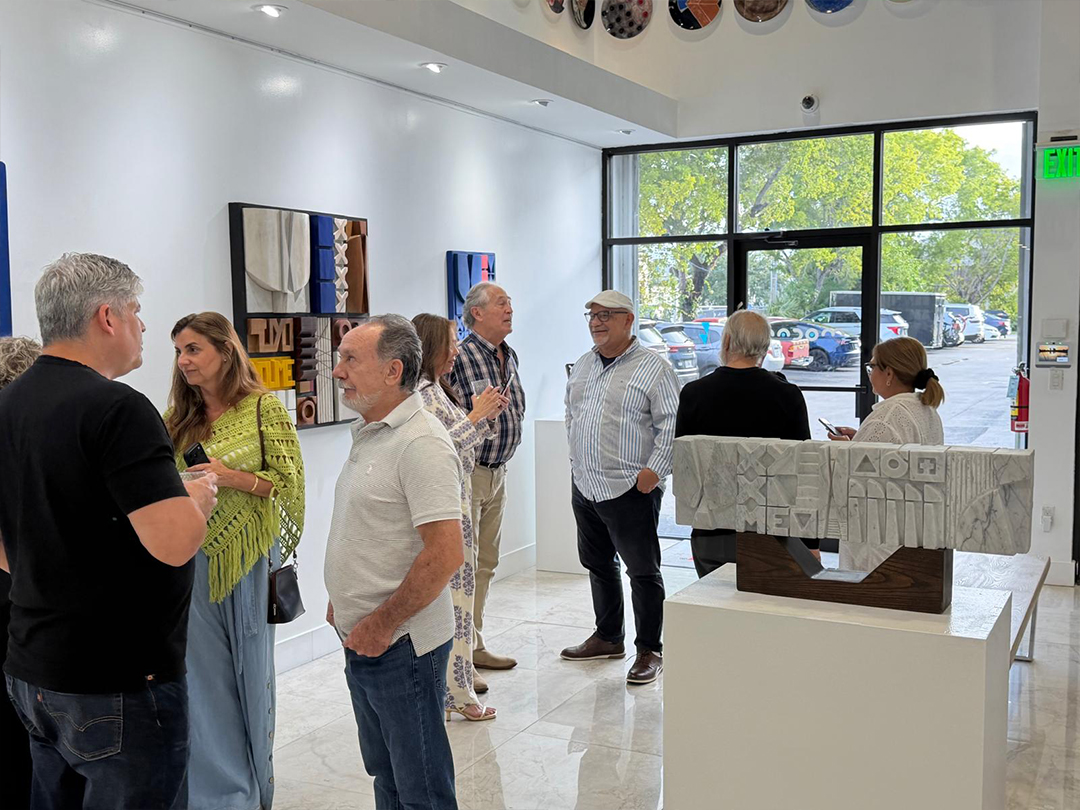
Salas works stone, marble, travertine, and wood with a logic of assembly and sculptural carpentry that moves between the solidity of the ancient world and modernist abstraction. His pieces combine polished surfaces with raw areas, fragments of patinated or found wood with quarried blocks, in compositions where the grid operates as an underground organizing principle. Series such as Tú y Yo / Escrituras sin Tiempo condense his approach, a constructive language that flattens the three-dimensional in order to reorganize it into a new structure, close in its logic to Synthetic Cubism, where the carved word, the abstract sign, and the reference to urban architecture coexist within articulated modules. As Dr. Carol Damian has observed, in Salas the viewer discovers texture as an integral function of composition and comes to appreciate each section of the assemblage as a foundational block of a whole that reveals itself only when the process, physical and conceptual, is complete.
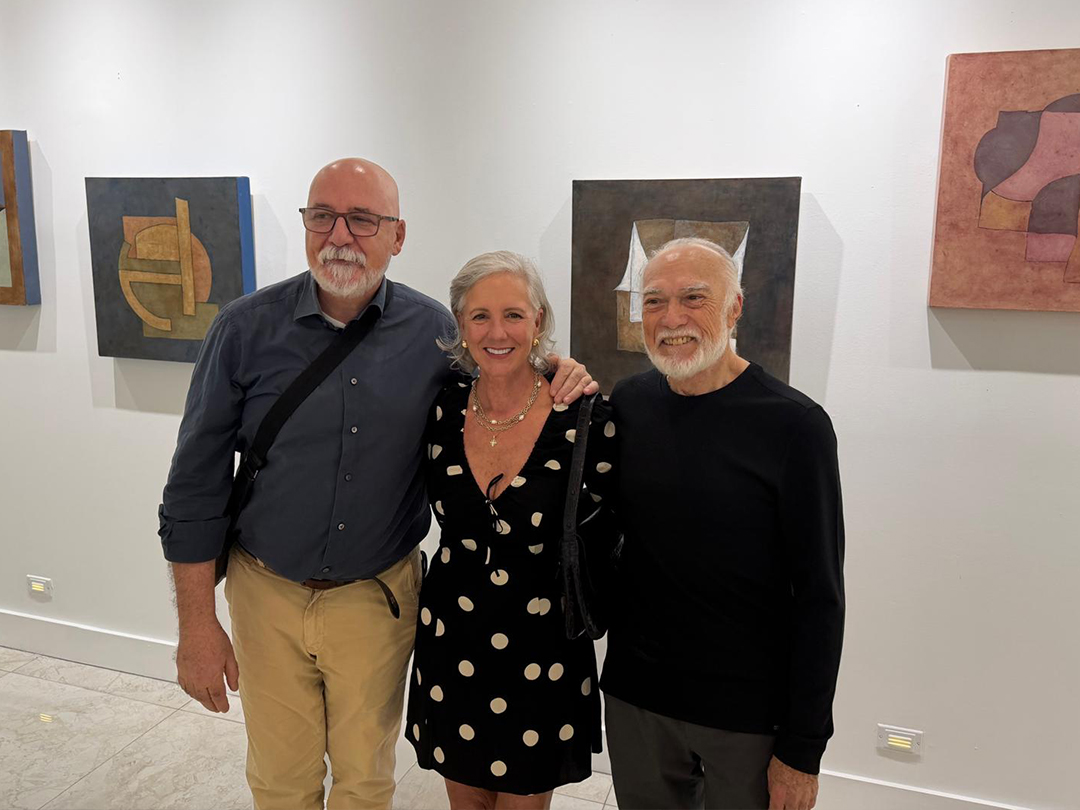
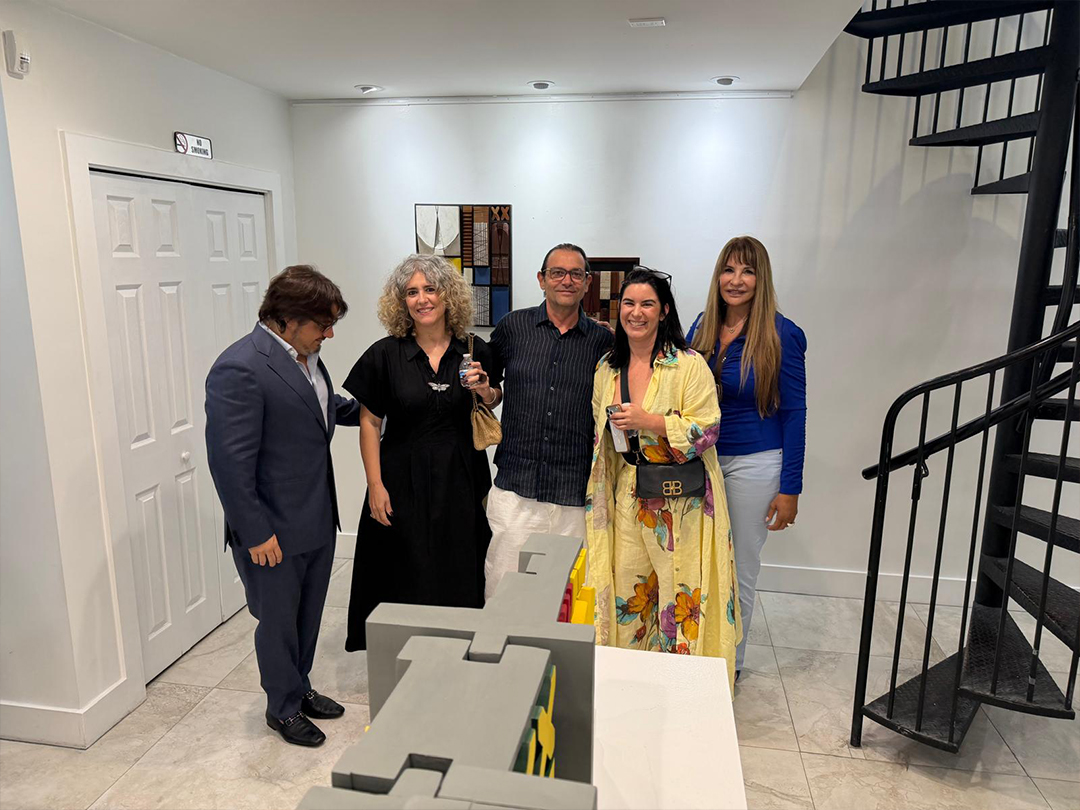
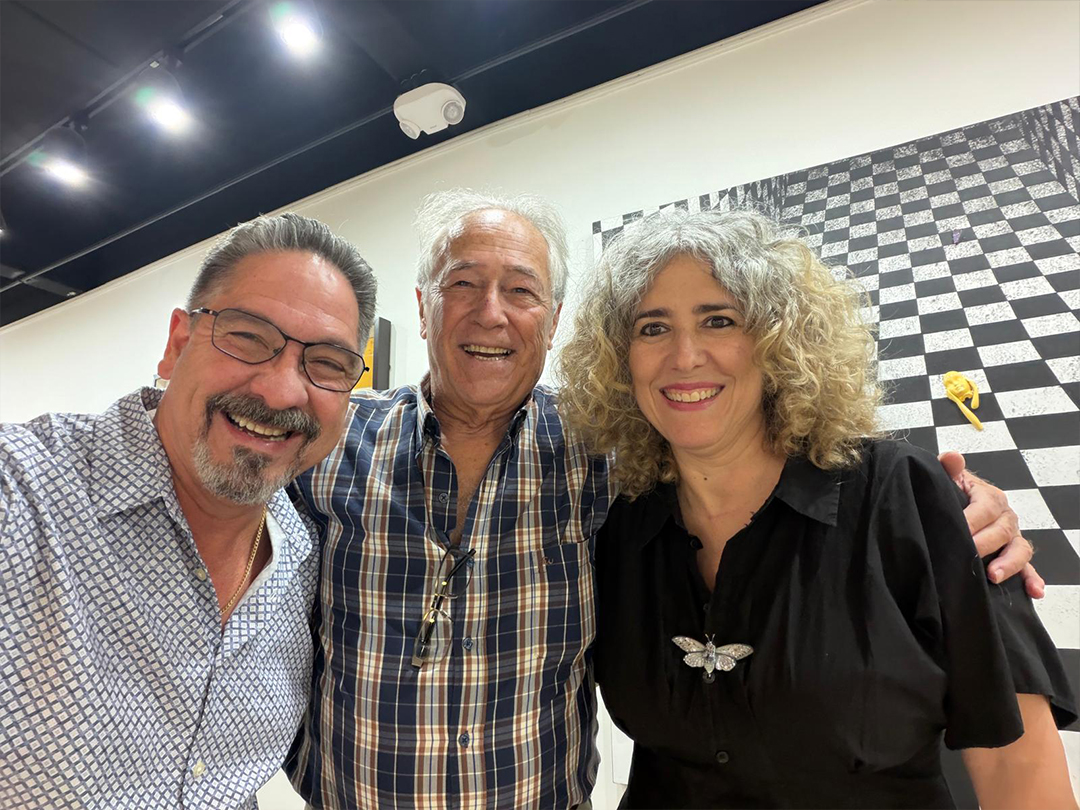
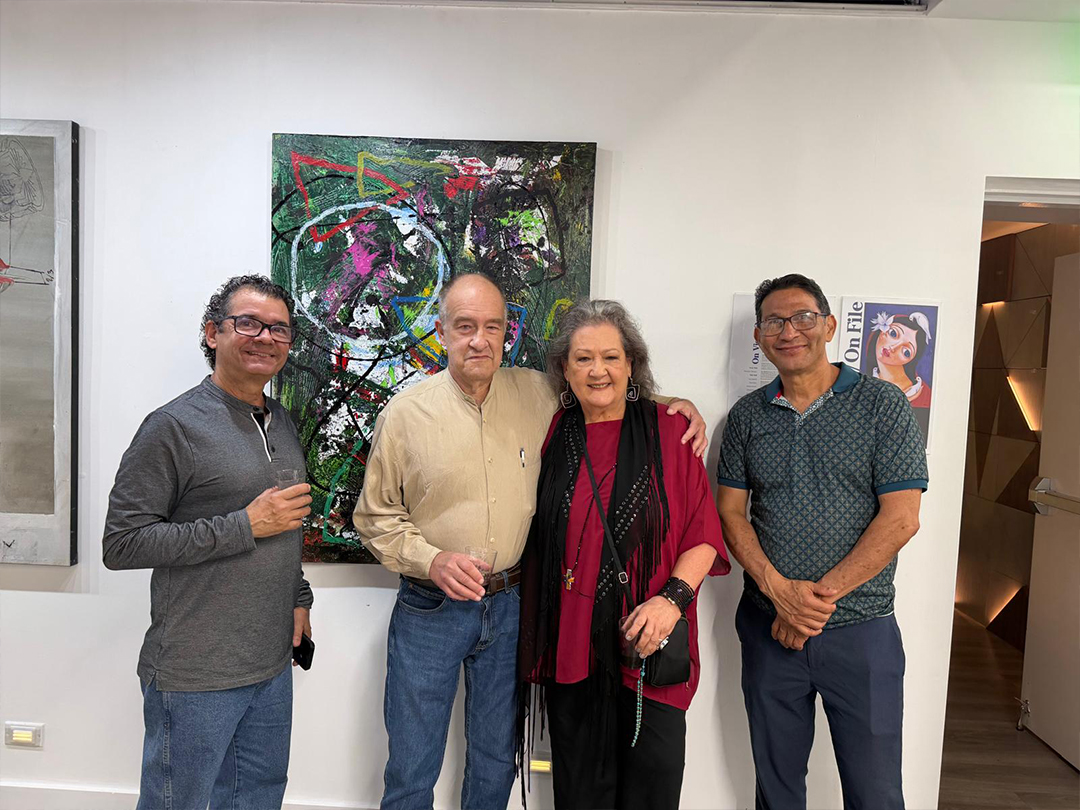
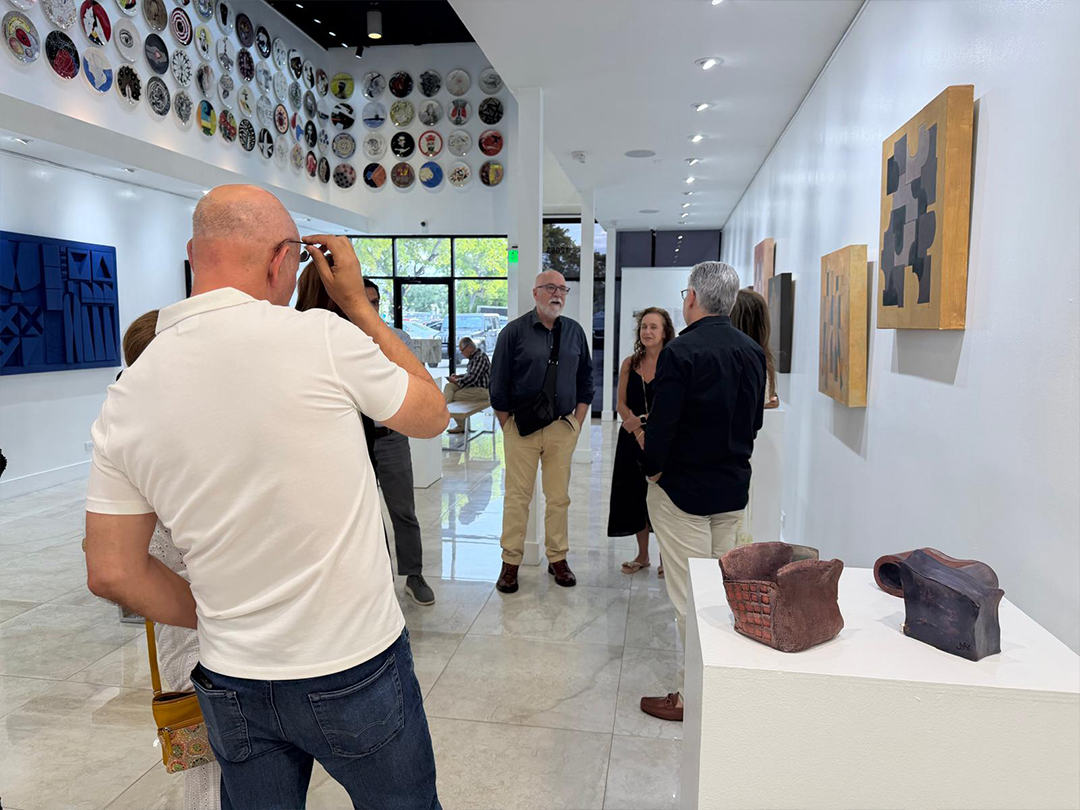

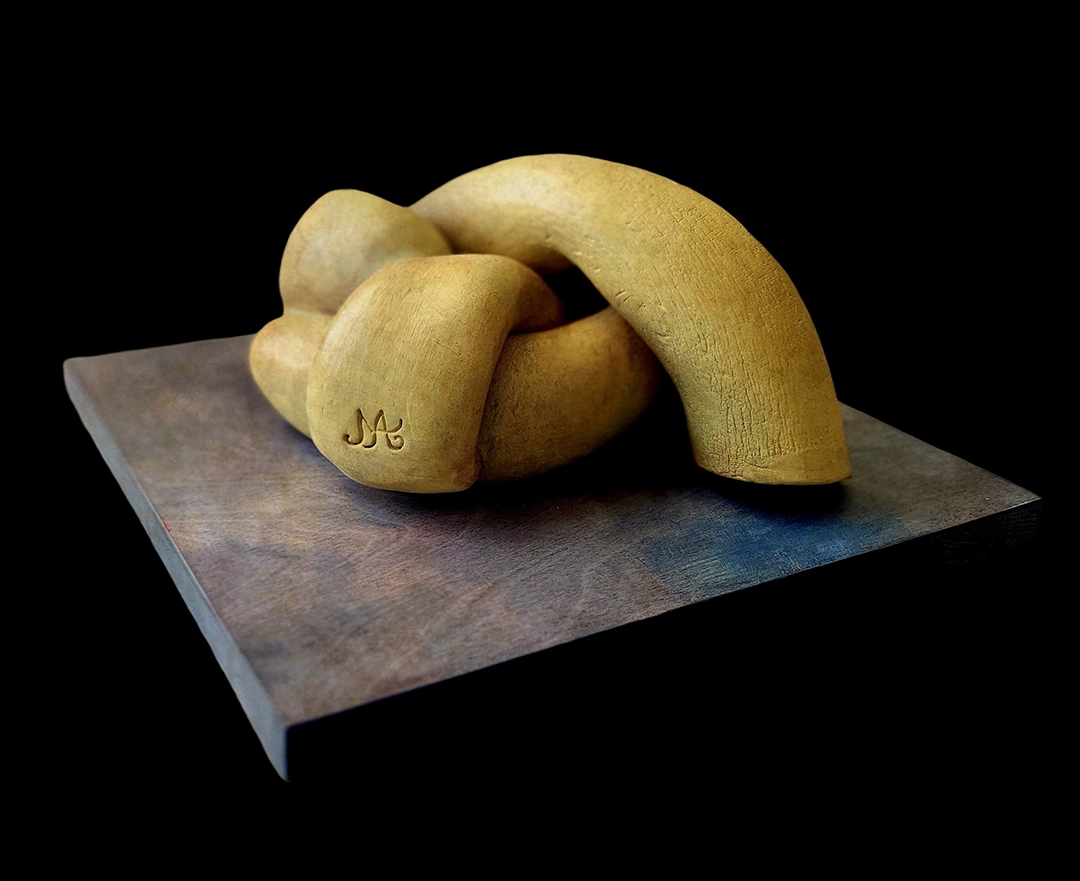
Marinoni works ceramics with a familiar vocabulary. Cylinders fitted into oval blocks, clusters of spheres serially arranged on bronze trays, latticed grids that fold across plates, cubes of saturated color that bear organic volumes, trapezoidal vessels that answer to the elemental geometry of cone, sphere, and cylinder. The syntax is constructive. The matter, ceramic patinated in oxidized greens, eroded ochres, deep blues, weathered golds, and lunar grays.
There is a poetic decision at work in that mise-en-scène. Marinoni produces ceramics carrying the aura of unearthed ceramics, and in doing so displaces constructivism from the plane of the canvas to the volume of the vessel, from oil paint to the kiln, and from the wall to the table. His recent practice, which encompasses the cycle El Banquete, carried out alongside the psychoanalyst Sodely Páez in alliance with NF Art&Design and MIFA, reveals the extent to which, in his work, the laid table and the geometric module form part of a single operation. To construct, in Marinoni, is also to offer.
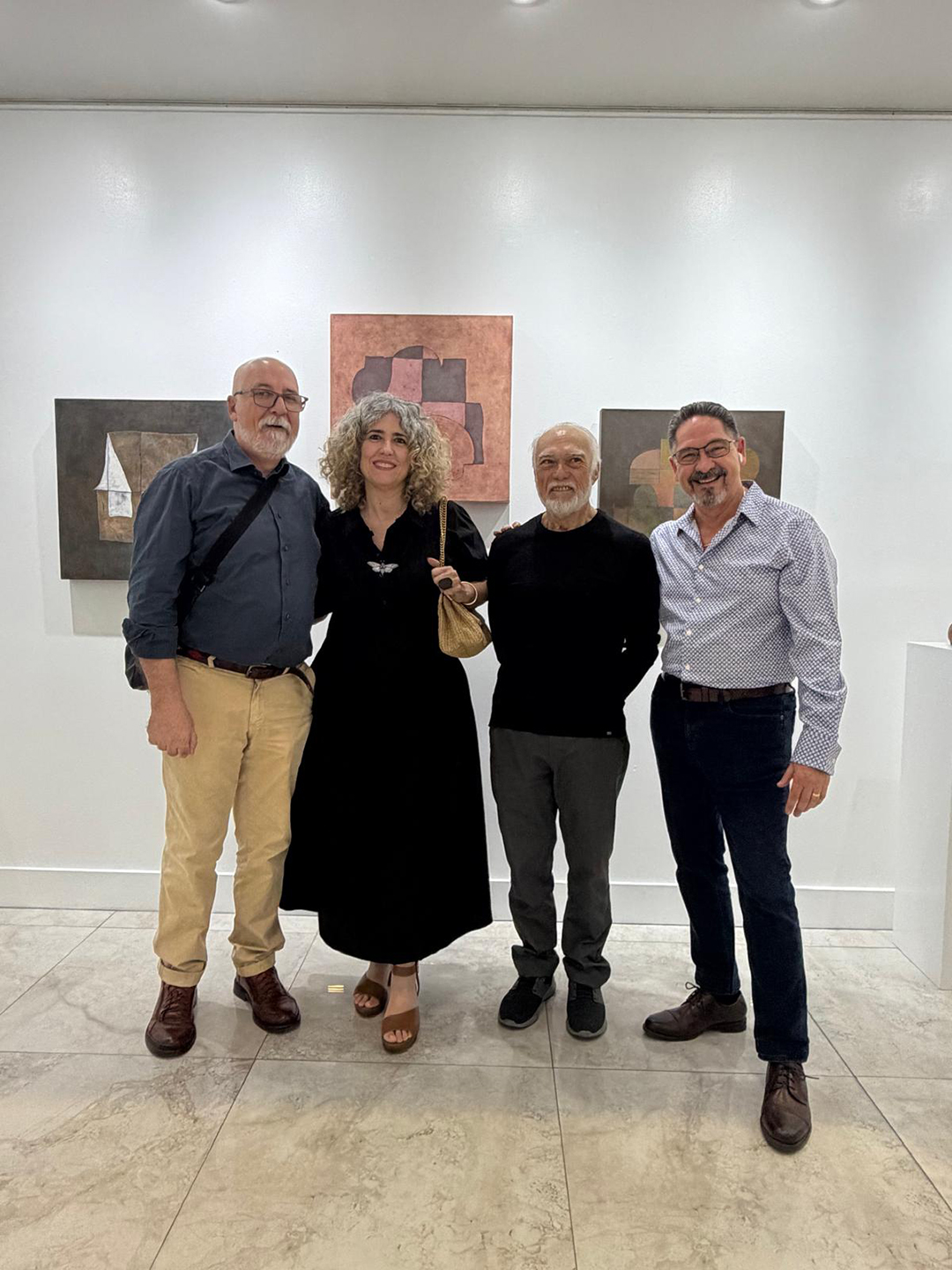
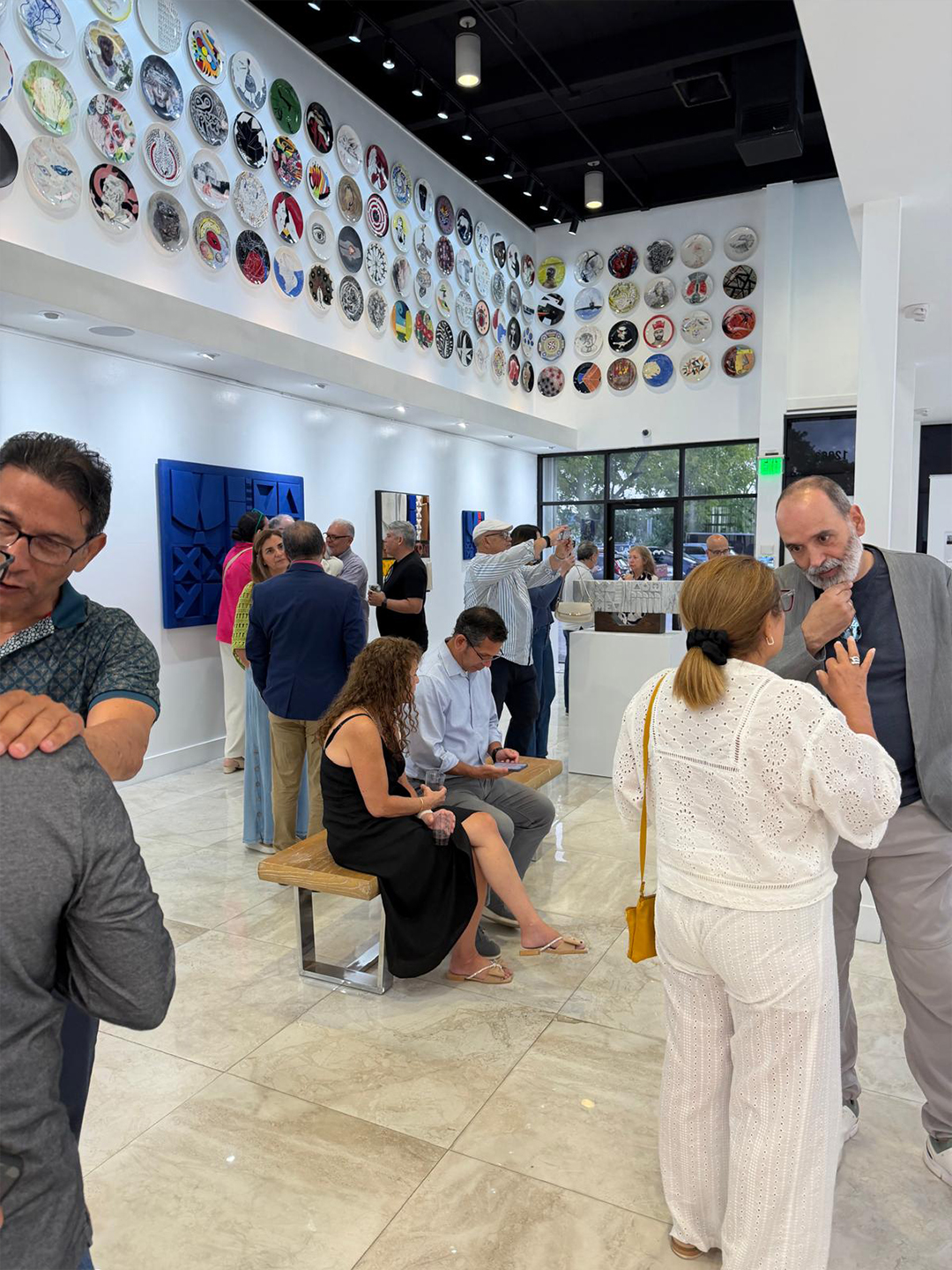
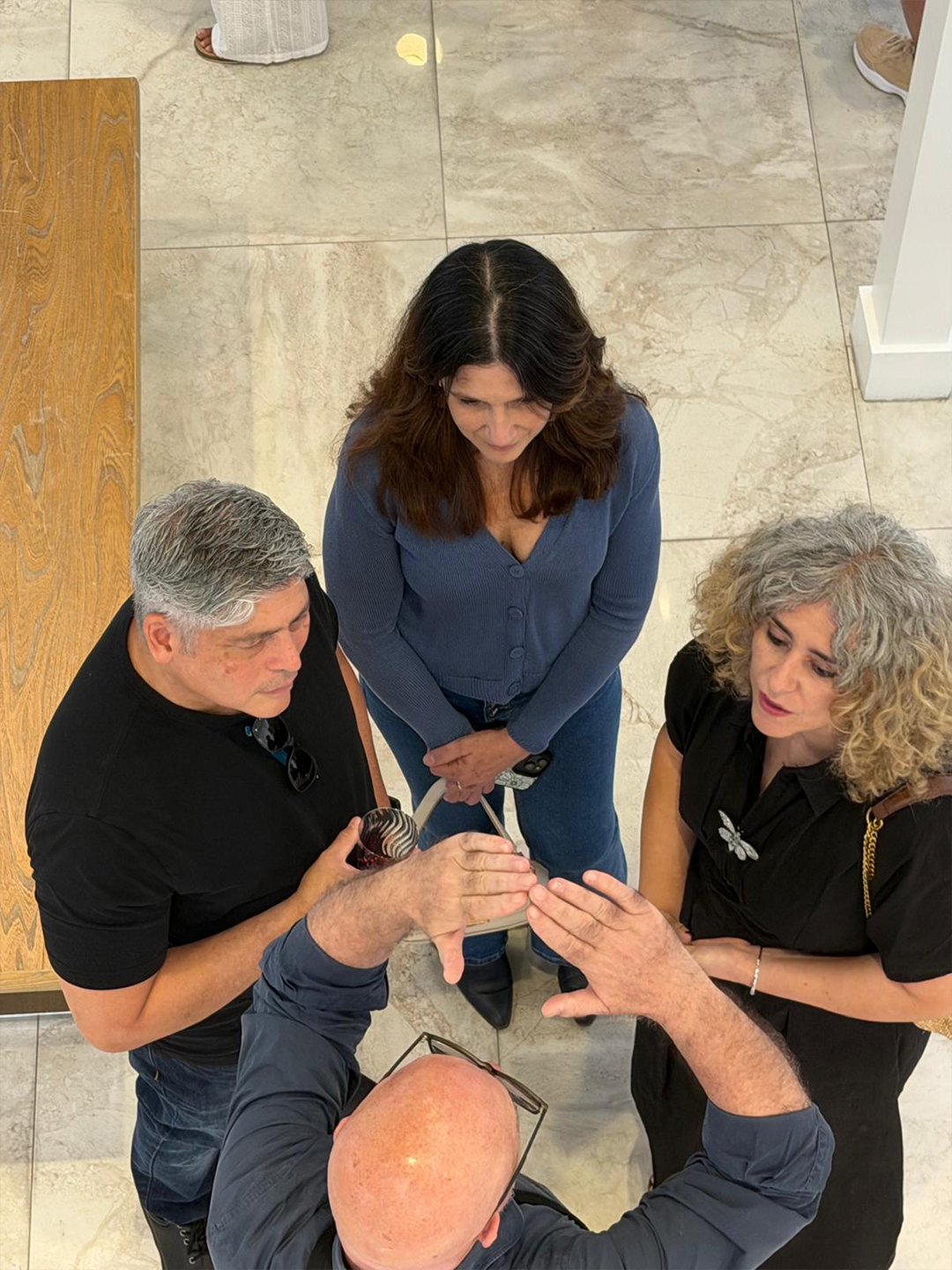
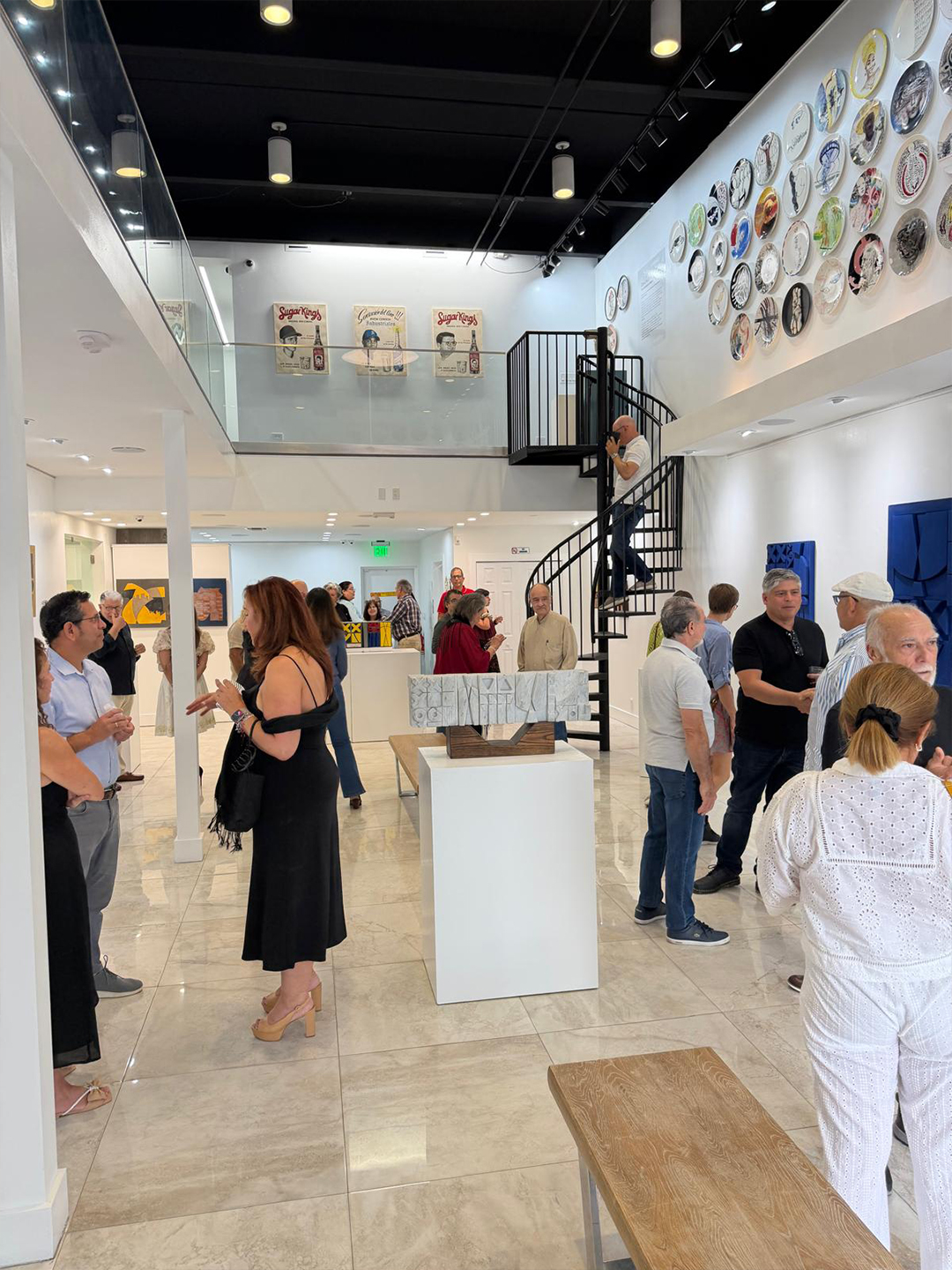
What Salas and Marinoni share goes beyond the formal repertoire. They share a way of understanding constructivism as a means of summoning the archaic from within modern form. Salas finds it in stone and in reclaimed wood, materials that arrive at the studio already laden with time. Marinoni shapes it in clay and entrusts it to fire with patinas that feign, in the high sense of the word, the passage of centuries. Both build objects that recall the ancient world and yet speak in the idiom of Latin American modernity.
The curatorial design proposes a conversational installation, where the structures of Salas find their echo in the ceramics of Marinoni, and where the carved grid replies to the modeled grid. It is a choral portrait of a constructivism of the south, where geometry often bears earth, oxide, and memory.
Latin American constructivism remains alive. It absorbs whatever ceramics, stone, and patinated wood can offer it as fresh sap. Salas and Marinoni are two contemporary voices joining this conversation. To bring them together in Miami is to recognize that the south of the continent continues to deliver forms to the world.
Jorge Salas (Venezuela) is a sculptor. His work, held in public and private collections across the Americas, has been recognized by specialized criticism for its capacity to articulate the classical sculptural tradition with contemporary abstraction.
Mario Marinoni (Uruguay) is a ceramist, chef, and interdisciplinary artist. Trained in the Uruguayan plastic tradition and a Miami resident for decades, he has exhibited in solo and group shows since 1995 in Montevideo, Maldonado, Buenos Aires, New York, Fort Lauderdale, and Miami. His recent practice integrates ceramic sculpture, signature cuisine, performance, and collective experiences gathered around the table.
The Museum of Contemporary Art of the Americas (MoCAA), based in Kendall, Miami, is devoted to the study, exhibition, and dissemination of contemporary art of the Americas, with particular attention to the transversal dialogues between the north, the south, the Caribbean, and the Latin American diasporas in the United States. The exhibition is supported by NARTS Foundation, a Miami-based cultural organization that understands culture as living language, shared conflict, and force of futurity, and which under the motto Neither Museum nor Relic, Living Culture develops projects where contemporary creation enters into conversation with migrant memory, the environment, and the written word, through programs such as Noir Week, Ellas Crean, Letras con conciencia, Raíces en tránsito, and Diálogo en colores. The alliance between the two institutions around Salas and Marinoni belongs to a shared commitment to making art a space where the common is thought through, contested, and reimagined.