


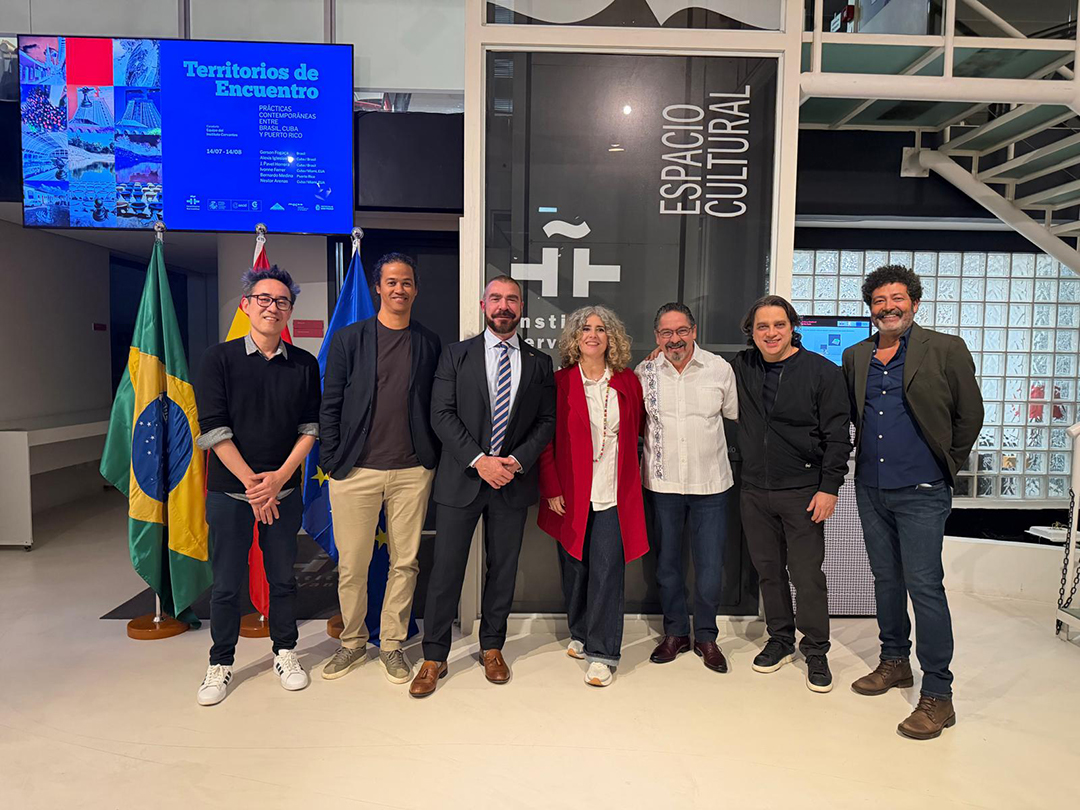
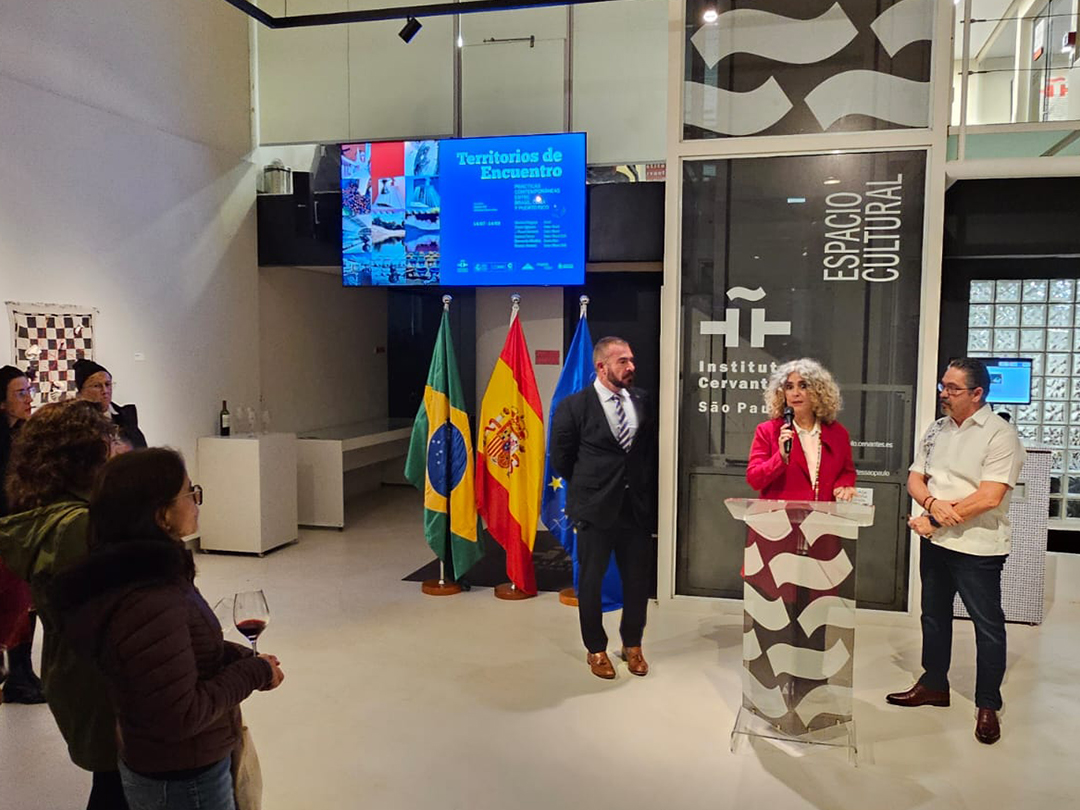
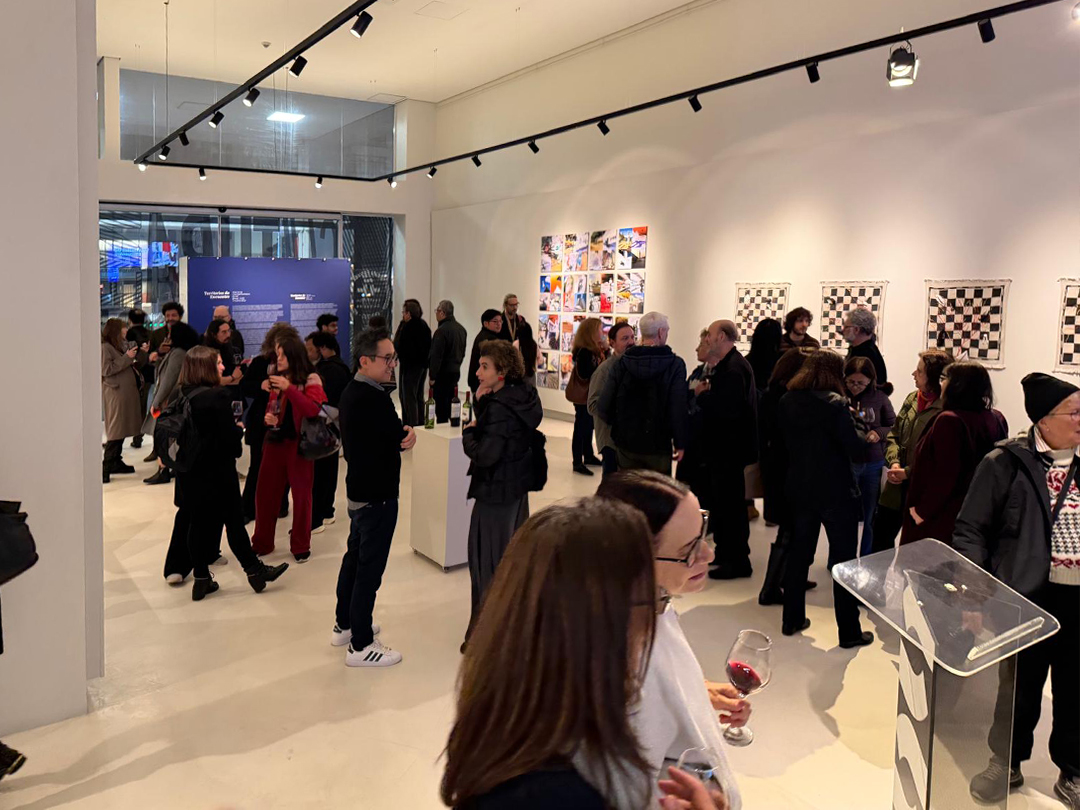
São Paulo, Brazil — July 14, 2026. The Instituto Cervantes São Paulo inaugurated Territorios de Encuentro. Prácticas contemporáneas entre Brasil, Cuba y Puerto Rico, a group exhibition that brings together six artists whose trajectories reflect the movement of people, memories, and visual languages across Brazil, the Caribbean, and the United States.
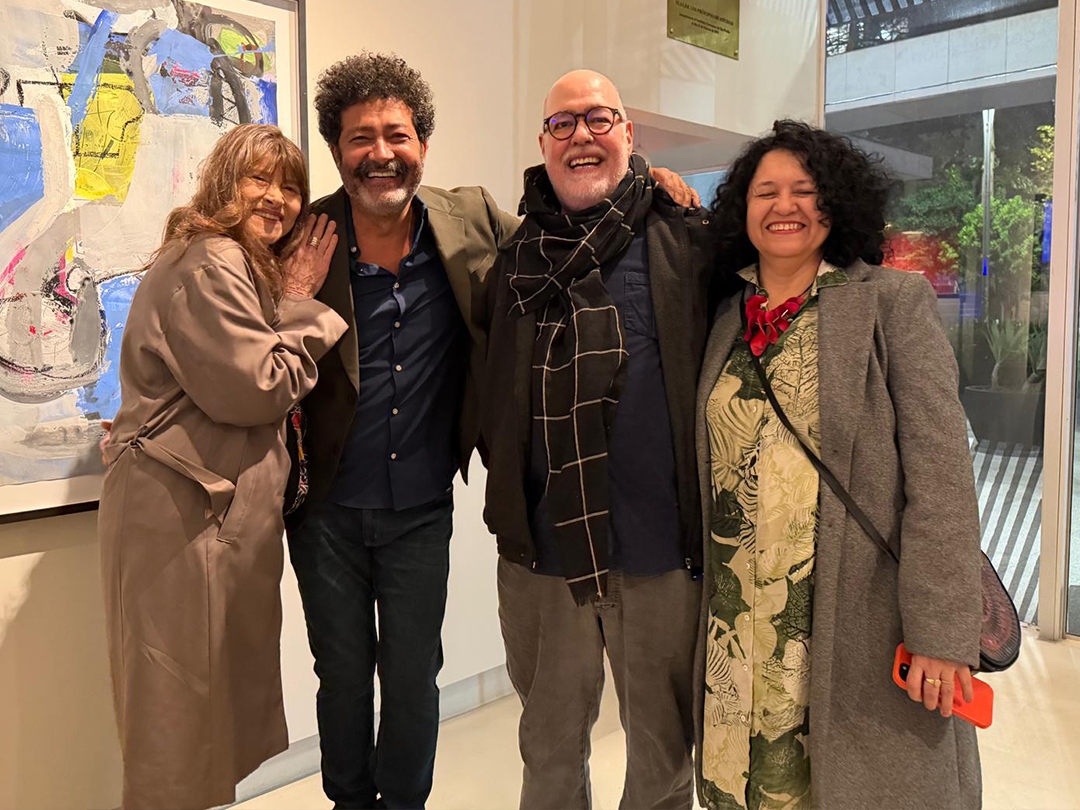
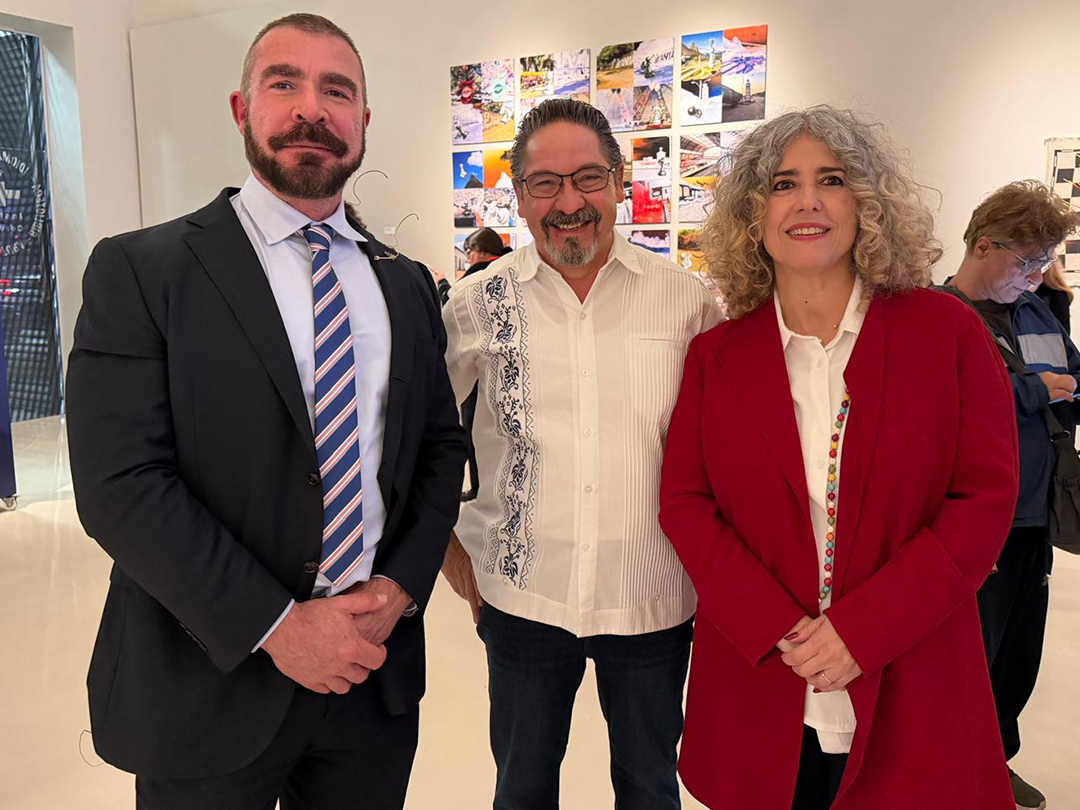
The opening took place at the institution’s Avenida Paulista headquarters, one of São Paulo’s most prominent cultural corridors. Artists, institutional representatives, cultural professionals, and members of the public gathered for the first viewing of a project conceived as a space of dialogue among distinct but historically interconnected territories.

Curated by the team of Instituto Cervantes São Paulo, the exhibition features Brazilian artist Gerson Fogaça; Cuban artists based in Brazil Alexis Iglesias and J. Pavel Herrera; Puerto Rican artist Bernardo Medina; and Cuban artists based in Miami Ivonne Ferrer and Nestor Arenas. The exhibition will remain open through August 14, 2026.
Leonardo Rodríguez, Founder, Board President, and Director General of the Museum of Contemporary Art of the Americas, and Ivonne Ferrer, Deputy Director of MoCAA and one of the participating artists, attended the opening on behalf of the museum. Their presence underscored MoCAA’s commitment to building lasting channels of cooperation among artists and institutions across the United States, Latin America, the Caribbean, and the wider Ibero-American cultural sphere.

Also participating in the institutional encounter were artist Gerson Fogaça and Malu da Cunha, Director of Instituto Cultural Urukum. Their involvement extended a collaboration with MoCAA that has already generated significant exhibition, documentary, and educational initiatives between Miami and the Brazilian state of Goiás.
During the gathering, MoCAA, Gerson Fogaça, and Malu da Cunha jointly presented the leadership of Instituto Cervantes São Paulo with the documentary catalog of Caminhos de Terra e Vento / Paths of Earth and Wind. The publication records the major collective exhibition developed by Instituto Cultural Urukum in partnership with MoCAA and presented in 2025 at Vila Cultural Cora Coralina in Goiânia.
The presentation of the catalog connected two successive stages of the relationship between the participating institutions. While Paths of Earth and Wind created a dialogue between the artistic context of Goiás and the international perspectives represented in the Rodríguez Collection, Territorios de Encuentro expands that conversation by bringing together artistic practices shaped by Brazil, Cuba, Puerto Rico, Miami, and their diasporic crossings.
The six artists do not illustrate a single identity or regional narrative. Instead, their works approach territory as an unstable and continuously reconstructed field. Place appears through memory, displacement, belonging, inherited symbols, material experimentation, and the transformation of personal experience into visual form.
Brazil, Cuba, and Puerto Rico are presented not as isolated geographic units, but as territories shaped by historical contact, migration, cultural mixing, and the circulation of images and ideas. The sea functions both as a physical distance and as a connective space, while Miami emerges as another point of convergence where Caribbean and Latin American identities are preserved, questioned, and reformulated.
Within this framework, each artist contributes a distinct perspective. Gerson Fogaça brings a practice rooted in the cultural and visual environment of Brazil. Alexis Iglesias and J. Pavel Herrera address forms of identity reshaped through the experience of living between Cuba and Brazil. Bernardo Medina introduces a Puerto Rican perspective marked by the complexities of insularity, memory, and cultural translation. Ivonne Ferrer and Nestor Arenas contribute voices formed between Cuba and South Florida, where migration becomes both lived experience and a condition for artistic reinvention.
The exhibition’s structure is therefore based on multiplicity rather than uniformity. Its works form a network of individual positions connected by experiences of movement, adaptation, remembrance, and cultural negotiation. Bodies, symbols, surfaces, and materials retain the traces of the places from which they emerge while opening themselves to new contexts of interpretation.


For MoCAA, the inauguration represents another important step in its sustained international program. The museum has worked to create opportunities for artists connected to its collection to enter meaningful institutional contexts beyond South Florida, while simultaneously bringing artists from other regions into its exhibitions, publications, educational programs, and cultural networks.
The participation of Ivonne Ferrer and Nestor Arenas is especially significant within this mission. Both artists are based in Miami and maintain practices deeply connected to the Cuban diaspora. Their presentation in São Paulo places their work within a broader Latin American conversation and reinforces the museum’s commitment to ensuring that South Florida’s artistic production circulates internationally.
The project also continues an established relationship between MoCAA, the Rodríguez Collection, and Instituto Cervantes São Paulo. The institution previously hosted Cuban Art from Both Shores, another initiative developed with the museum and the collection. Territorios de Encuentro advances that relationship beyond a single national framework, establishing a wider dialogue among several territories and migratory experiences.
The opening demonstrated the importance of institutional partnerships in creating spaces where contemporary art can move beyond national categories. Instituto Cervantes São Paulo provided the exhibition with a platform located at the center of one of Latin America’s most active cultural cities, while MoCAA and the Rodríguez Collection contributed artists, works, institutional coordination, and a long-term commitment to exchange.
More than a conventional group exhibition, Territorios de Encuentro proposes an evolving geography of relationships. Its territories are not defined exclusively by borders, but by the routes through which artists, memories, and cultural references travel. Brazil, Cuba, Puerto Rico, and Miami appear as connected points within a larger map whose meaning is continually rewritten by migration and encounter.
The inauguration affirmed the exhibition as both an artistic event and an institutional milestone. It brought together collaborators from projects developed in Goiás, Miami, and São Paulo, preserved the memory of earlier initiatives through the presentation of the Paths of Earth and Wind catalog, and opened new possibilities for exhibitions, publications, research, educational activity, and cultural cooperation.
Through Territorios de Encuentro, MoCAA continues to advance a model of exchange based on sustained relationships rather than isolated appearances. The exhibition recognizes contemporary art as a space in which geographic distance can become dialogue, cultural difference can generate new forms of understanding, and institutional cooperation can create lasting connections among communities across the Americas.
Territorios de Encuentro. Prácticas contemporáneas entre Brasil, Cuba y Puerto Rico will remain on view through August 14, 2026, at Instituto Cervantes São Paulo, Avenida Paulista 2439, ground floor of the Edifício Eloy Chaves, Bela Vista, São Paulo.
