


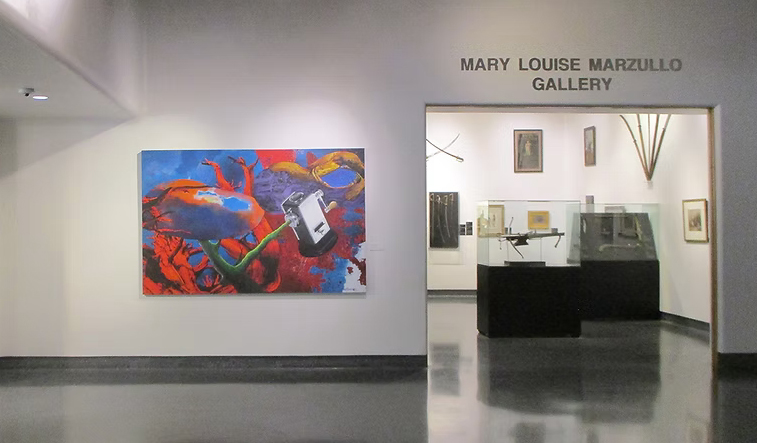
On August 12, 2026, the international art magazine Art Sôlido published “Two Donations, One History of Cuban Art,” an article by critic and curator Anthony Bianchi examining the presence of Cuban art in the permanent collection of the Museum of Arts & Sciences (MOAS) in Daytona Beach through two donations separated by more than six decades. The first was made in 1957 by Fulgencio Batista and Marta Fernández Batista. The second, in 2020, consisted of fourteen works from the Rodríguez Collection donated by collector Leonardo Rodríguez.
For the Museum of Contemporary Art of the Americas, the significance of the article extends beyond its reference to a specific institutional collaboration. Bianchi places the Rodríguez Collection within a broader process of preserving and extending the legacy of Cuban art in the United States, recognizing the 2020 donation as an intervention capable of carrying into the present a museum narrative that began more than sixty years earlier.
According to the article, MOAS’s historic Cuban holdings comprise approximately 150 works and trace important moments in Cuban art of the nineteenth and twentieth centuries through artists such as Leopoldo Romañach, Armando García Menocal, Víctor Manuel, Eduardo Abela, Carlos Enríquez, Amelia Peláez, René Portocarrero, Mirta Cerra, Sandú Darié, and Guido Llinás. The addition of fourteen works from the Rodríguez Collection expanded that narrative to include artists associated with later generations and experiences, among them Lisyanet Rodríguez, Ivonne Ferrer, Milena Martínez Pedrosa, Ciro Quintana, Noel Dobarganes, Jorge Santos Marcos, Adrián Menéndez, Néstor Arenas, Carlos Luna, Reynerio Tamayo, Aldo Menéndez, Patricio Rodríguez, Maikel Domínguez, and Pedro Ávila Gendis.
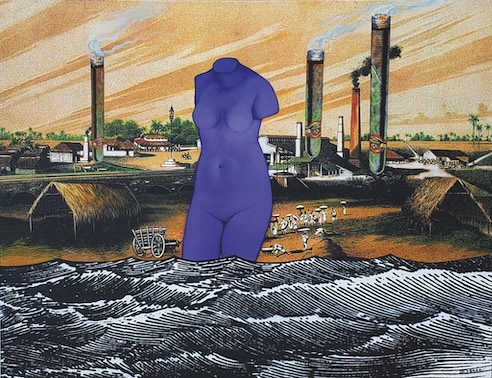
Bianchi gives particular importance to this continuity. The historic 1957 donation preserved a significant representation of Cuban art prior to the Revolution, while Leonardo Rodríguez’s contribution brought into the museum works, languages, and generations shaped during the second half of the twentieth century and the opening decades of the twenty-first. Between the two groups stands 1959, an unavoidable historical rupture that profoundly altered the geography of Cuban culture. From that moment onward, the history of Cuban art could no longer be understood exclusively through what was produced within the island. Exile, migration, and the diaspora became part of that history, while Miami emerged as one of its principal centers of artistic production and circulation.
This observation is closely aligned with the work developed by the Museum of Contemporary Art of the Americas. The Rodríguez Collection, currently on extended loan to the museum, is one of the principal resources supporting its research, exhibition, and educational programs devoted to Cuban, Caribbean, and Latin American art. MoCAA has consistently approached the collection as a means of studying Cuban art together with its diaspora and of incorporating into the historical record works created outside the island that for decades remained dispersed among private collections, immigrant communities, and institutions across different countries.
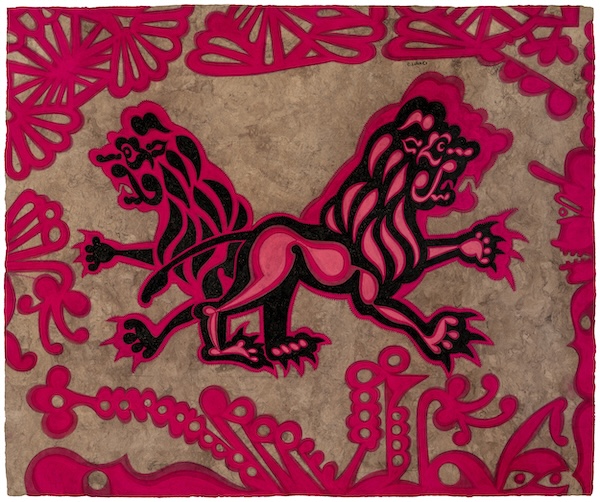
The Art Sôlido article also reconstructs the institutional history that preceded the donation. Before the creation of the Museum of Contemporary Art of the Americas, Leonardo Rodríguez had opened his collection to the public through the Kendall Art Center, founded in 2016. Relationships established during those years with MOAS led to exhibition projects including Beyond the Plate and Women Artists in the Rodriguez Collection. For Bianchi, this sequence is significant. Institutional collaboration first led to exhibition and later to the permanent incorporation of works into the holdings of the Daytona Beach museum.
From this perspective, collecting takes on a dimension that extends beyond ownership. Once artworks enter a museum collection, they become part of structures of preservation, research, exhibition, and public access capable of carrying them forward to future generations. The article understands precisely this passage from private collection to public patrimony as a form of cultural philanthropy.
The reflection is especially meaningful for MoCAA because the museum’s own institutional history emerged from a comparable transformation. After six years of activity, the Kendall Art Center evolved in 2022 into the Museum of Contemporary Art of the Americas, expanding the experience of collecting into a museum program devoted to preserving, researching, exhibiting, and circulating contemporary artistic expressions from Cuba, the Caribbean, and the Americas.
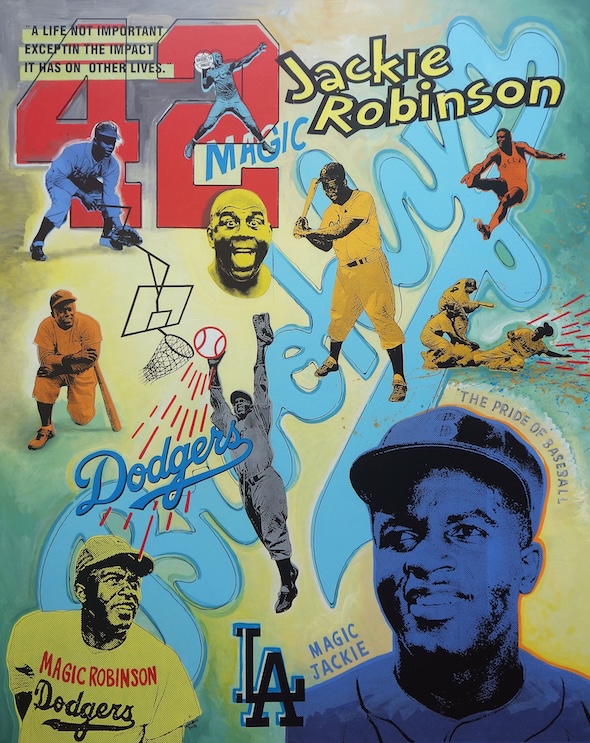
Art Sôlido presents itself as an international magazine and publishing platform dedicated to contemporary art and literature, founded in 2010 and associated with Coral Gables and New York. Its work encompasses essays, books, and editorial and curatorial projects developed in collaboration with artists, galleries, museums, and cultural institutions.
The author of the article, Anthony Bianchi, is part of the publication’s editorial team. According to the biographical information published by Art Sôlido, he was born in New York in 1990, studied Art History at New York University, and later earned a master’s degree in the same discipline from Yale University. The magazine presents him as a critic and curator with professional experience connected to art institutions in Washington, D.C., and New York.
More than documenting a donation made six years ago, “Two Donations, One History of Cuban Art” raises a broader question. Collections can create continuity where political history produced dispersion. By connecting MOAS’s historic Cuban holdings with contemporary works from the Rodríguez Collection, the article recognizes a history of Cuban art that crosses territories, generations, and political circumstances and continues to be written both inside and outside Cuba.
Within that reading, the contribution of the Rodríguez Collection does not appear as an isolated episode. It belongs to a wider cultural structure in which collectors, museums, and research initiatives help preserve and make accessible an artistic memory that now inhabits multiple geographies. It is also the territory in which MoCAA has located a fundamental part of its work.
Lead image: View of a work by Aldo Menéndez, part of the new donation made by collector Leonardo Rodríguez
