


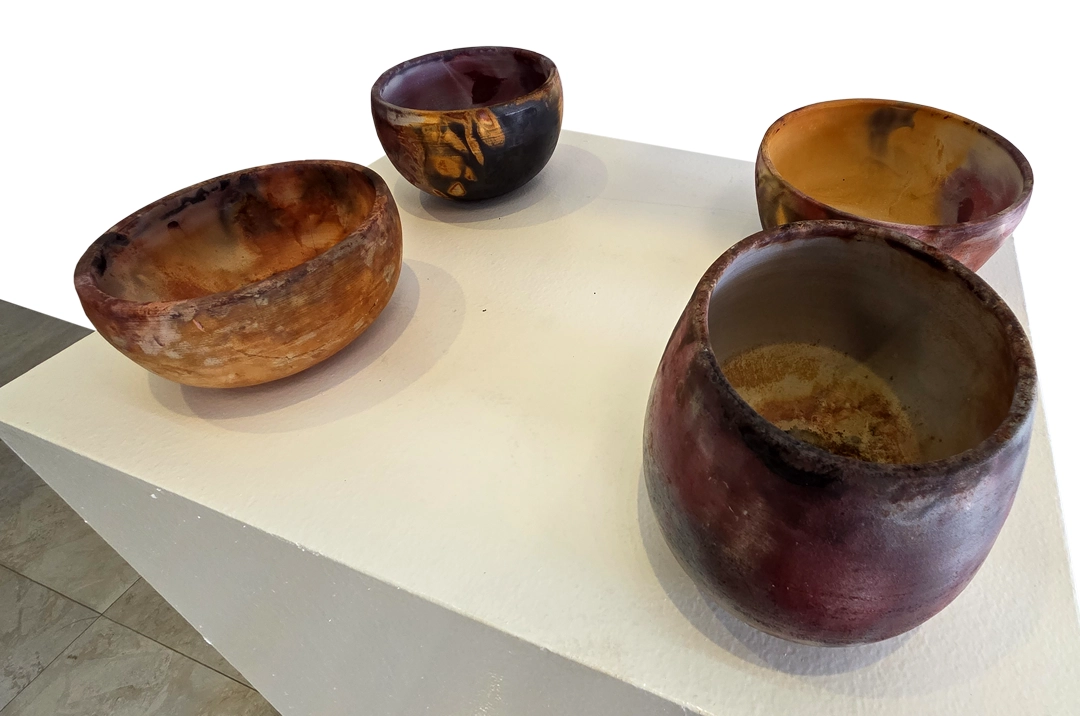


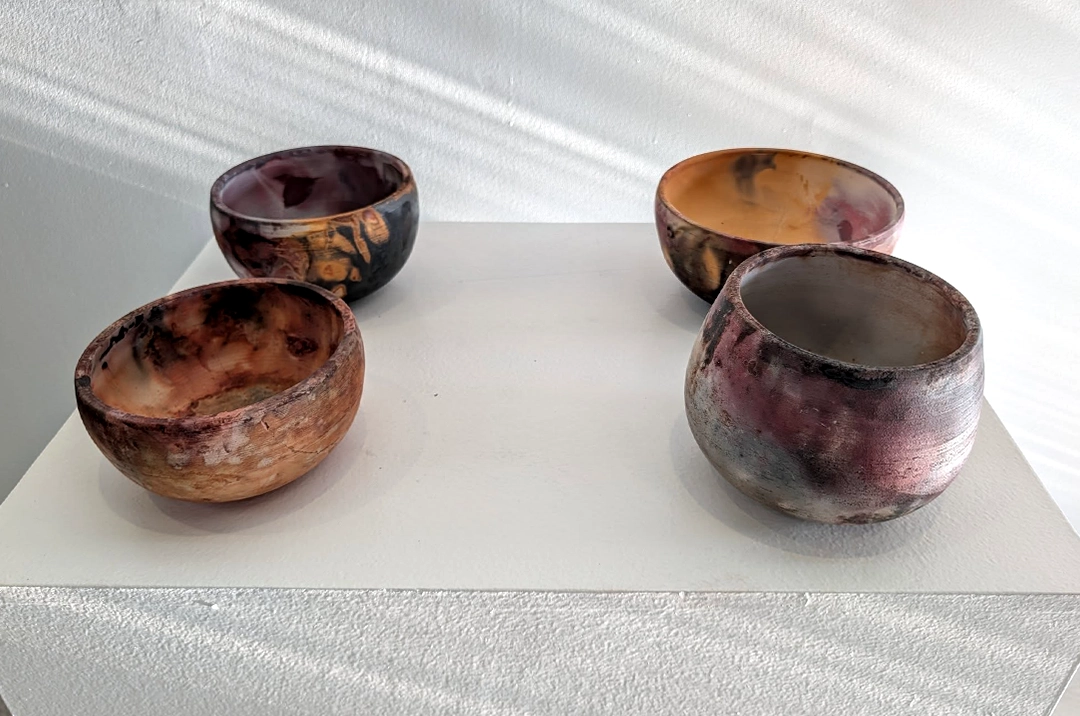


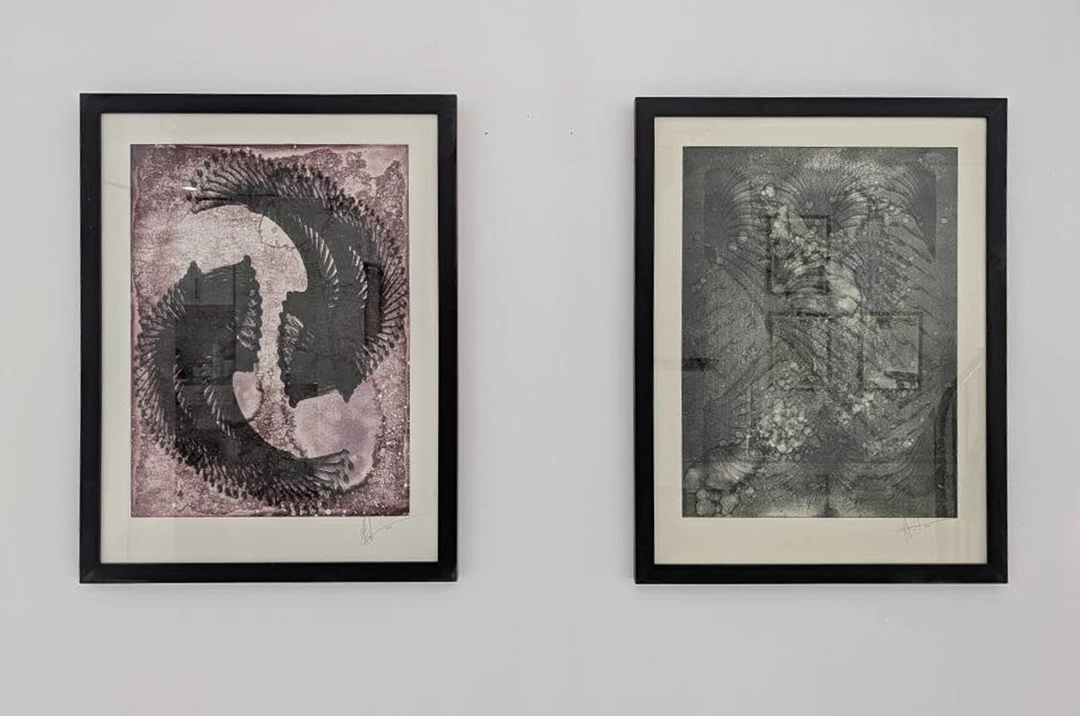
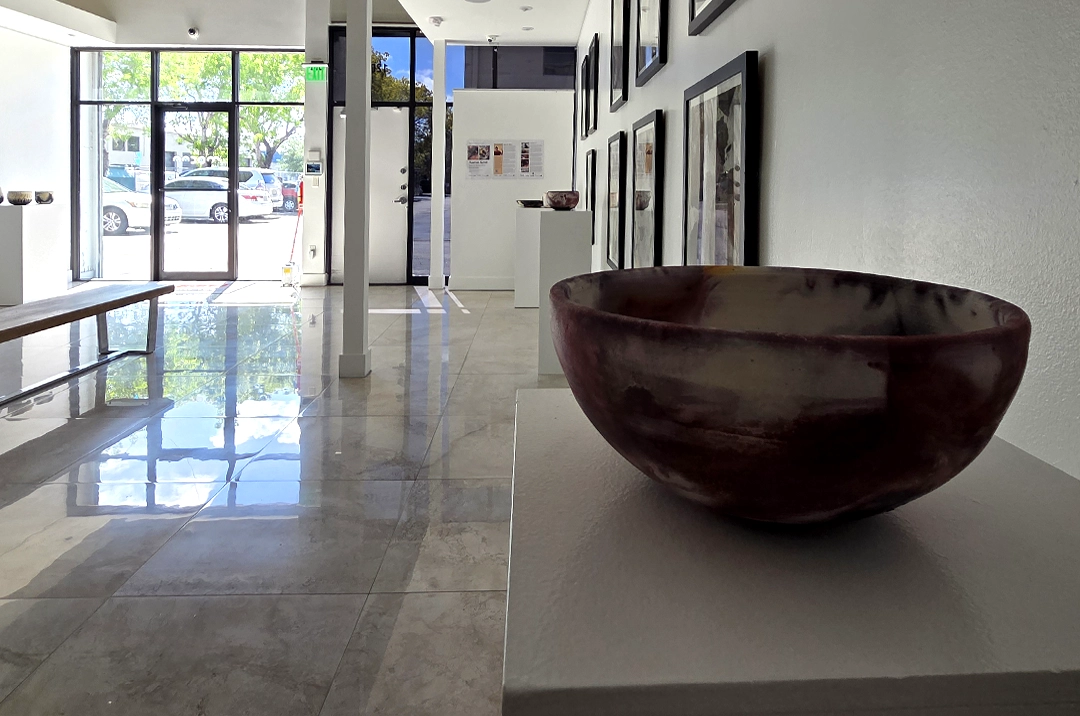
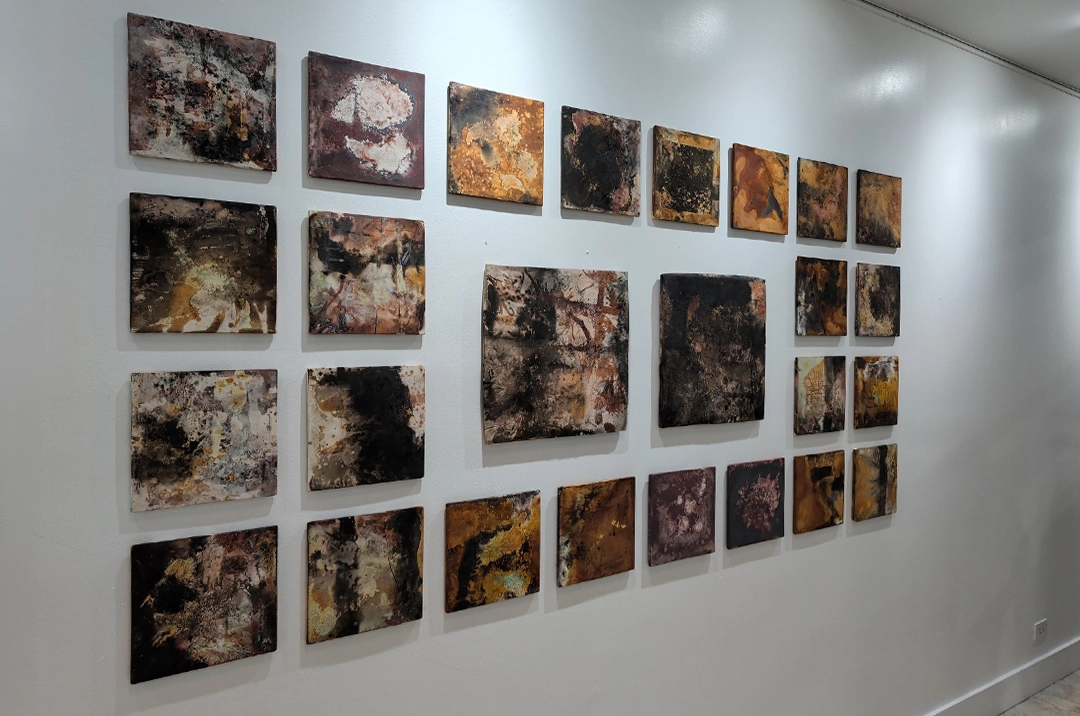
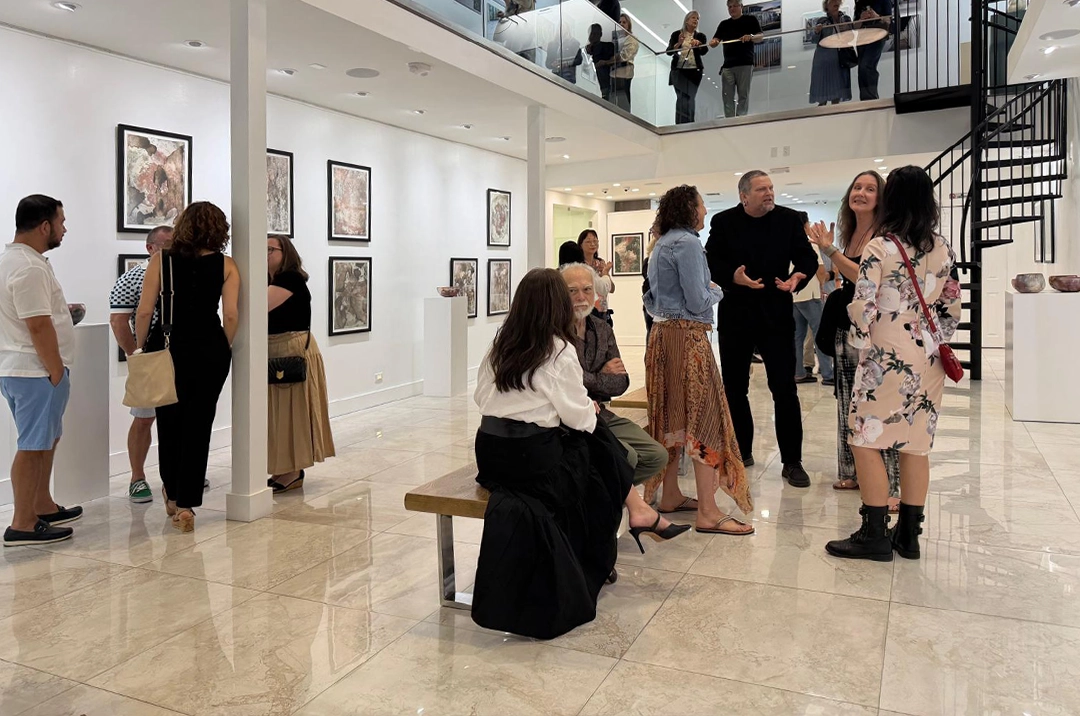
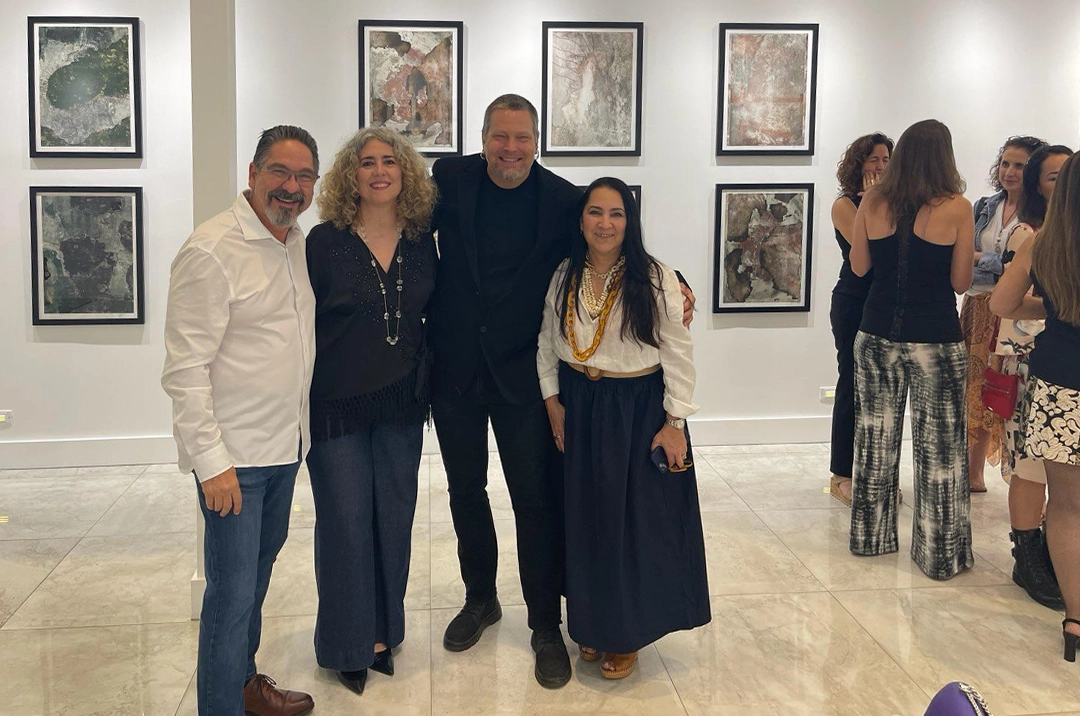
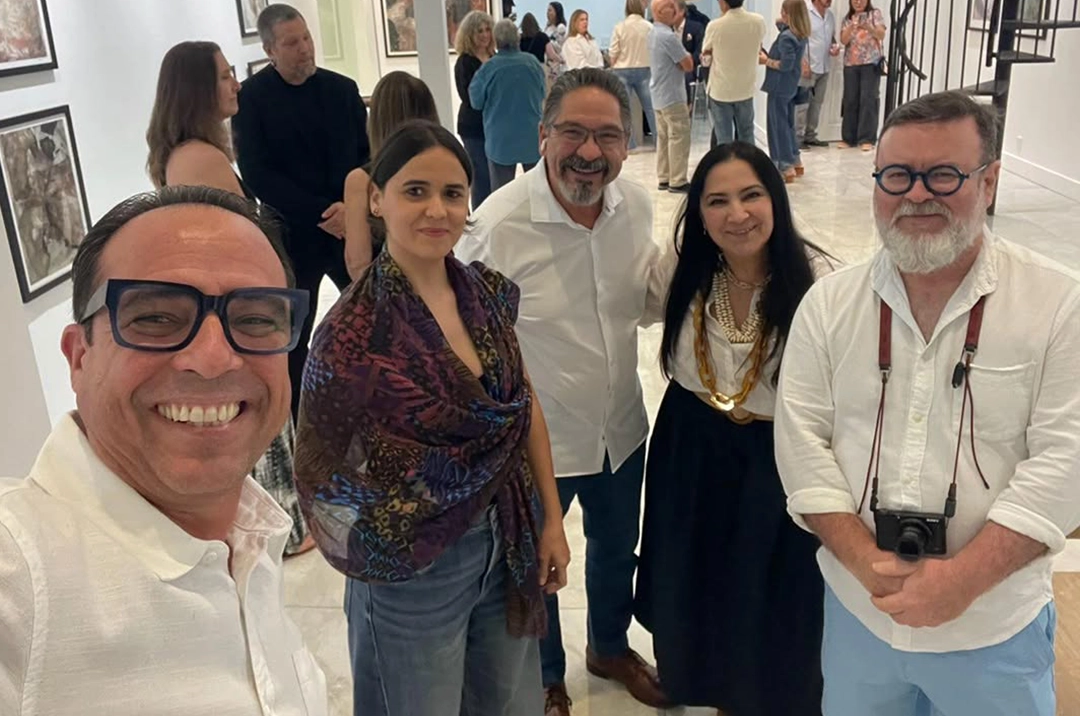
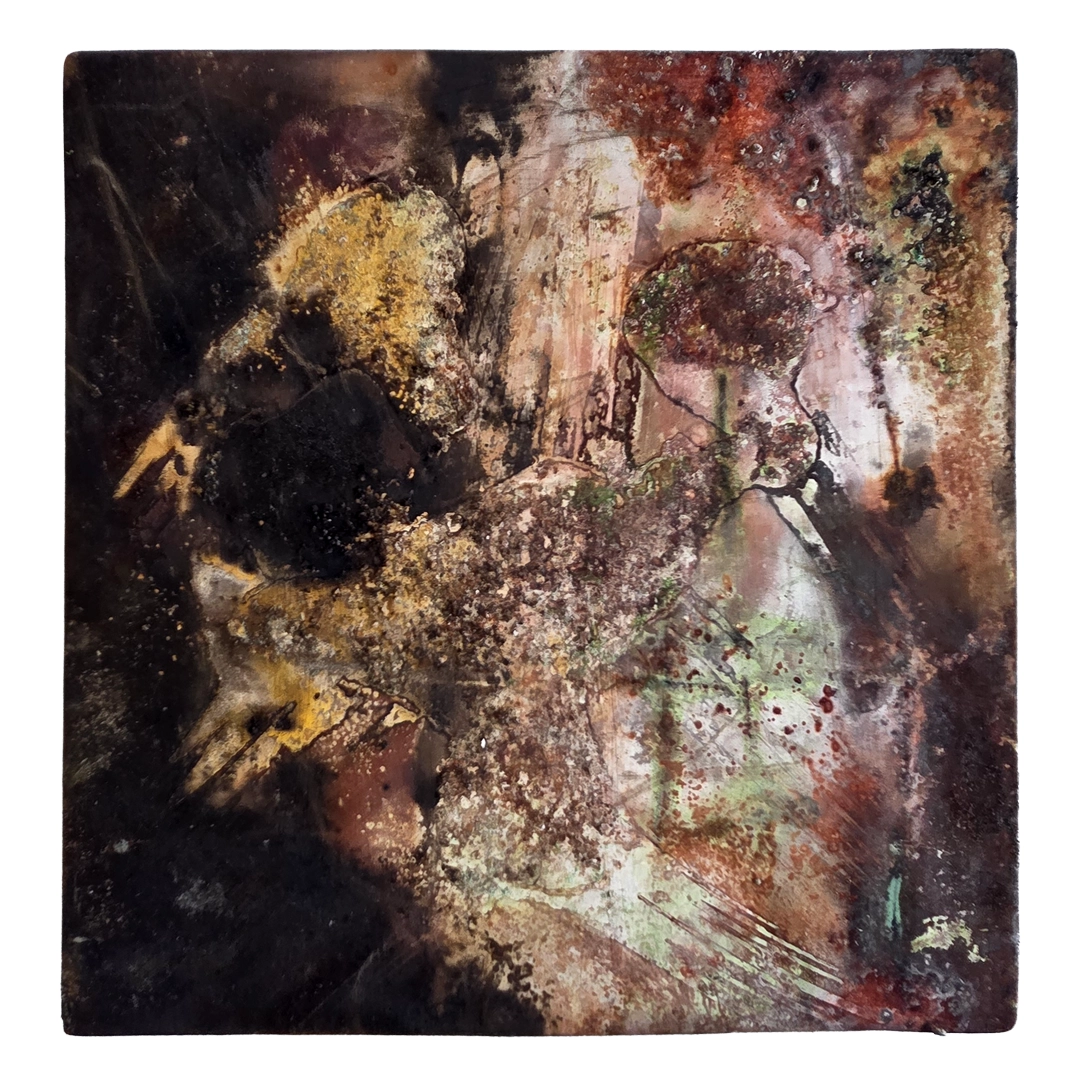
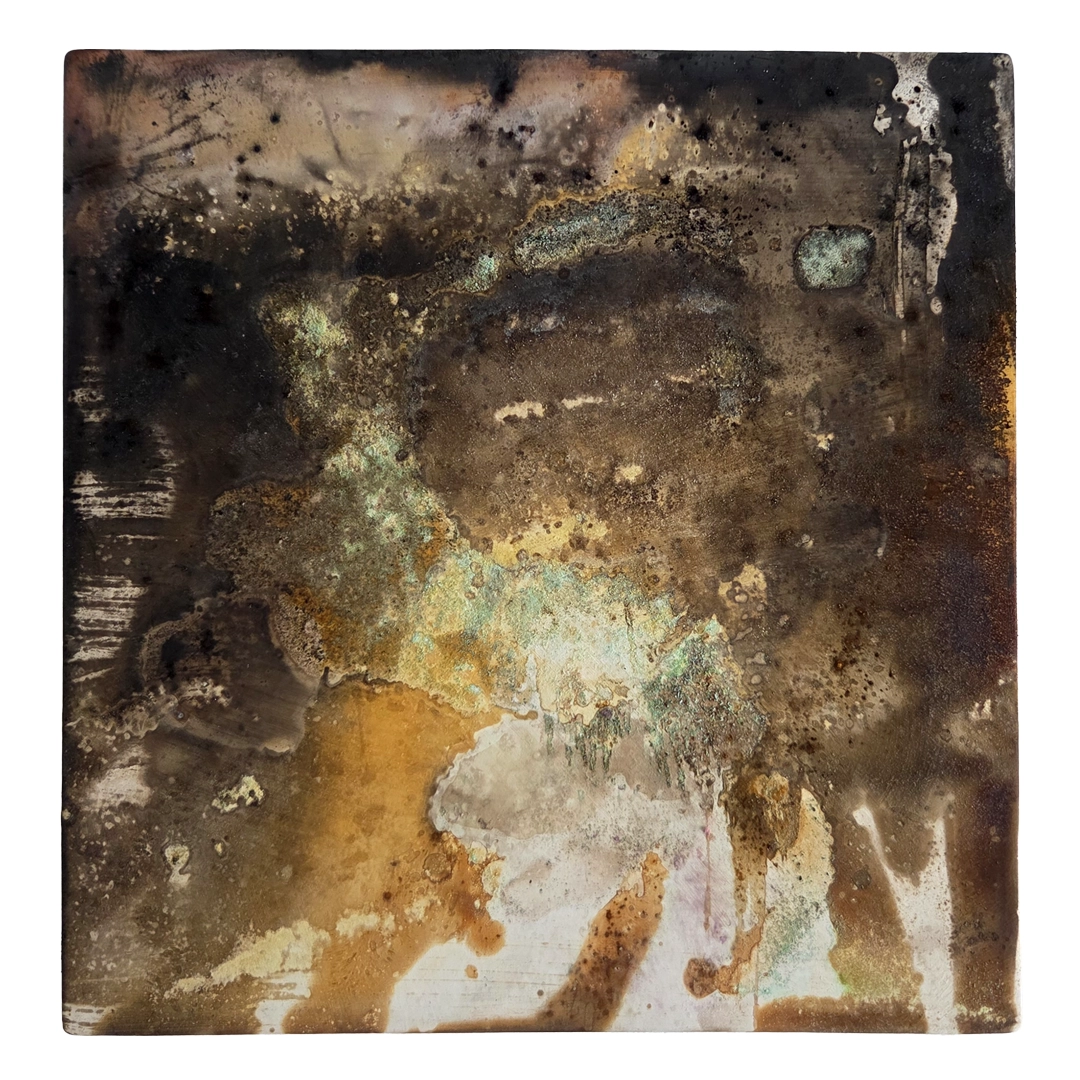
Stain & Relics brought together a body of work developed by Aaron Kent (Cincinnati) over years of material investigation, in which ceramics, printmaking, and hybrid processes intersect without submitting to stable disciplinary boundaries. The exhibition, which opened on April 17, 2026 at MoCAA, was the result of a collaboration between the Fine Arts Ceramic Center and The Annex Gallery. The show included pit-fired vessels, tile work, sculptural pieces, and a core of graphic work that operates through a specific procedure: ceramic pieces photographed and subsequently screen-printed, where the three-dimensional is translated into layered visual form and the original work becomes the matrix of another, distinct one.
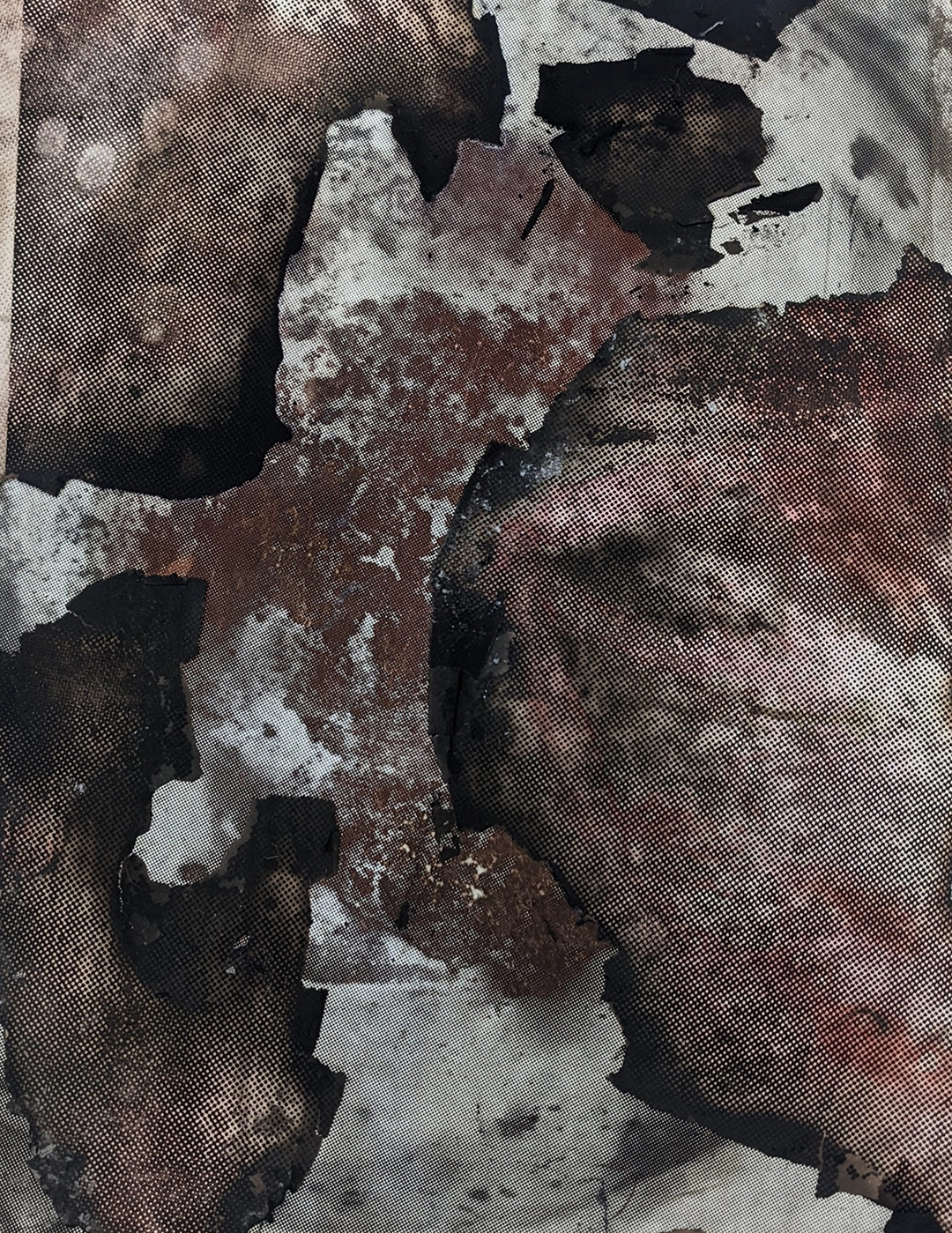

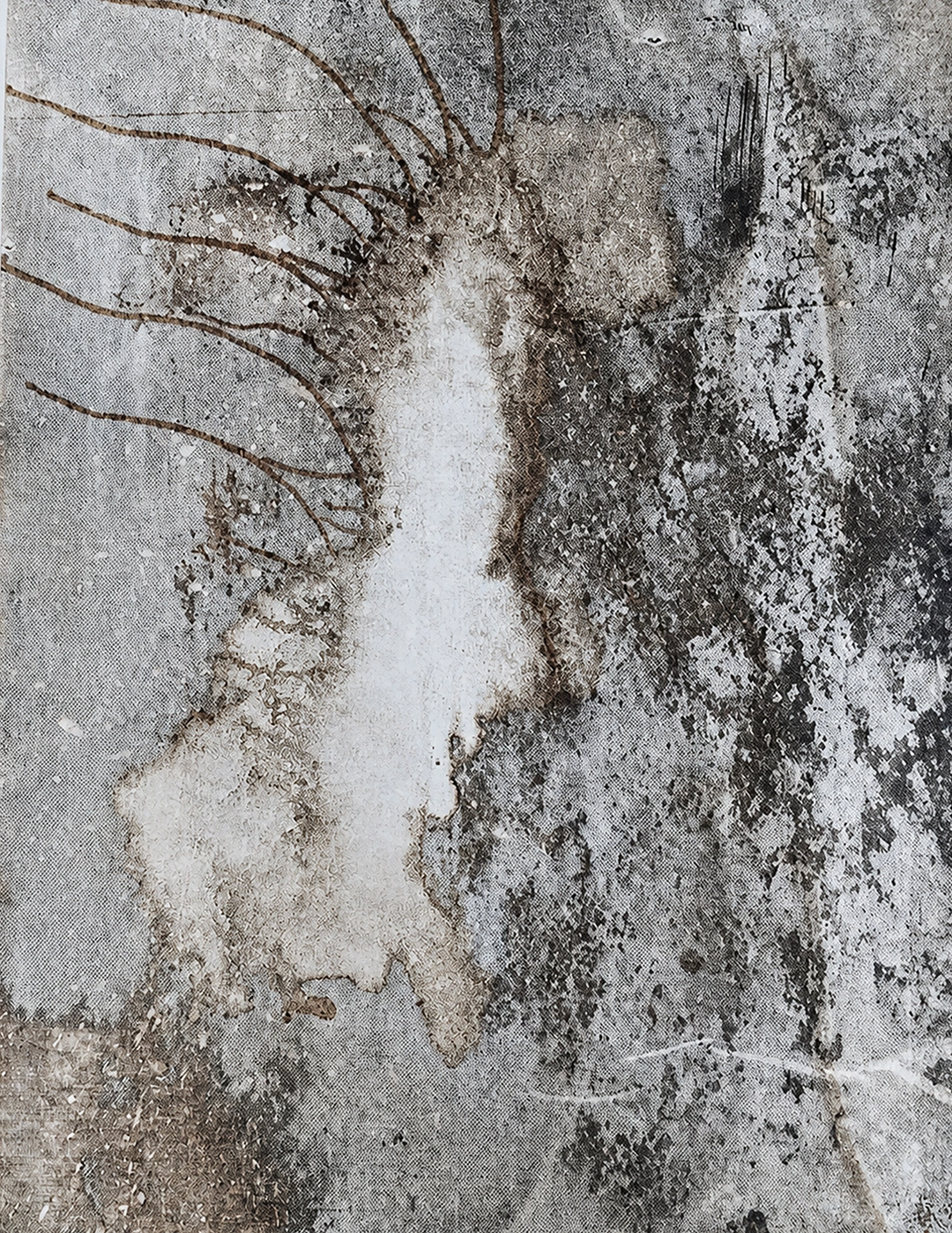
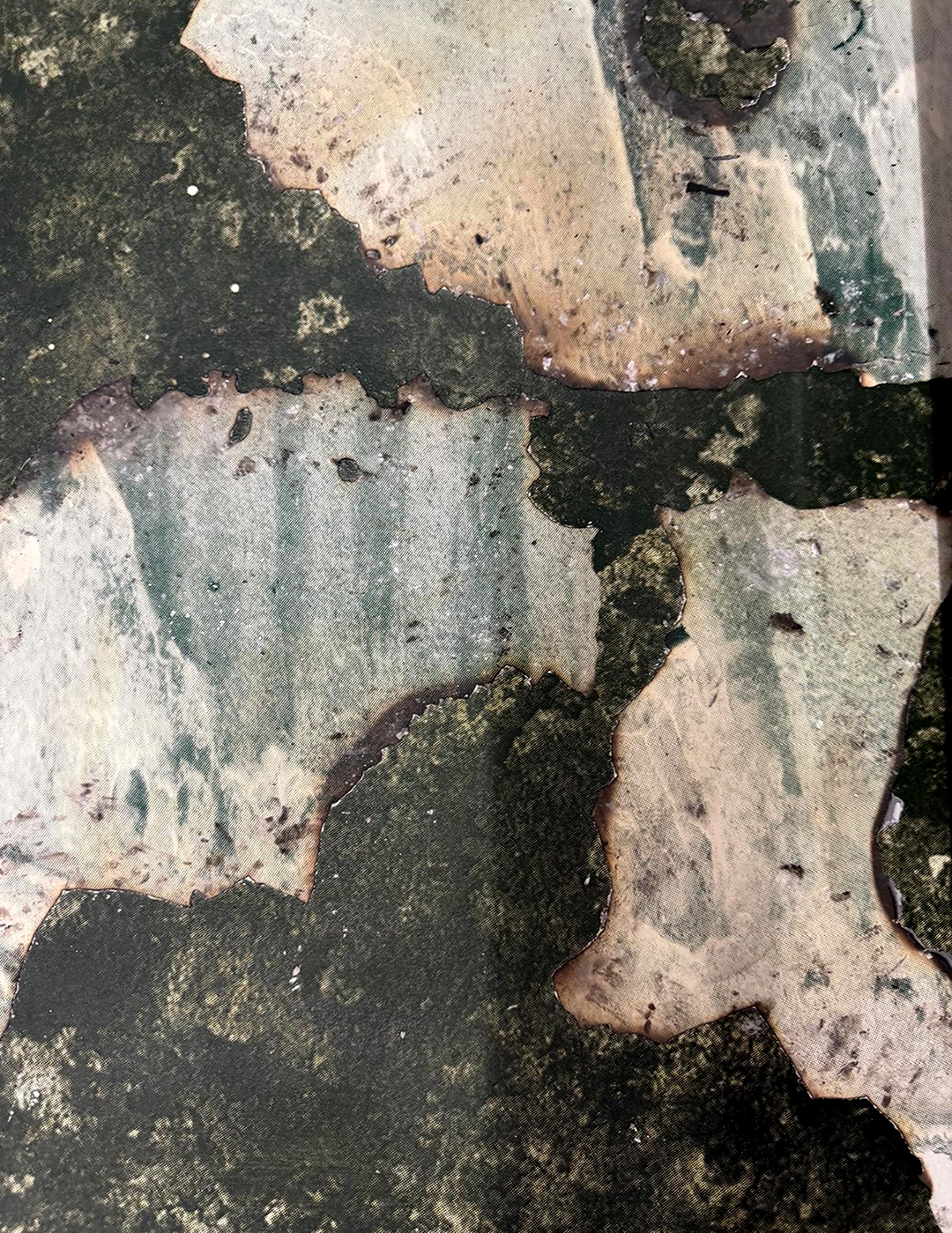
Kent's practice is grounded in direct engagement with matter. Bones, eroded surfaces, and residues of thermal and chemical processes operate as carriers of memory: layers of experience that settle into each object and turn it into a physical record of what has been lived. His work does not pursue purity of medium or flawless resolution; it holds onto transformation as evidence. Cracks, stains, fractures, and marks are not accidents to be concealed but the content of the work itself. In this sense, the work operates in the sustained tension between control and chance: the crack that appears in the kiln, far from being discarded, is reincorporated —repaired or left in its given state— and ultimately becomes a piece in its own right.

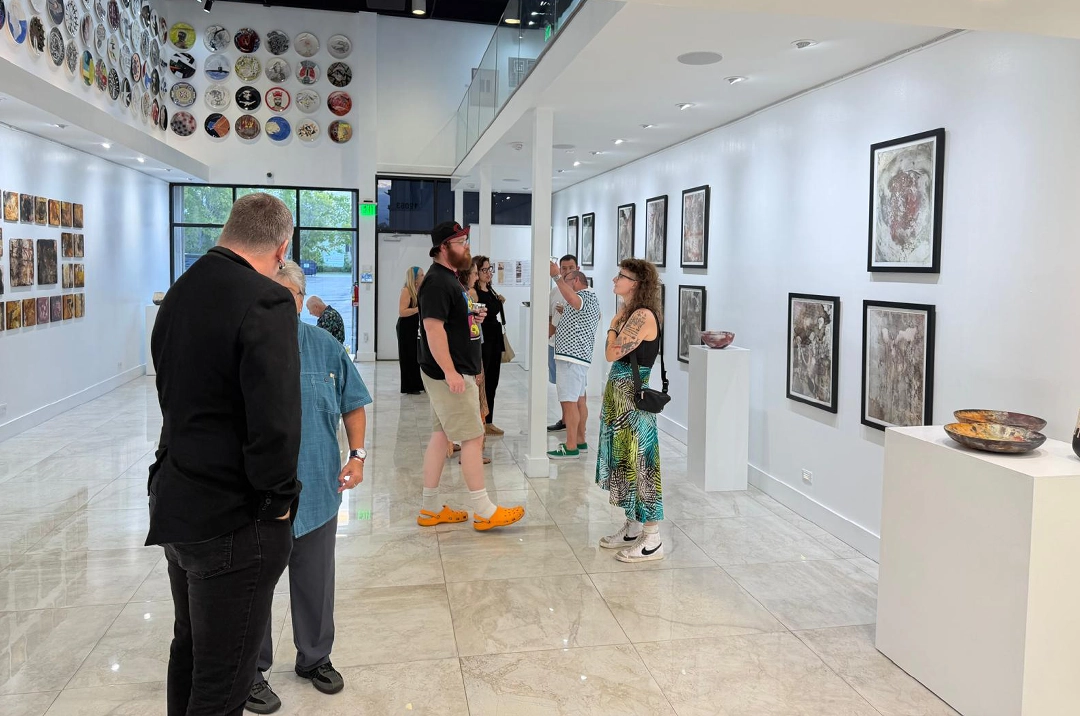
The title of the exhibition pinpoints its two axes. The stain as trace —of fire, of oxidation, of time on matter— and the relic, understood not in religious terms but as that which persists once a body, an affect, or a context has disappeared. Kent's fascination with bones, vertebrae, and the internal structures that outlast soft tissue finds here one of its most mature formulations: bone as a solid archive, as a three-dimensional photograph of what was once warm.
This poetics does not emerge from nowhere. It is shaped by the artist's experience in the contexts of gay activism and the AIDS crisis during the 1980s and 1990s, by the loss of friends, and, decisively, by the death of his mother, with whom he shared the practice of ceramics. What in his early work was explosive and reactive reorganized over time into a more tactile, more process-based body of work, more attentive to erosion and trace. Each piece retains a singular, irreducible condition, even when it approaches formats traditionally associated with repetition, such as printmaking.


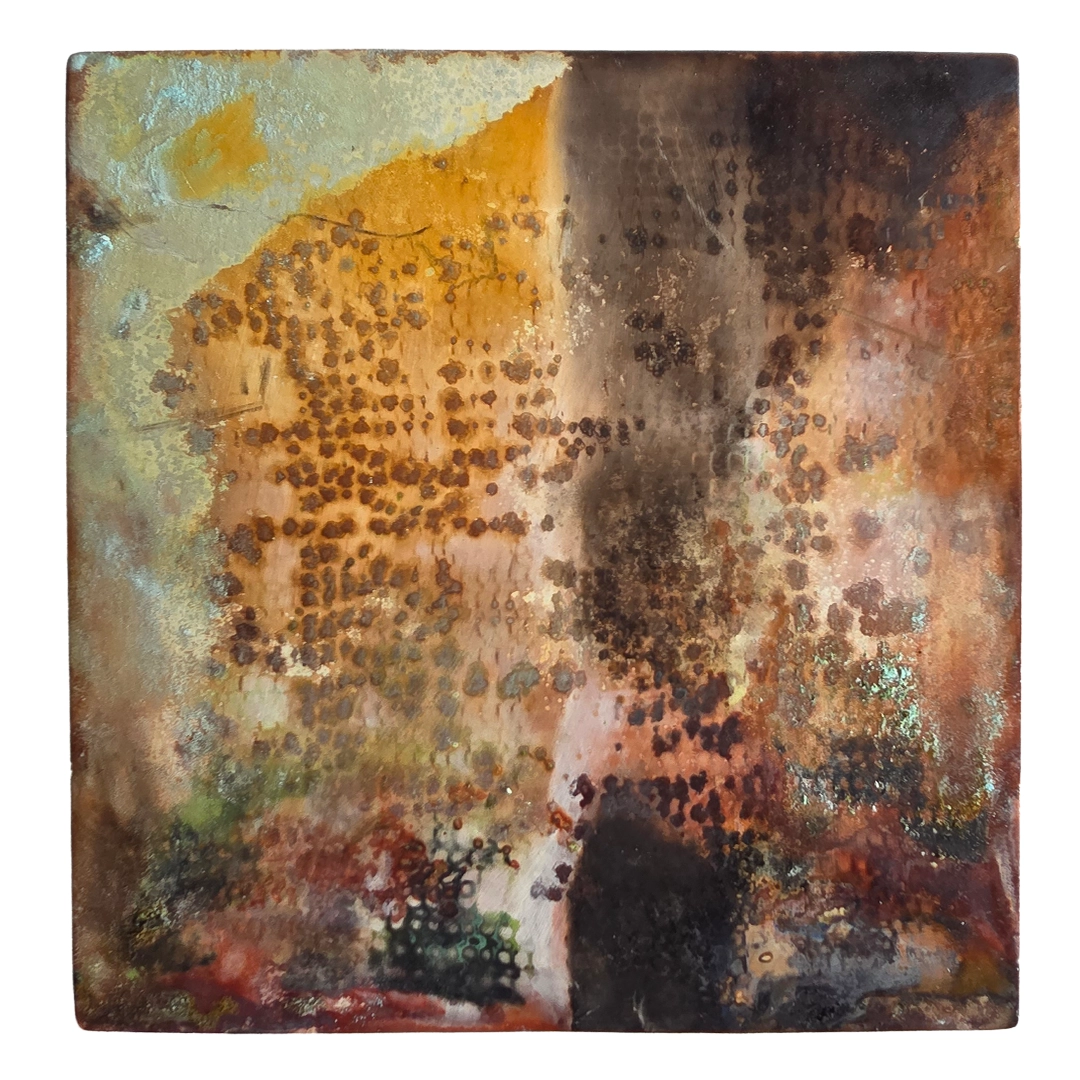
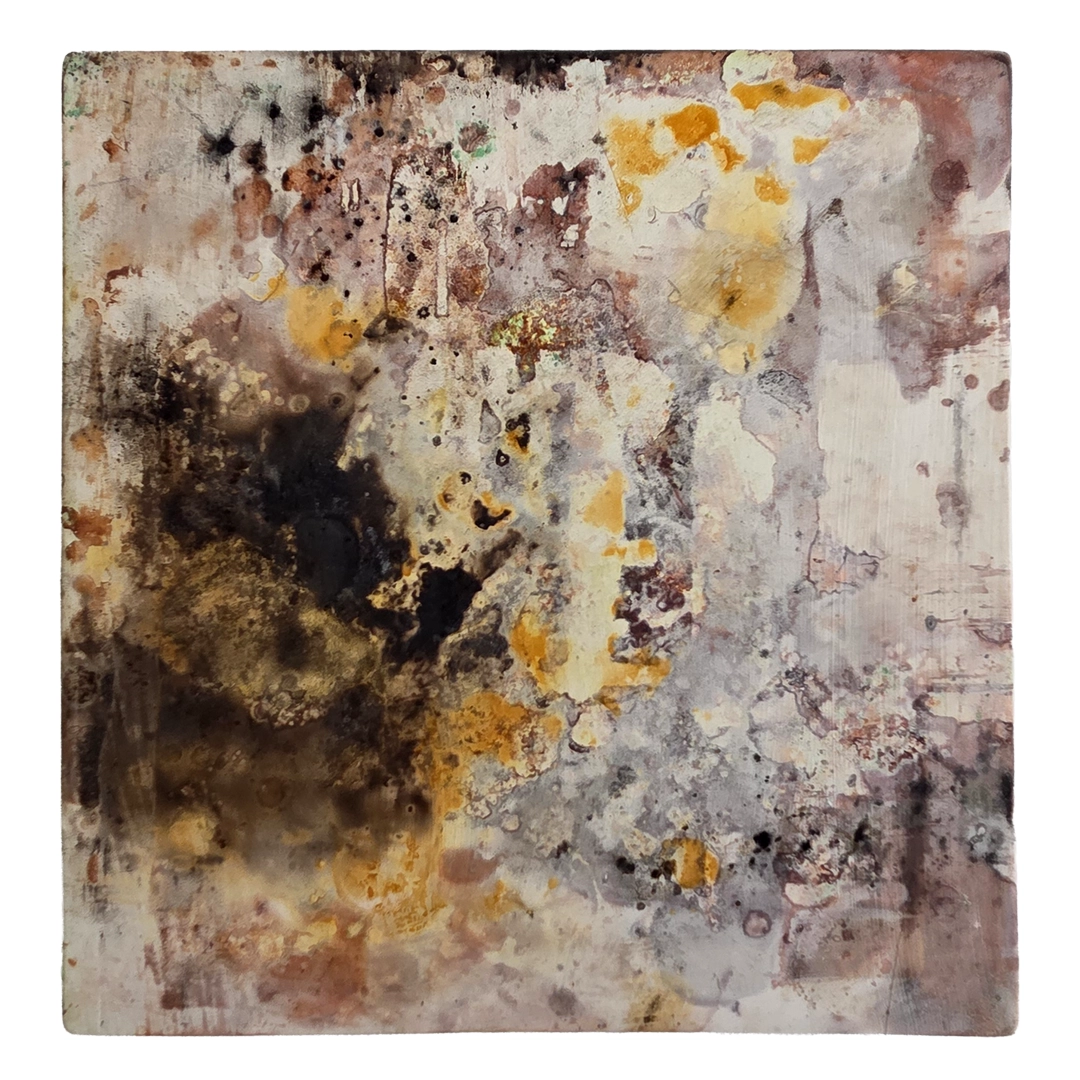

The title of the exhibition pinpoints its two axes. The stain as trace —of fire, of oxidation, of time on matter— and the relic, understood not in religious terms but as that which persists once a body, an affect, or a context has disappeared. Kent's fascination with bones, vertebrae, and the internal structures that outlast soft tissue finds here one of its most mature formulations: bone as a solid archive, as a three-dimensional photograph of what was once warm.
This poetics does not emerge from nowhere. It is shaped by the artist's experience in the contexts of gay activism and the AIDS crisis during the 1980s and 1990s, by the loss of friends, and, decisively, by the death of his mother, with whom he shared the practice of ceramics. What in his early work was explosive and reactive reorganized over time into a more tactile, more process-based body of work, more attentive to erosion and trace. Each piece retains a singular, irreducible condition, even when it approaches formats traditionally associated with repetition, such as printmaking.
Stain & Relics offered the public access to a practice of notable emotional density and procedural rigor, and reaffirmed MoCA Américas' commitment to work that expands the field of contemporary art through sustained engagement with matter, time, and lived experience.
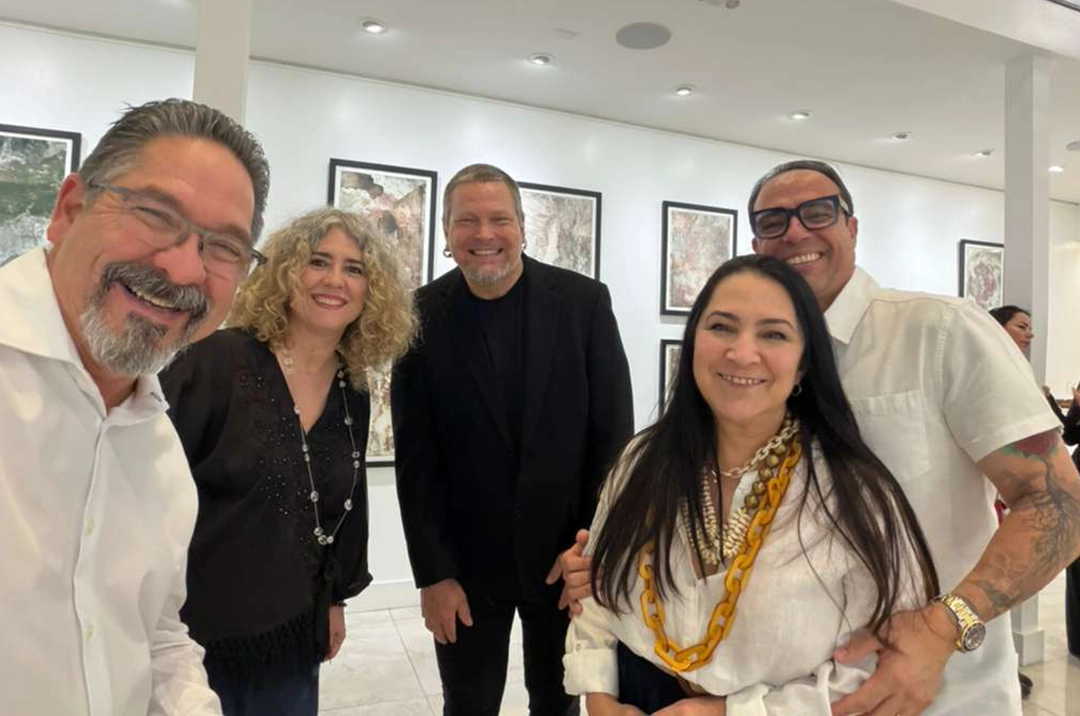
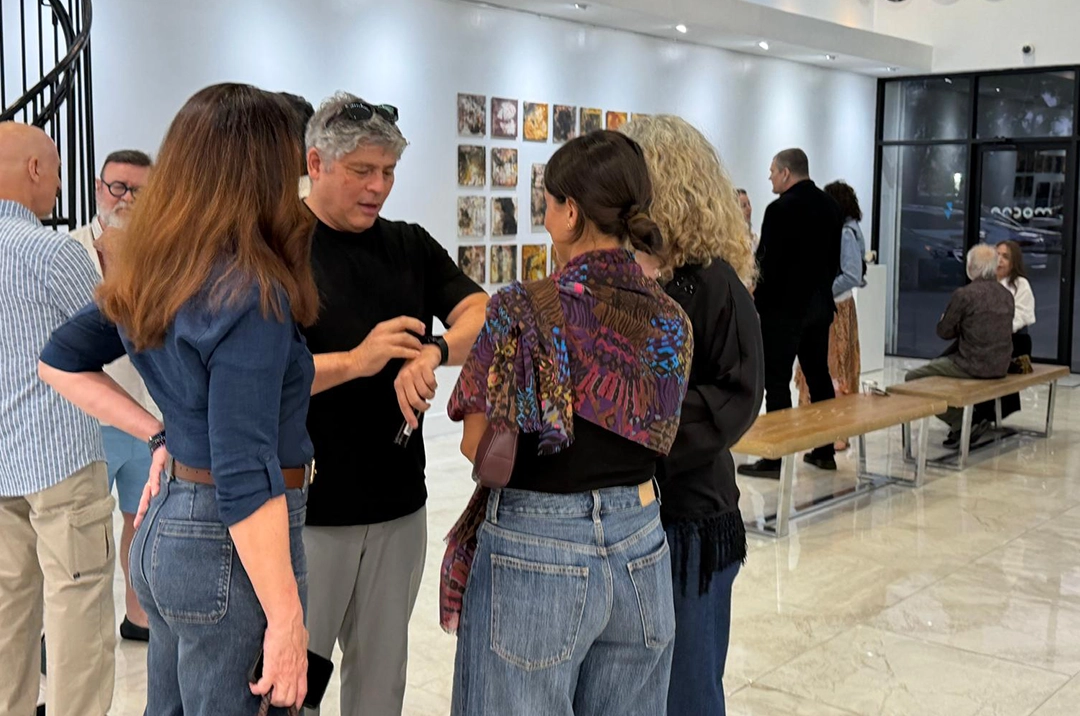
The exhibition was also inscribed within MoCA Américas' sustained effort to articulate interstate and international relations, building bridges between scenes that do not always engage one another with the fluidity they deserve. The opening drew a substantial representation of the Midwest community now based in Florida —artists, cultural workers, collectors, and general public— who responded notably to the call. A delegation from The Annex Gallery, sponsor of the exhibition, traveled from Cincinnati for the occasion; its presence underscored the collaborative nature of the project and the specific weight that the Ohio scene continues to hold in the national circulation of contemporary art. Trained at the Art Academy of Cincinnati and sustainedly connected to the local scene through DIY Printing, his studio and printmaking platform, Kent maintains a community-based practice that has had a lasting impact on the city's educational programs for years.


This exhibition is made possible thanks to the support of the Miami-Dade County Department of Cultural Affairs, the Cultural Affairs Council, the Mayor, the Miami-Dade County Board of County Commissioners and Rodriguez Collection


The Kendall Art Cultural Center (KACC), dedicated the past six years to the preservation and promotion of contemporary art and artists, and to the exchange of art and ideas throughout Miami and South Florida, as well as abroad. Through an energetic calendar of exhibitions, programs, and its collections, KACC provides an international platform for the work of established and emerging artists, advancing public appreciation and understanding of contemporary art.
READ MORE
The Rodríguez collection is a blueprint of Cuban art and its diaspora. Within the context of the new MoCA-Americas the collection becomes an invaluable visual source for Diaspora identity. It represents a different approach to art history to try to better understand where we come from to better know where we are heading.
READ MORE


