


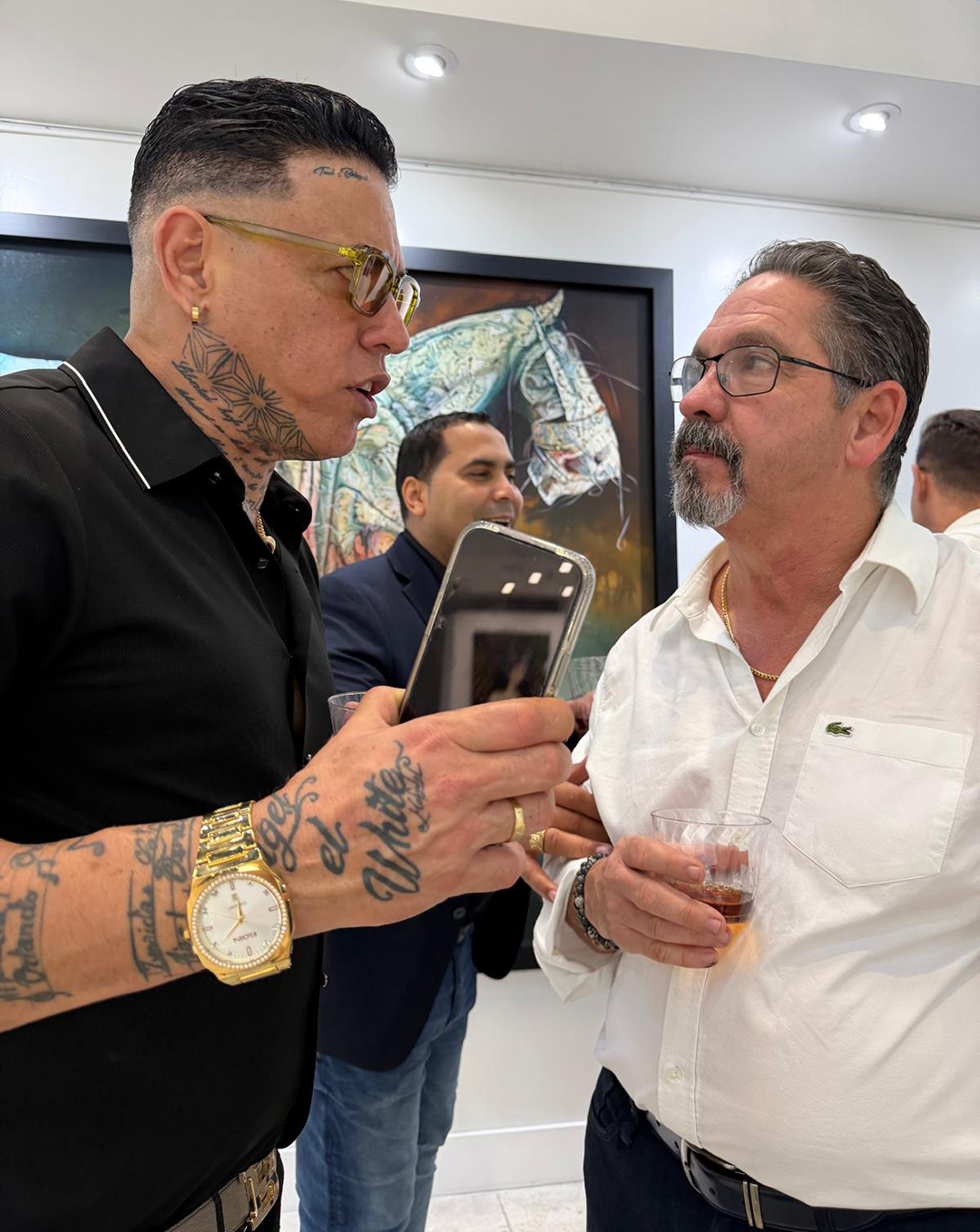
The Cuban musician, known for his connection to Cubanito 2002 and now active in Miami, encountered the work of Tony Rodríguez and Noel Dobarganes at the Museum of Contemporary Art of the Americas.
Miami, FL — The Museum of Contemporary Art of the Americas recently welcomed Cuban musician Ángel “El White” during a visit to Echoes of Humanity, the two-person exhibition by Tony Rodríguez and Noel Dobarganes currently on view in the museum’s main hall.
Known to audiences in Cuba and across the diaspora for his work with Cubanito 2002, Ángel “El White” belongs to a generation of musicians whose sound helped define an important moment in the development of Cuban urban music during the early years of the twenty-first century. Alongside Haniel González Martínez, known as DJ Flipper, and Javier Durán Webb, known as El Doctor, he formed part of a group whose songs reached a wide youth audience on the island and remained present in the popular memory of a generation.
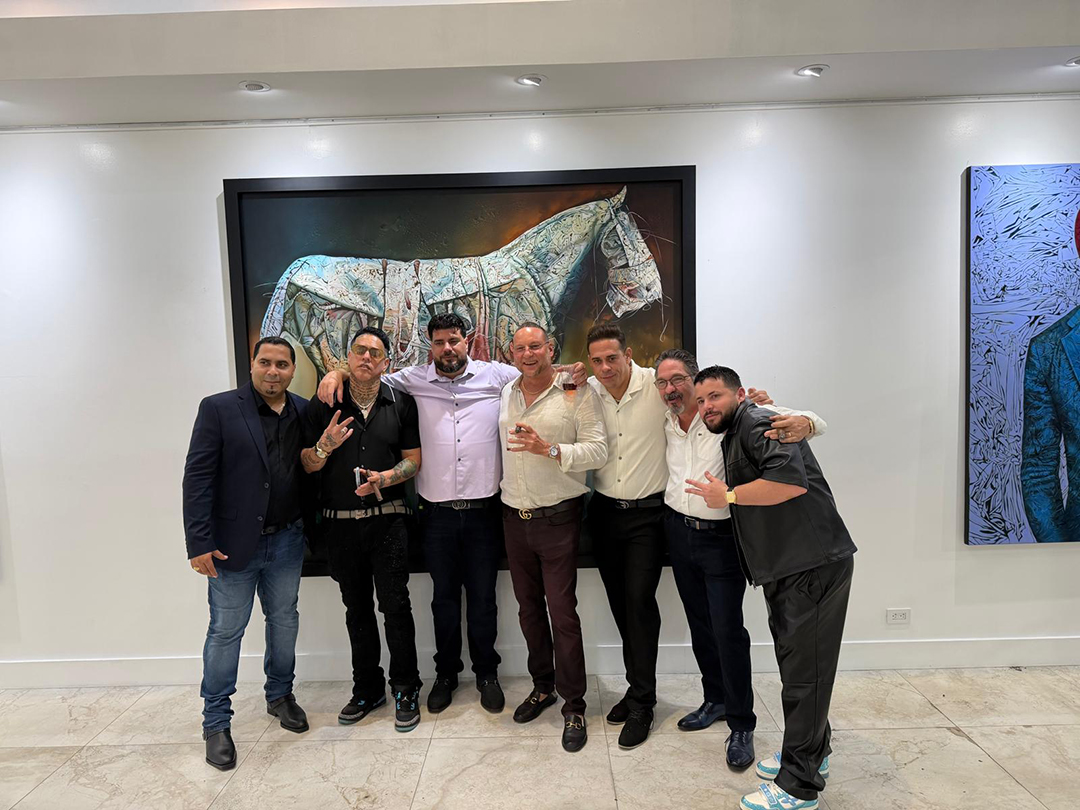
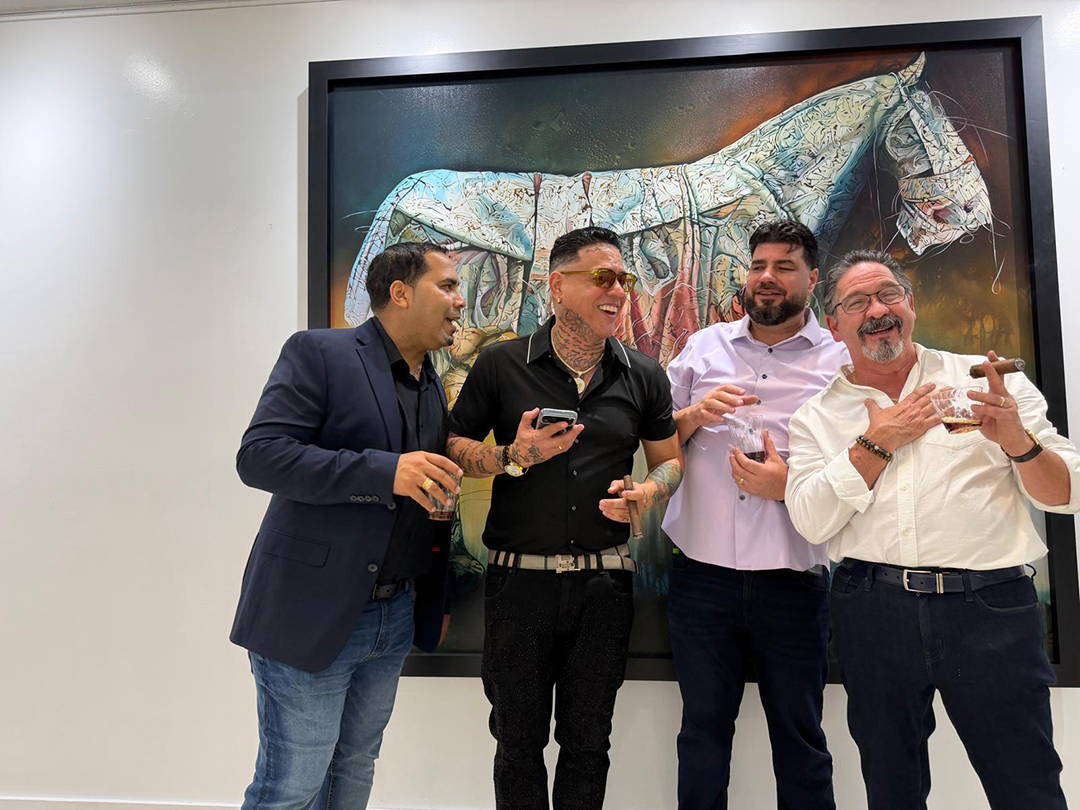
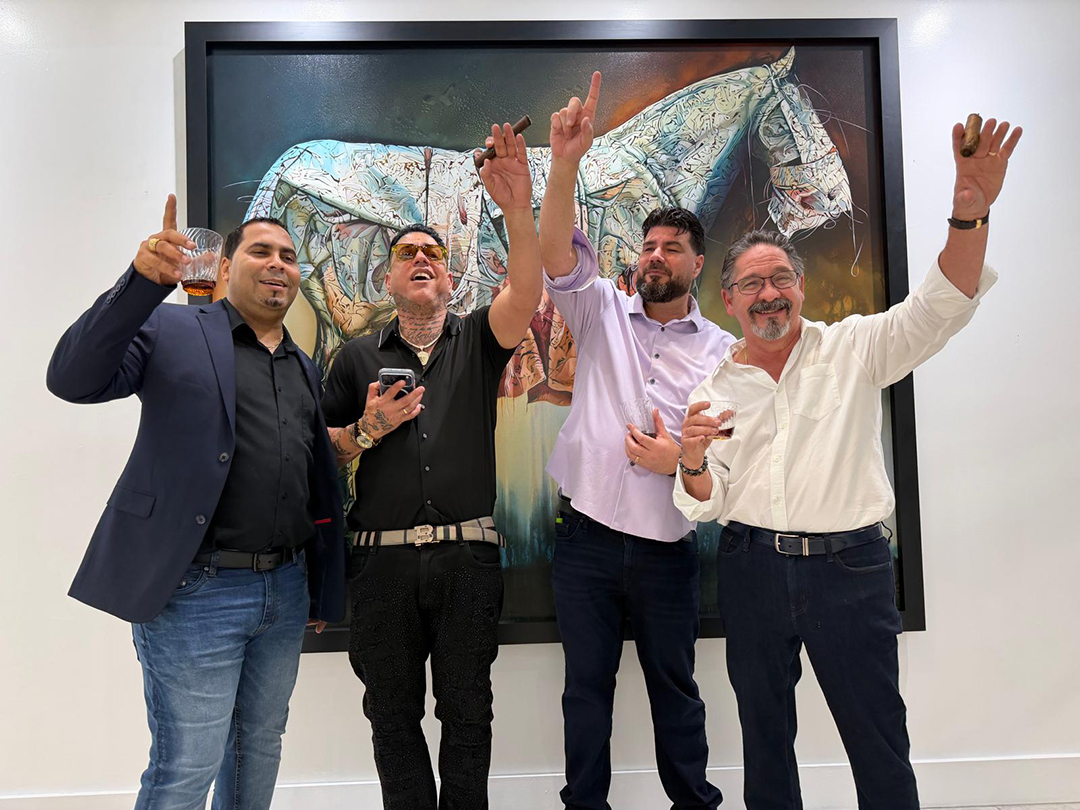

Today, from Miami, El White continues to develop his musical path through solo work and collaborations. His visit to MoCAA brought a voice from Cuban popular music into contact with an exhibition shaped by other languages of memory, displacement, transformation, and human persistence.
On view from June 26 through July 17, Echoes of Humanity brings together, for the first time, the work of Juan Antonio Rodríguez Olivares—known as Tony Rodríguez—and Noel Dobarganes. Though both artists were born in Cuba and now work within the larger cultural geography of Miami, their paintings arrive at the human figure from distinct positions.
Rodríguez’s ongoing series The Weight of Wings considers the body within systems of technological acceleration, adaptation, and uncertainty. Its mechanical wings, made of gears, metal feathers, and fragmented structures, appear as burdens carried by figures who move through unstable urban and emotional landscapes. Dobarganes, meanwhile, approaches the human through surfaces thick with time: color, texture, ornament, and gesture accumulate until painting itself becomes a field of memory, tension, and sensory density.
The encounter with Ángel “El White” extended the exhibition’s resonance beyond the visual arts. His trajectory belongs to a musical culture equally marked by movement between Cuba and Miami, by the persistence of popular memory, and by the ways in which artistic languages change when they enter new social and geographic contexts.

Such crossings are central to MoCAA’s broader cultural mission. Through its ongoing Art & Music program, the museum creates opportunities for visual artists and musicians to appear in dialogue, allowing audiences to experience the distinct yet interconnected forms through which contemporary culture is made and shared. The opening of Echoes of Humanity itself included a special performance by guitarist and composer Ricardo González, underscoring the museum’s commitment to making sound part of the experience of looking.
Ángel “El White”’s visit affirmed that connection once more. Painting and music may work through different materials, tempos, and publics, yet both preserve what communities carry with them: voices, images, rhythms, losses, aspirations, and forms of belonging that continue to travel long after the place of origin has been left behind.
Echoes of Humanity remains on view at the Museum of Contemporary Art of the Americas through July 17.
