MoCA-Américas inaugurates a new phase of collaboration with Pepe Herrera’s screenprinting workshop in Madrid, focused on the production of graphic editions linked to diaspora artists working with the institution, as well as the reproduction of original works held in the museum’s collection and the Rodriguez Collection. The initiative forms part of a broader editorial strategy aimed at expanding the circulation of these practices while maintaining rigorous technical standards and direct oversight of the printing process.
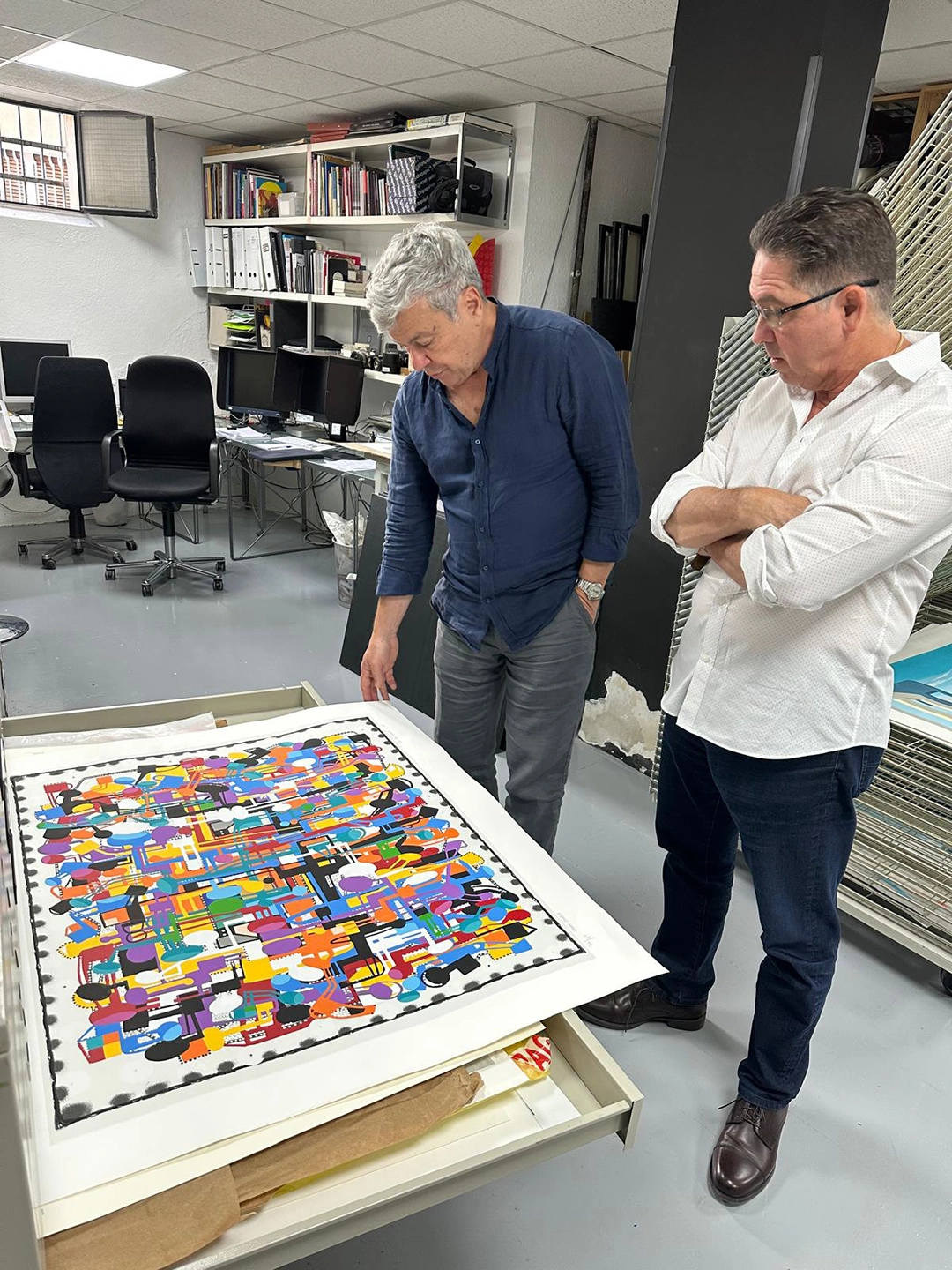
Within this framework, Leonardo Rodríguez, Founder and Director of MoCA-Américas, and Ivonne Ferrer, Deputy Director of the institution and Director of the Fine Arts Ceramic Center, conducted a working visit to Herrera’s workshop, located in Madrid’s Tetuán district. The meeting allowed for an in situ assessment of the workshop’s technical capacities and established the groundwork for a sustained collaboration centered on the production of high-quality editioned works.
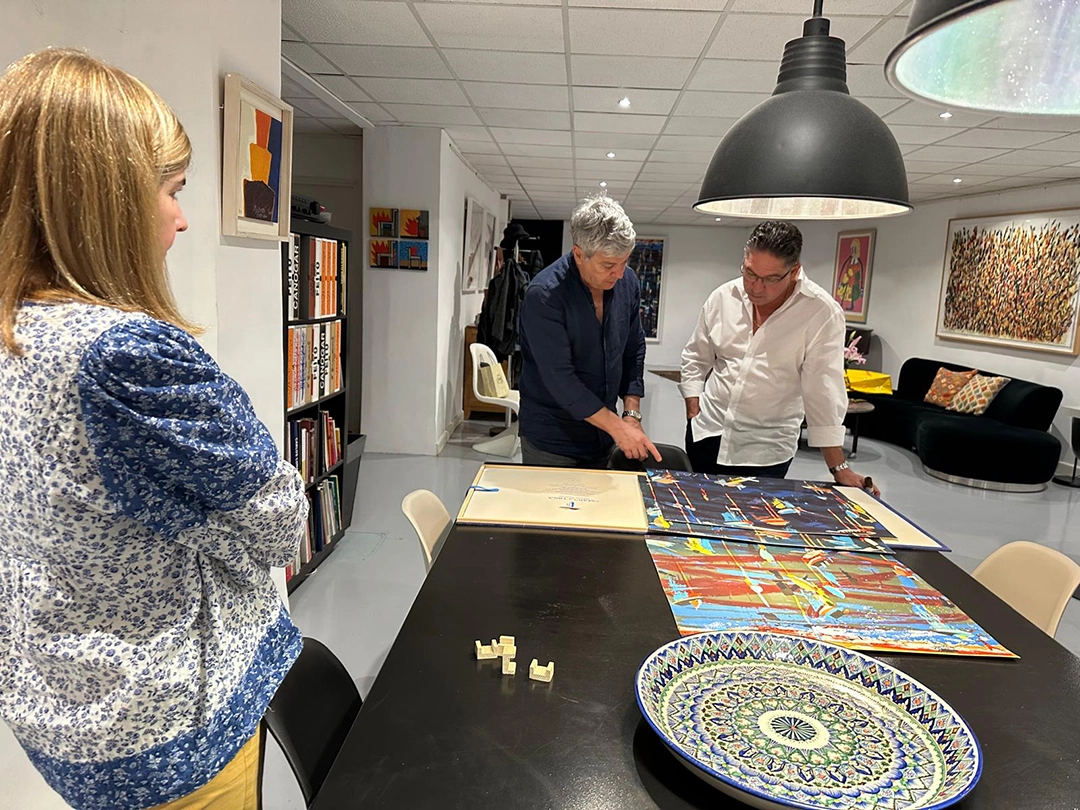
Founded in 2002, the Pepe Herrera Taller Gráfico has established itself as a leading space in the field of artistic screenprinting in Madrid. Conceived as an open working environment, the workshop has historically functioned as a meeting point for artists from diverse backgrounds, enabling direct participation in both creative and printing processes. Its precise and contained structure operates closer to a laboratory than to a conventional studio, reinforcing a work ethic grounded in technical control and meticulous attention to detail.
Pepe Herrera’s practice (Santa Clara, 1958) moves between painting and printmaking. Trained at the Instituto Superior de Arte in Havana, his engagement with screenprinting began in the 1980s within the context of the Taller René Portocarrero, a key institution in the development of contemporary Cuban printmaking. There, under the influence of figures such as Aldo Menéndez and in dialogue with a generation of active artists, Herrera developed an approach that would later evolve into a highly specialized technical practice.
Following his relocation to Spain in 2000, he founded his own workshop in Madrid, from which he has sustained a consistent practice of editing and printing original graphic works. Over more than two decades, the workshop has collaborated with internationally recognized artists, including Alfonso Albacete, Waldo Balart, André Butzer, Antón Patiño, Aimee Joaristi, Jaime Monge, and Ivonne Ferrer, among others, forming a production archive that brings together multiple generations and geographic contexts.
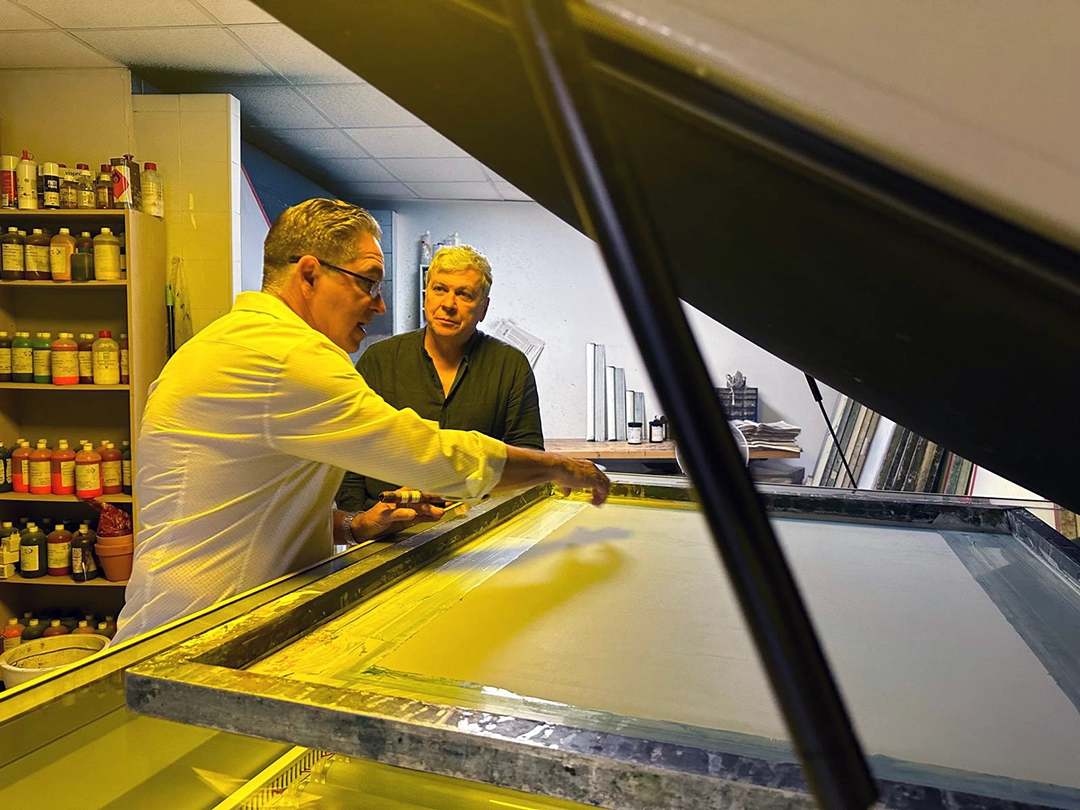
The visit by MoCA Américas extends beyond institutional recognition and marks the beginning of a specific line of work centered on printmaking as a vehicle for curatorial expansion. The capacity to produce controlled editions will not only broaden the reach of the works but also generate new modes of engagement between audiences, the collection, and the artists.
Through this collaboration, MoCA-Américas reinforces its commitment to the research and circulation of diaspora art, incorporating screenprinting as a strategic axis within its editorial and exhibition program. The Pepe Herrera workshop thus becomes a key technical partner in a process that seeks to translate the singularity of each work into reproducible formats without compromising its material density or conceptual integrity.