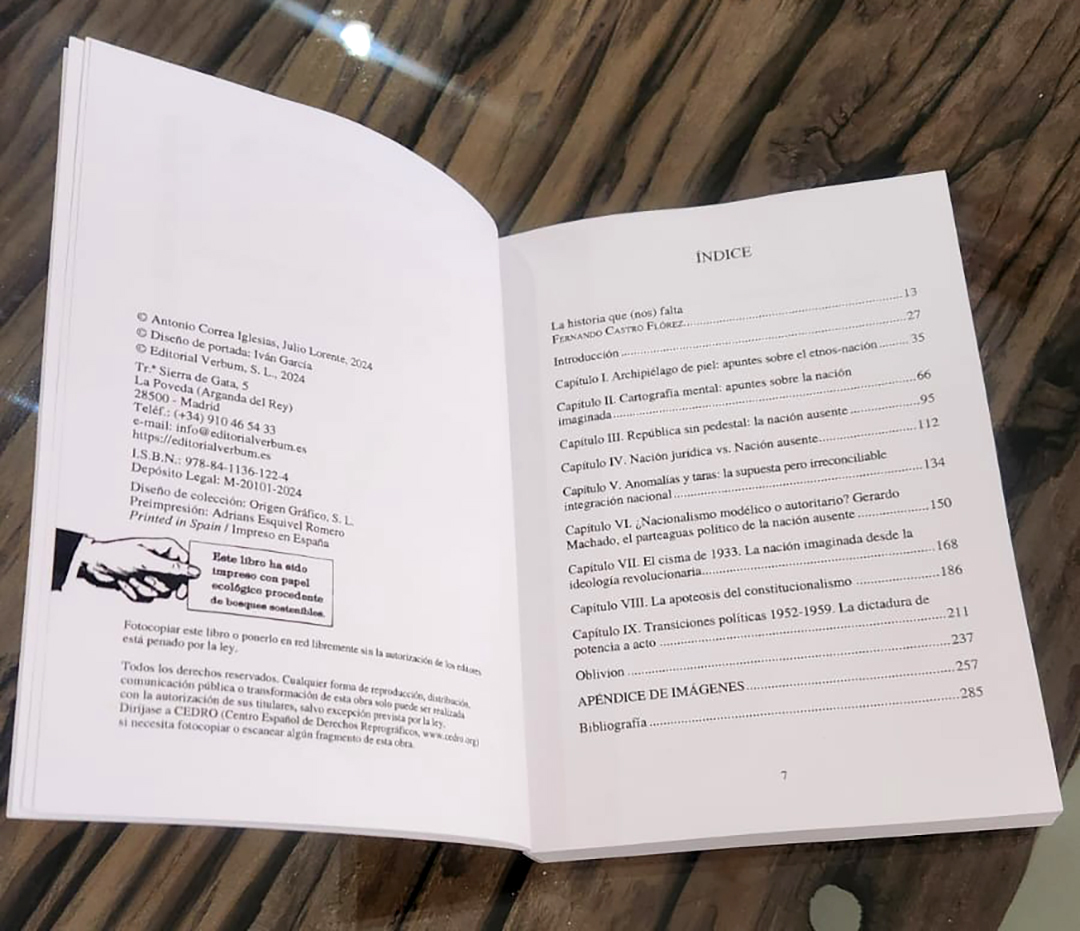
The Museum of Contemporary Art of the Americas (MoCAA) welcomes the recent publication of Cuba: History and Perspectives of an Eschatology (Verbum, Madrid, 2024), a book that makes a substantial contribution to contemporary critical thought on Cuba’s historical, political, and cultural trajectory. The volume is authored by one of the museum’s most committed and longstanding collaborators, whose critical voice has accompanied and enriched numerous curatorial, editorial, and exhibition projects over the years.
Far from constituting a conventional work of historiography, Cuba: History and Perspectives of an Eschatology positions itself within the realm of the ontology of history. The book probes the conceptual forces that operate beneath historical narration, examining how the pursuit of national identity in Cuba became progressively channeled into ideological frameworks that ultimately served a political teleology embodied in a totalitarian state. History here is not treated as a neutral succession of events, but as a constructed field shaped by intellectual fixations, ideological reductions, and the subordination of lived experience to predetermined ideas.
Central to the author’s argument is the enduring absence of a plural and sustained intellectual tradition in Cuba—one capable of generating organized systems of thought over time and of conceiving the historical subject as both organic and transcendent. This deficit, the book argues, fostered a linear and overdetermined understanding of historical processes, a form of insular positivism that magnified certain moments while suppressing others. Within this framework, the so-called “revolutionary event” became the privileged site for a false ontological legitimation of the nation.
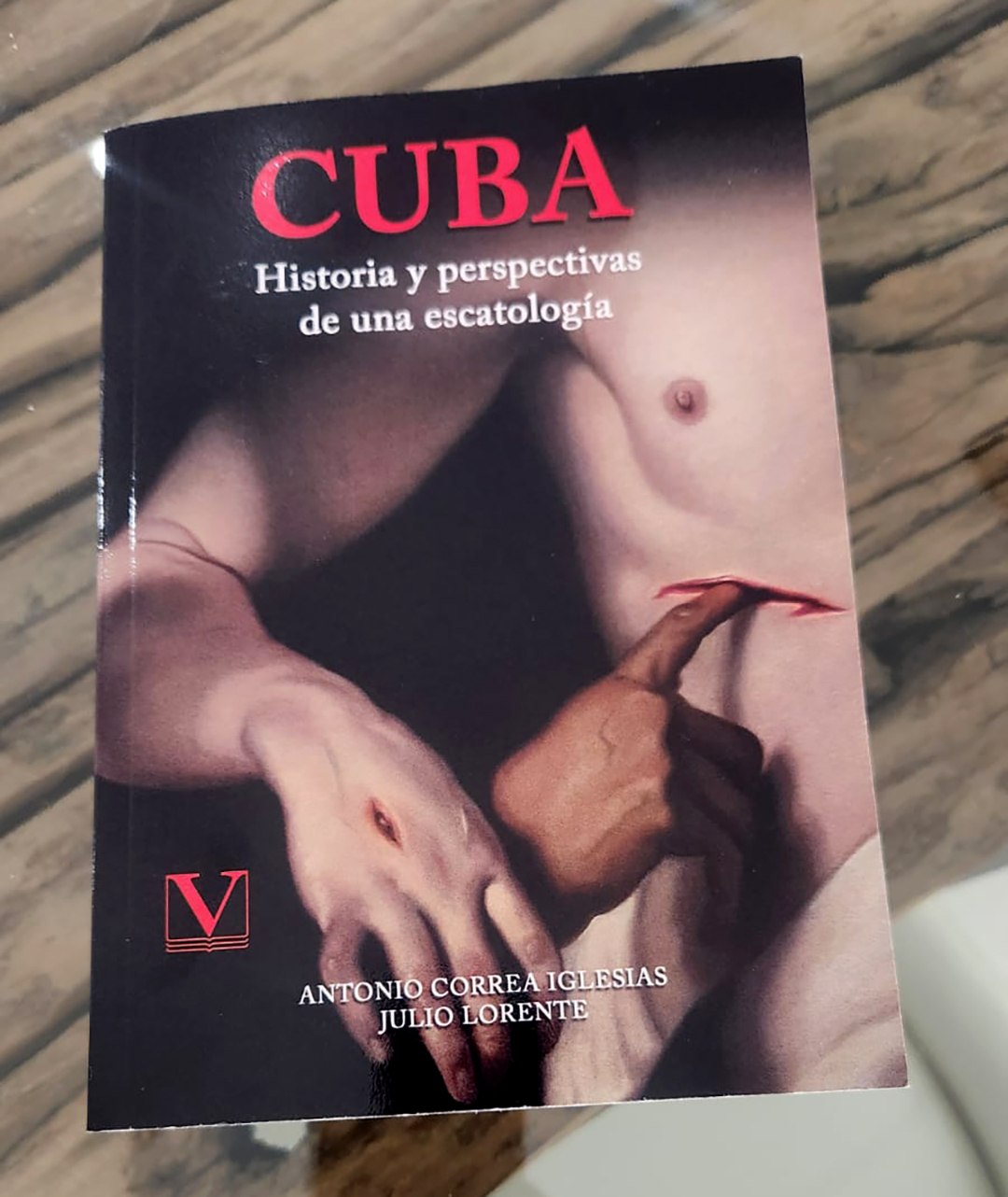
Engaging critically with Hegel’s notion of the “cunning of reason,” the author raises a fundamental question: what occurs when there is no sedimented intellectual tradition, no genuine plurality of thought? The answer, explored throughout the book, is the fixation of certain ideas as inevitable premises—an intellectual condition that gives rise to a closed, perimetral, and ultimately totalitarian culture. The pages of Cuba: History and Perspectives of an Eschatology offer a rigorous and unsettling examination of these dynamics.
For MoCAA, the publication of this book holds particular significance not only because of its conceptual depth, but also because of the author’s sustained engagement with the museum’s intellectual life. His critical contributions—through catalog essays, book presentations, and curatorial texts—have played a key role in articulating reflective and uncompromising perspectives on art, history, and culture in the Americas, with a particular focus on the Cuban context.
With this publication, MoCAA reaffirms its commitment to critical thought and to ongoing collaboration with the intellectual voices of its community. The museum understands contemporary art as an expanded field of dialogue, where artistic practice, theoretical reflection, and cultural critique intersect. In this sense, Cuba: History and Perspectives of an Eschatology exemplifies the kind of rigorous, questioning, and intellectually honest work that MoCAA considers essential to its mission.
About the Author
A critic and essayist, the author has maintained a close and continuous relationship with the Museum of Contemporary Art of the Americas. He has actively contributed to curatorial projects, authored texts for exhibition catalogs and museum publications, and presented several books within the museum’s programs, establishing himself as a thoughtful and engaged critical voice within the institution’s cultural ecosystem.