


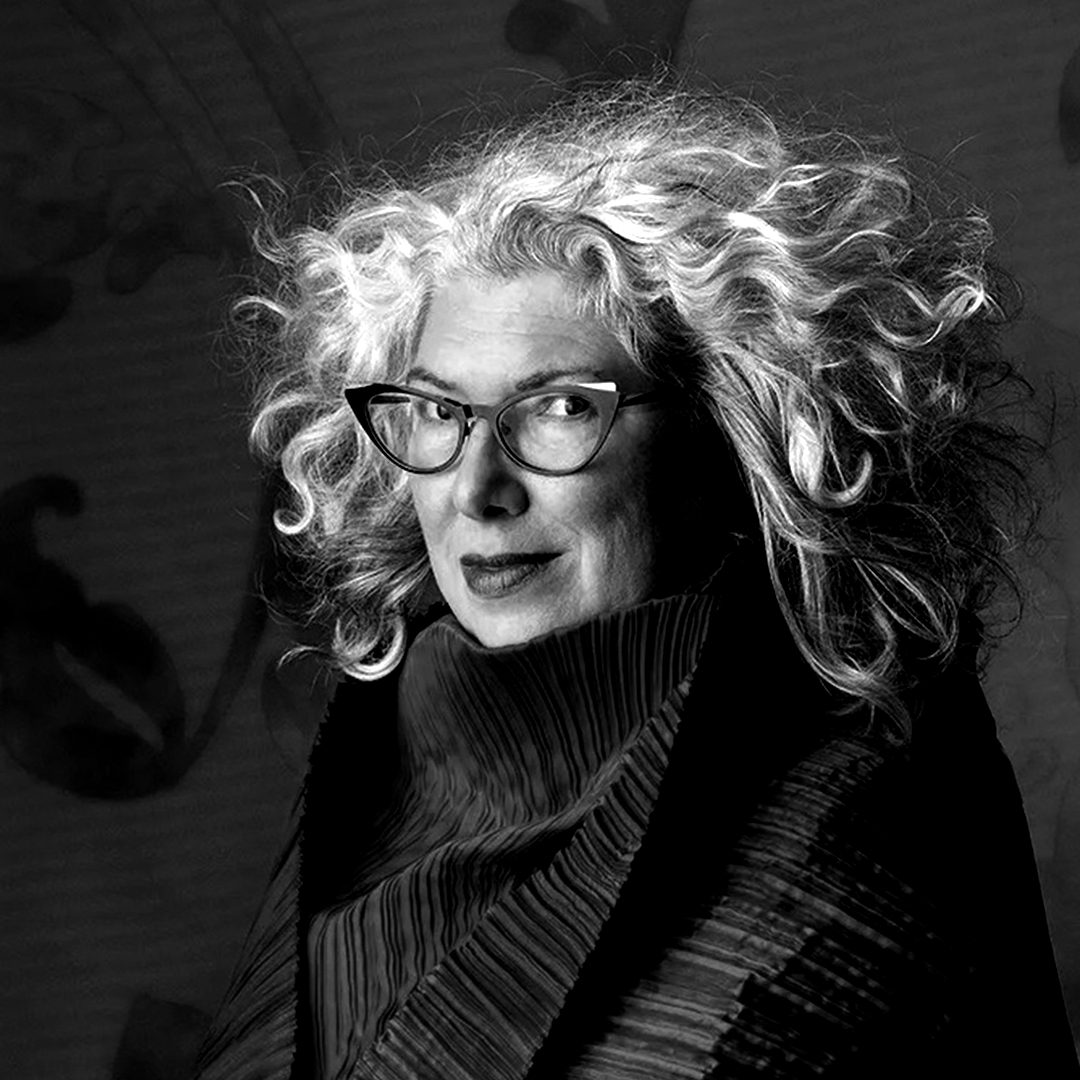
The work of Tina Gutiérrez—this defines the tone of her entire practice—emerges from personal experience and situates itself within the terrain of identity. Her series América, for instance, is constructed from that intermediate condition that runs through both her artistic and lived experience, marked by a plural cultural framework that resists resolution within a single narrative. She incorporates the resulting tension as a constitutive structure, turning it into the central axis of her visual inquiry.
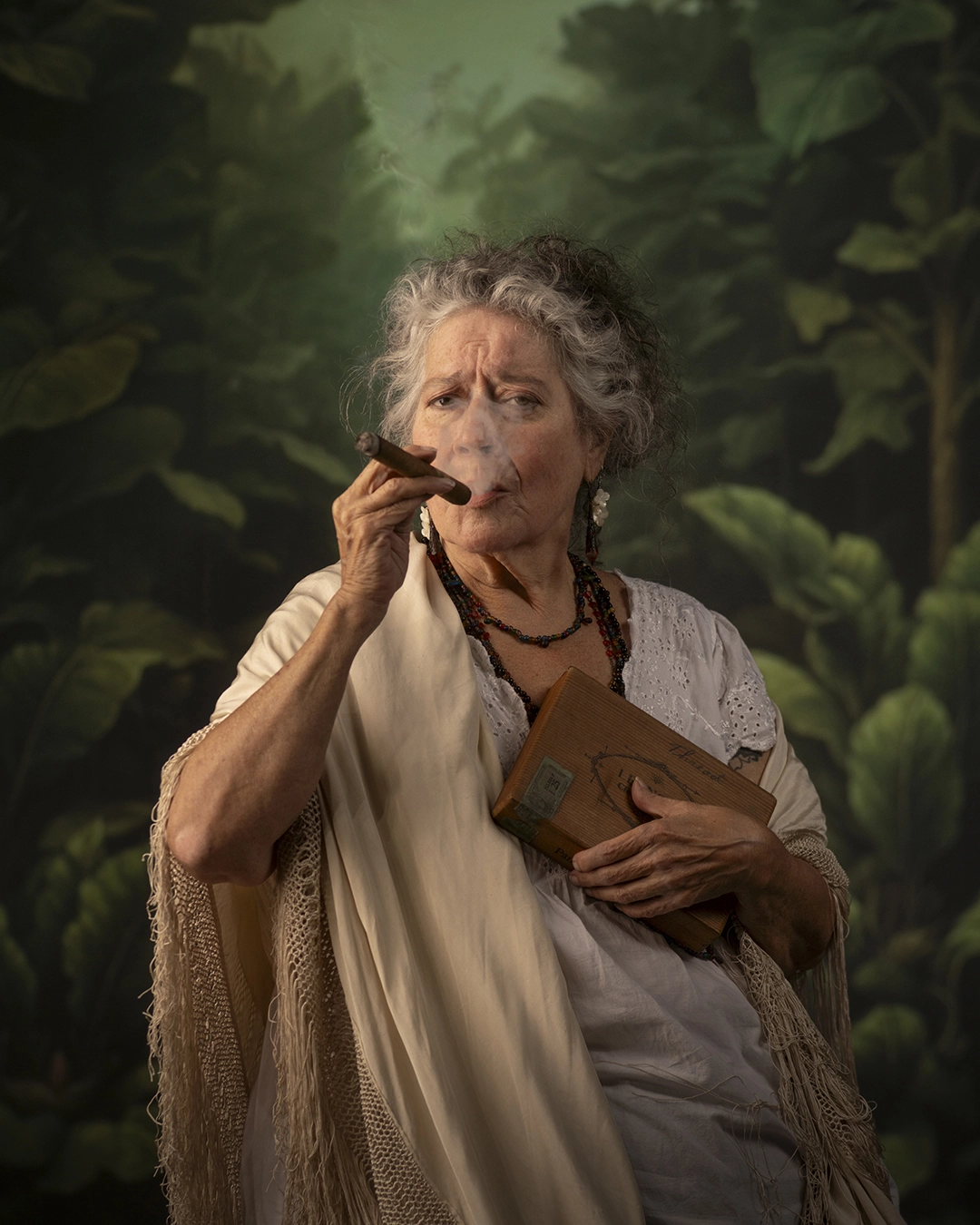
Portraiture is her primary tool. Her images reveal a precise awareness of Western tradition, visible in the organization of the figure, in the relationship between subject and background, and in the use of costume as a device of symbolic construction. References to Frida Kahlo or Diego Velázquez are not merely cited but embedded within the language of the work itself. Each photograph inscribes itself within that lineage and rearticulates it from a present shaped by ongoing debates around identity, representation, and belonging.
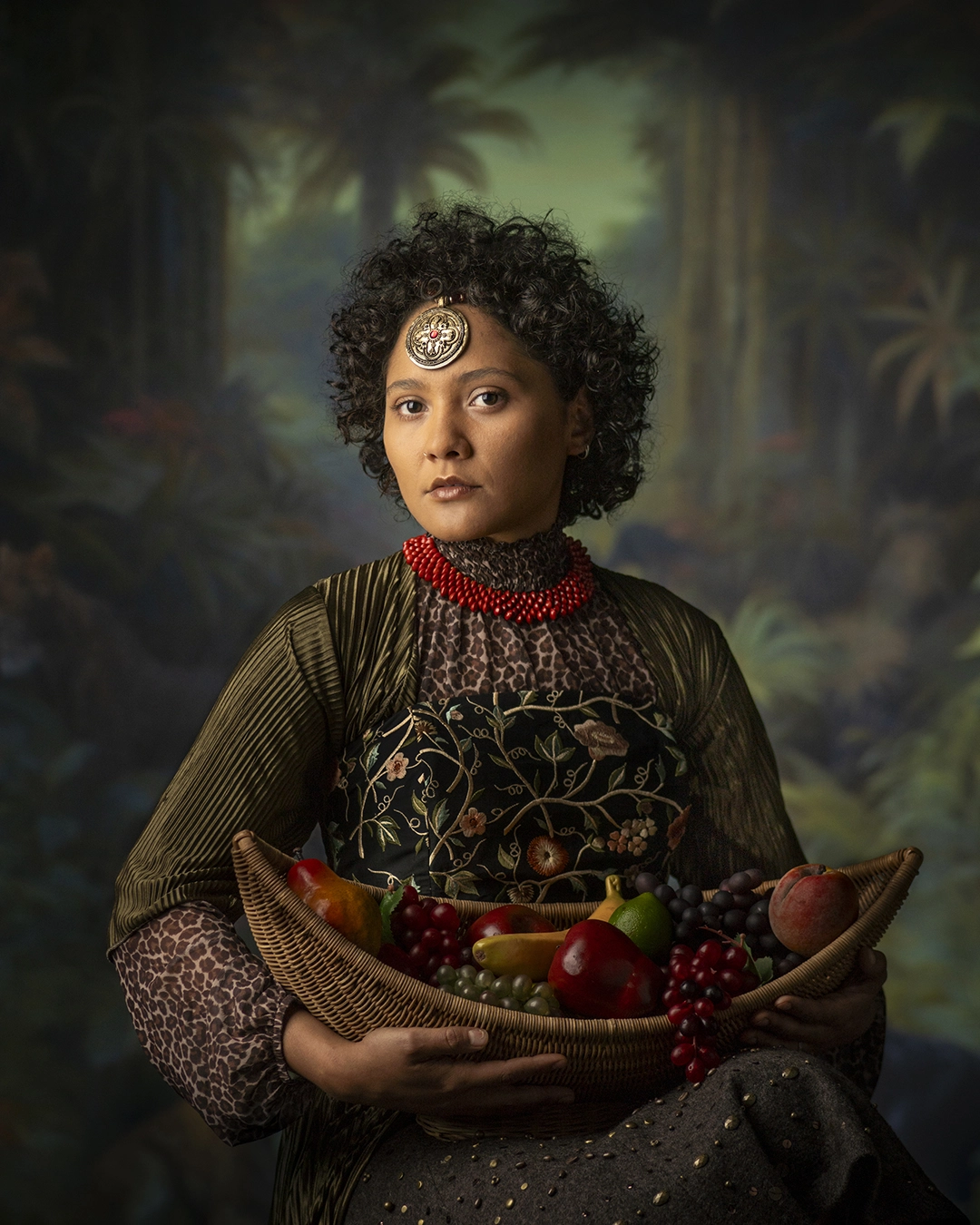
Her process operates across multiple levels of construction. Gutiérrez works with garments assembled from found clothing, with scenographies built through projection, and with backgrounds generated through artificial intelligence. This convergence of resources produces images that position their figures within a displaced temporality, where the historical and the contemporary coexist on a single surface. The scene thus acquires an ambiguous quality that expands the narrative without fixing it within a single context.
At the core of the series are women. Their stories form an integral part of the project and are incorporated into the process through interviews conducted before, during, or after each session. Experiences of migration, loss, family reconstruction, and generational transmission emerge throughout. The artist organizes these narratives within a visual framework that situates them in a register of dignity and complexity, distancing them from the stereotypes that have historically shaped representations of Latin identity within media and cultural discourse.
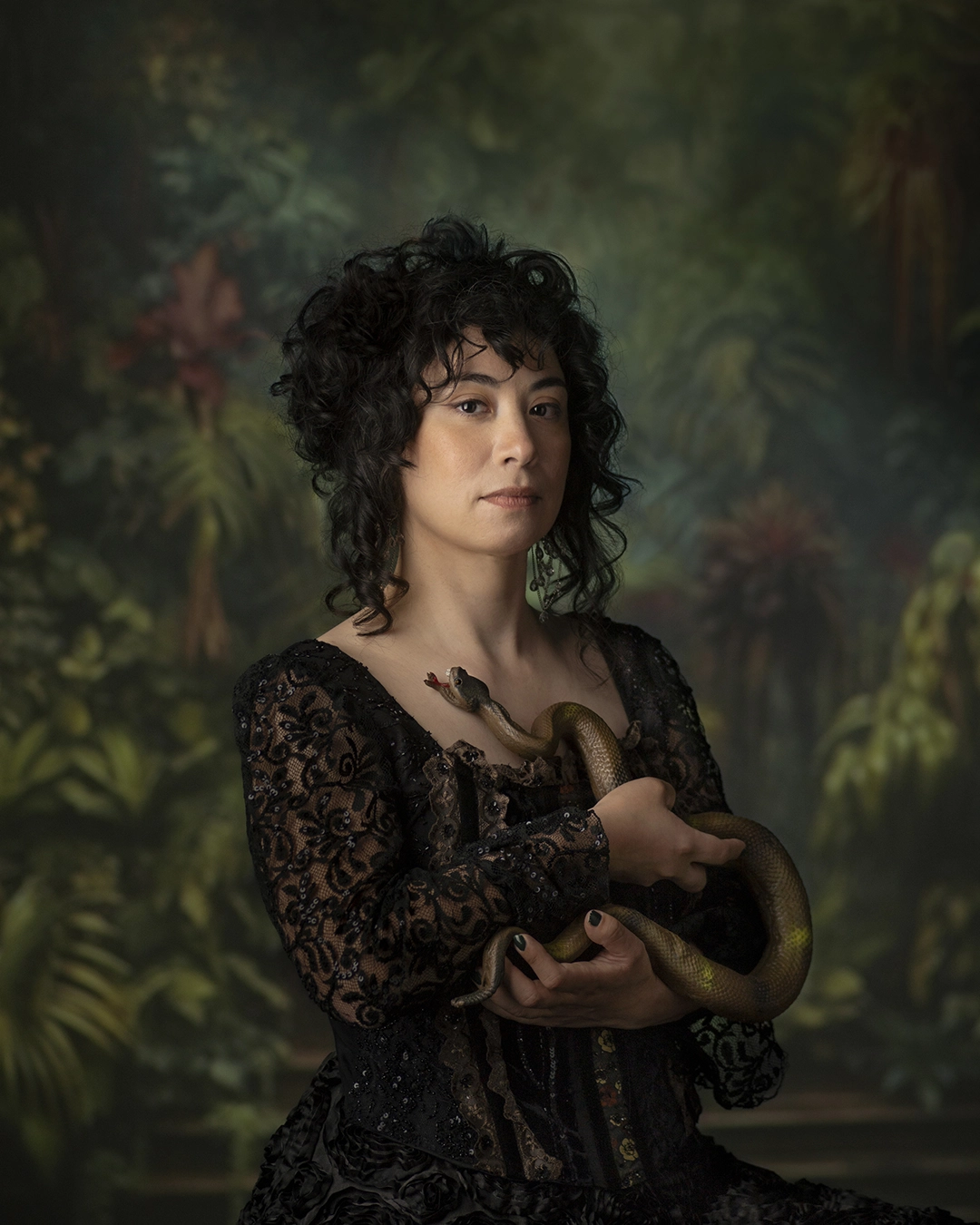
The natural elements accompanying the figures introduce another layer of meaning. Animals, plants, and symbolic objects reinforce a relationship with notions of origin, care, and transformation. These elements do not function as ornament but as part of a visual system that expands the semantic field of each image. The result is a body of portraits that operate as open scenes, where each component contributes to the production of meaning.
The incorporation of artificial intelligence in the backgrounds introduces a contemporary dimension that remains in dialogue with the other components of the project. This decision does not arise from a technological impulse in itself, but from the need to generate visual spaces capable of holding multiple temporalities. The images unfold within a terrain where the real and the imagined are intertwined, creating an atmosphere that points toward a form of expanded realism.
América thus emerges as a sustained inquiry into the representation of Latina women within the United States. The series proposes a shift in how these identities have been seen and narrated. Through direct collaboration with its participants and through a carefully constructed visual language, the work opens a space in which these stories gain visibility on their own terms.
In this trajectory, the work of Tina Gutiérrez acquires a dimension that extends beyond the strictly artistic sphere. It situates itself at a point where aesthetic practice intersects with processes of recognition, memory, and cultural affirmation. The images do not merely register presence; they construct a framework through which that presence can be understood with greater breadth and depth.
Over the past years, Gutiérrez’s trajectory has demonstrated a rare consistency between thematic inquiry, sustained production, and institutional presence. Her repeated participation in programs such as FotoFocus, alongside solo and group exhibitions at institutions including the Contemporary Arts Center Cincinnati, the Museum of Contemporary Art Cleveland, and MoCA Américas, situates her work within an active and demanding circuit. These are accompanied by recognitions such as the ADC Photographer of the Year award and a number of grants that have supported key projects in her recent practice. In parallel, her teaching at the Art Academy of Cincinnati and her participation in lectures, panels, and educational programs consolidate a formative dimension that remains in direct dialogue with her work. Together, these elements configure a profile that does not depend on a single project or moment of visibility, but on a practice articulated over time, capable of sustaining its own discourse while engaging with contemporary debates on image, identity, and representation.
