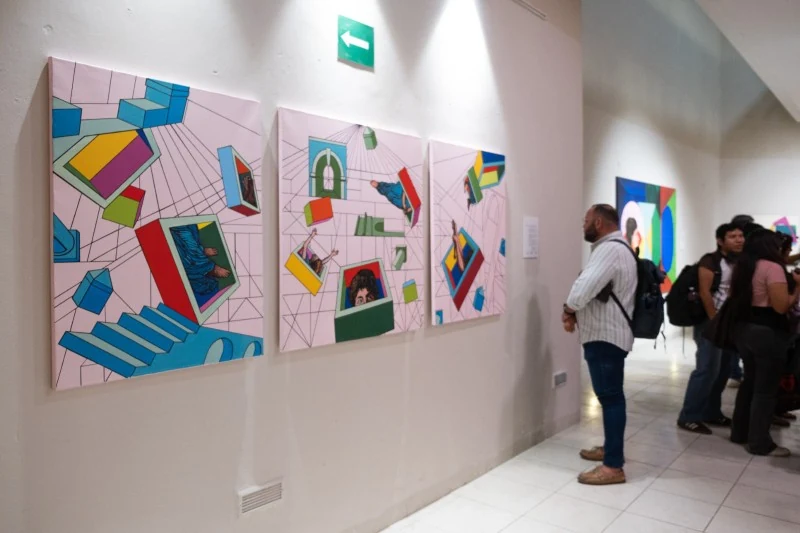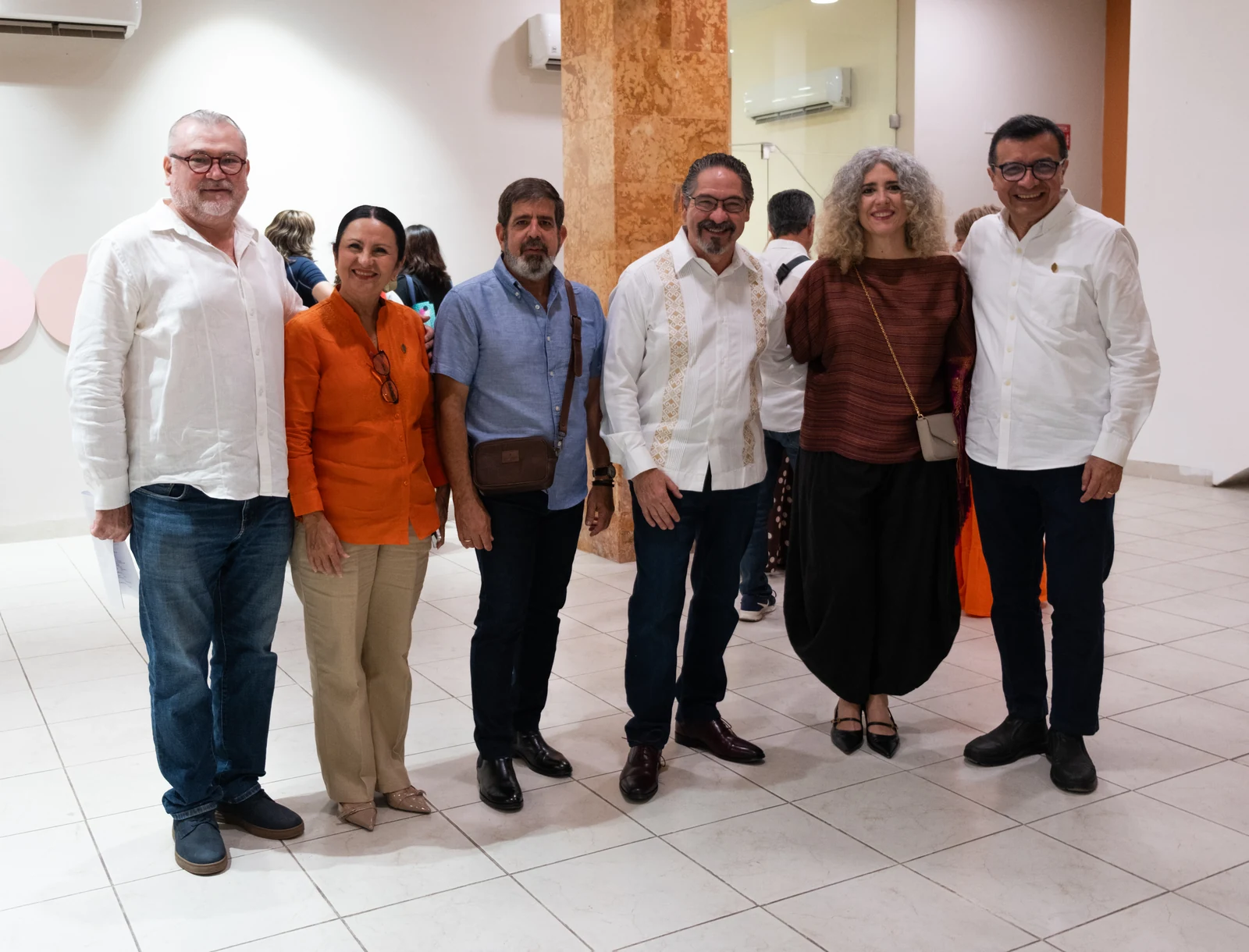
“Geometrías habitadas. Cuerpo, espacio y arquitectura en la obra de Ivonne Ferrer” is the title of the Cuban artist’s exhibition, currently on view in the gallery of UADY’s Faculty of Architecture, Habitat, Art and Design.
The exhibition, coordinated by art critic and curator David Mateo, the Museum of Contemporary Art of the Americas, and UADY’s Faculty of Architecture, Habitat, Art and Design, drew a large audience, particularly university students and professors, and will remain open to the public through October in the gallery of the CAHAD Library on the university campus.
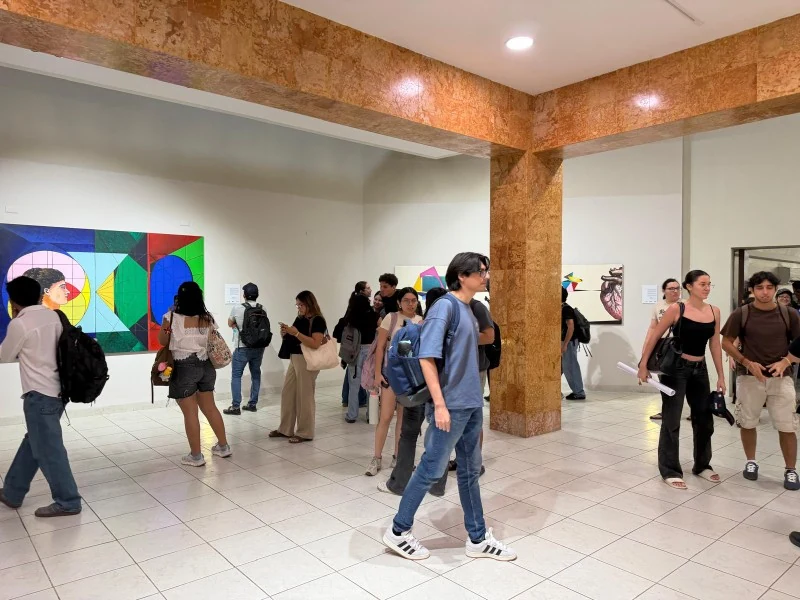
The exhibition features nine medium- and large-format works: seven paintings, an installation, and a print, created by the artist expressly for this occasion. As Ivonne has stated, the group of works addresses sacred geometry as a general concept, as a state of allegorical compulsion, but also as structure, space, boundary, and a way of organizing and relating the body to architecture.
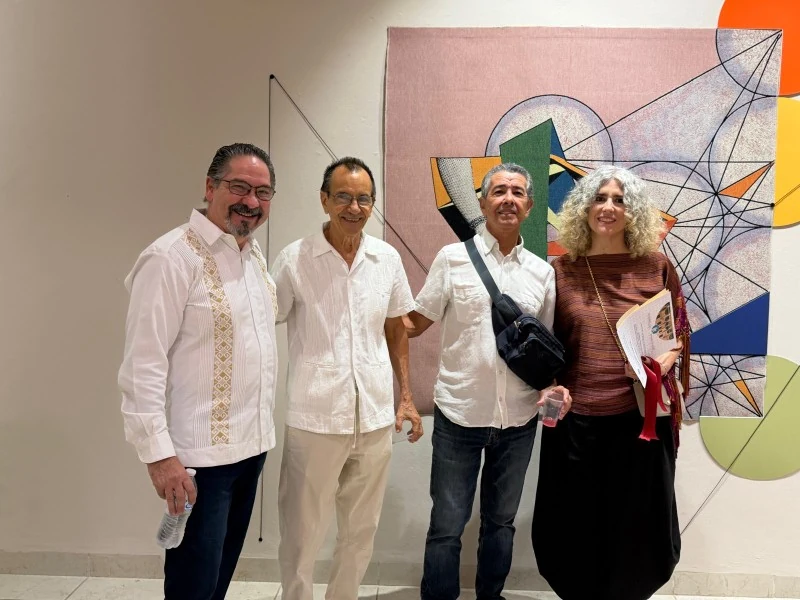
The exhibition opened on September 17, 2026, and was presided over by architect David Reynaldo Alcocer, director of UADY’s Faculty of Architecture, Habitat, Art and Design; Dr. Elvia González Canto, academic secretary of CAHAD; the coordinator of the Bachelor’s Degree in Visual Arts, Taimy Margarita de los Ángeles Pérez; professor and artist Javier Barrera; Leonardo Rodríguez and Ivonne Ferrer, MoCAA’s directors, respectively; curator and art critic David Mateo; and artist and leader of the Praxis Havana project, Enrique Miralles (Tente).
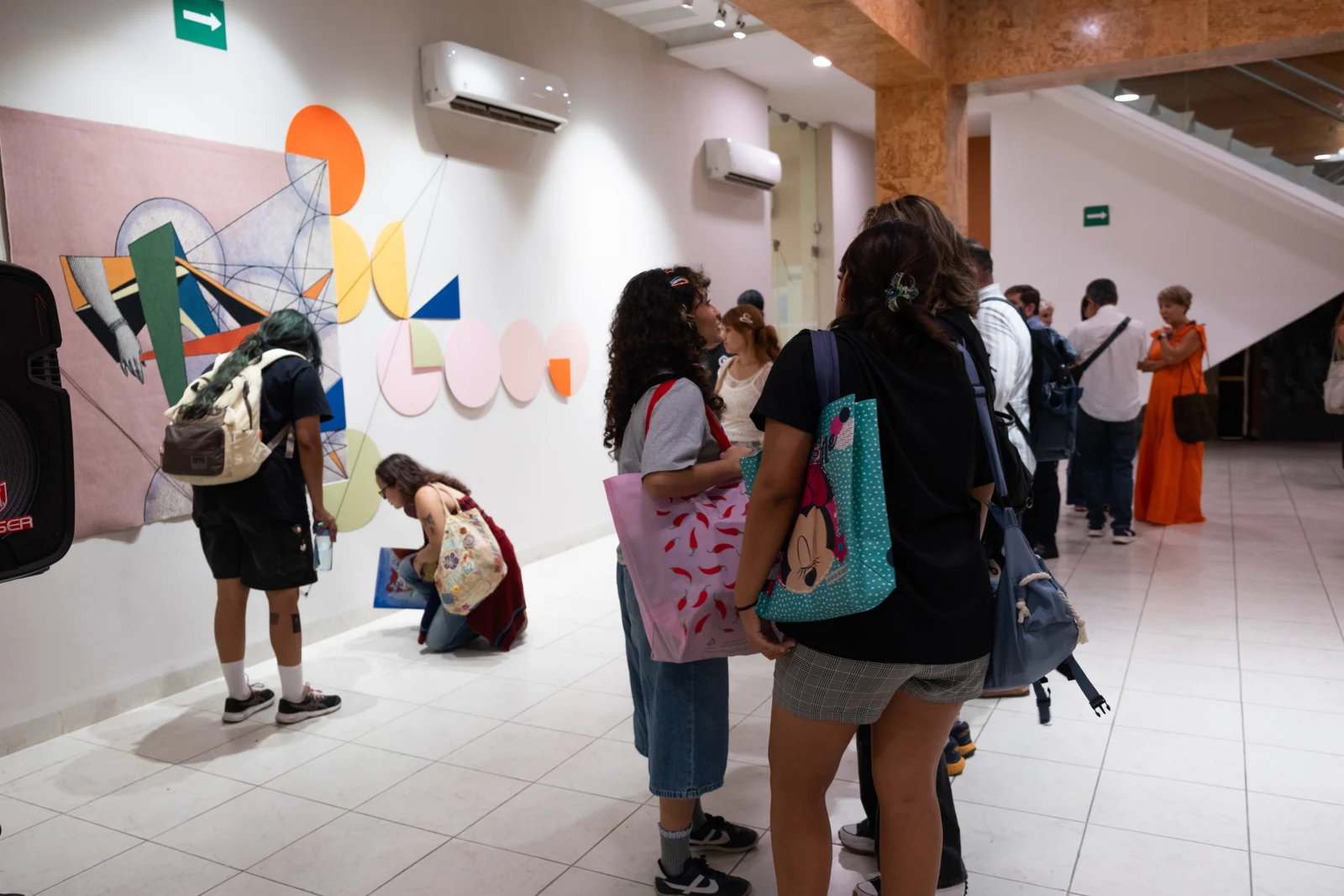
In an excerpt from the exhibition wall text, curator David Mateo states: “In Ivonne Ferrer’s work, one can discern the intense, dynamic relationship among three essential components that, far from operating independently, ultimately come together within a single symbolic ecosystem: the body, architecture, and space. The body might refer to individual episodes, to the introspective; architecture, to the tangible or subjective physical setting of social interaction; and space, to historical, cultural, and emotional circumstances. It is not merely a matter of recognizing the formal presence of these categories within her compositions, but of understanding how each finds in the others a possibility for contrast and expansion.”