


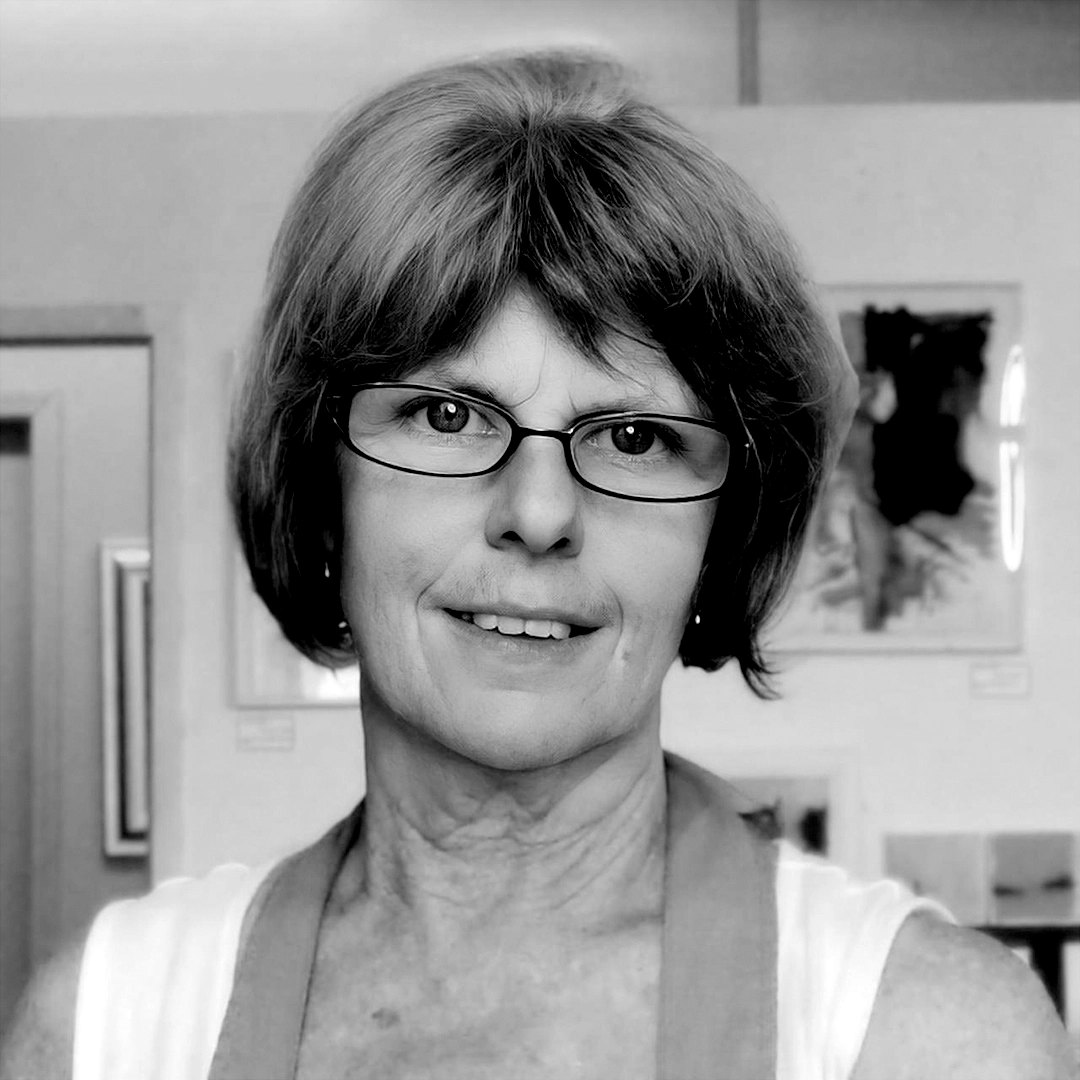
Barbara Ahlbrand has built her trajectory around a simple and steady conviction: the need to sustain a personal vision. That commitment appears clearly both in her own statements and in the way her work has been described. Over the years, Ahlbrand has developed an extensive and consistent body of work, shaped by a recognizable artistic identity and by an ongoing engagement with portraiture, the figure, everyday objects, and abstraction.
Her education followed an unorthodox path. Rather than moving through a fixed or narrowly academic formation, her development took shape through studio classes and community-based opportunities in the Cincinnati, Ohio, and Northern Kentucky area. Among the institutions connected to that process are the Baker-Hunt Foundation, the Art Academy of Cincinnati, and Northern Kentucky University. That trajectory suggests a living relationship to artistic practice, built through sustained work, observation, and studio discipline.
One name holds a decisive place at the beginning of that formation: Aileen F. McCarthy, a student of Frank Duveneck and Barbara’s first teacher. Ahlbrand credits that influence with shaping her handling of paint and drawing media. The mark of that classical instruction remains important as a foundation, and from it she developed her own way of working with color, pictorial matter, and the energy of the line.
That combination of academic grounding and personal affirmation seems central to her path. Ahlbrand has worked to maintain her own perspective in portraiture, figurative work, and abstraction. The statement that accompanies her profile condenses that impulse with precision: “I constantly strive to maintain my personal vision.” More than a motto, the phrase functions as a principle of continuity. Her work does not appear to be guided by fashion, external programs, or the need for immediate validation, but by a sustained relationship to an inner measure.
Another important aspect of her trajectory is the stability of her working and living environment. Barbara Ahlbrand is a lifelong resident of Northern Kentucky and continues to work from her studio at the Pendleton Art Center in Cincinnati, a space shared by more than one hundred artists and described as one of the sites that keep the art scene alive and viable in the Midwest. That context offers both a community of practice and a concrete position within a regional artistic ecosystem of lasting vitality.
The description of her work also emphasizes the independence of her gaze. She is said to have maintained a strong sense of her own identity and to have amassed an extensive body of work over a career that clearly defines her singular vision as an artist. That formulation is significant because it shifts the emphasis away from alignment with broader trends or external narratives and toward the internal coherence of a practice. In Ahlbrand’s case, the work seems to be grounded in persistence and in fidelity to a sensibility entirely her own.
Within that horizon, her subjects form a broad and deeply human range. Portraiture, the figure, everyday objects, and abstraction coexist in her work as territories sustained by a common attention. They do not appear as isolated compartments, but as different zones of a single visual inquiry. Across them, craft, experience, and perception come together in a gaze capable of recognizing intensity both in human presence and in the quiet life of things.
It is also important to note the way her relationship to the art world is described. The material states that Ahlbrand has worked unconcerned with the art world at large. The phrase should not be read as withdrawal, but as a position. Her work stands on a clearly defined autonomy, on a practice that does not depend on external noise in order to carry value. What reaches the viewer, in that framework, is her own perspective: a distinct and fully formed way of seeing, built over time.
There is an ethical dimension in that position as well as an aesthetic one. To preserve a personal vision over the course of a long career demands discipline, patience, and a particular form of loyalty to one’s own work. Ahlbrand has gathered precisely that: an extensive body of work, a firm identity, and a language that moves across different genres without losing cohesion. Portraiture, figurative painting, the observation of ordinary objects, and abstraction all find their unity in the constancy of that gaze.
Taken as a whole, Barbara Ahlbrand’s trajectory speaks of ongoing formation, sustained labor, and fidelity to a personal sensibility. Her practice is grounded in drawing, painting, and printmaking; it is nourished by an early instruction rooted in classical training; and it matures within the context of an active artistic community, where her studio remains the place from which that vision continues to develop.
Barbara Ahlbrand has thus built a body of work grounded in craft, in the energy of pictorial media, and in the persistence of a distinct voice. In her work, painting remains a space of attention, character, and presence. Her trajectory confirms the value of an artist who has grown according to her own measure and sustained, over time, a vision entirely her own.
Images in Sequential Order
Photograph of the artist
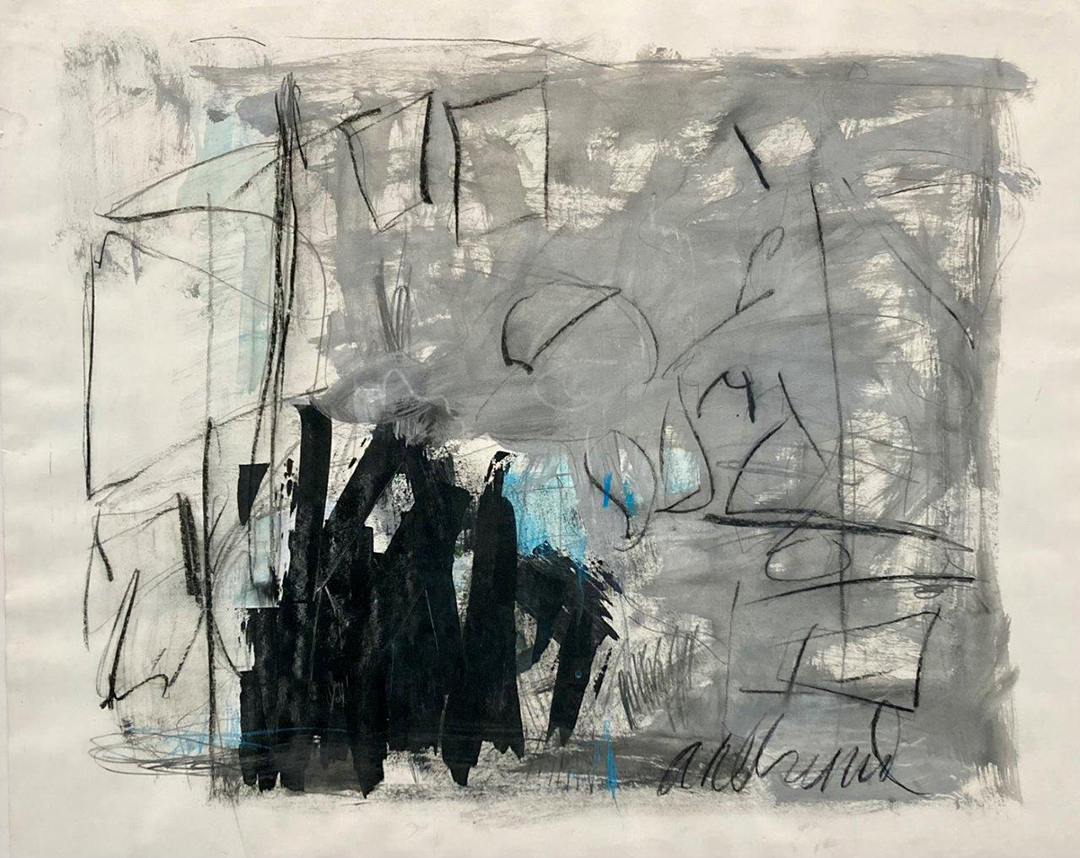
Could be, undated
India ink, pastel, acrylic on paper | 35 x 29 in
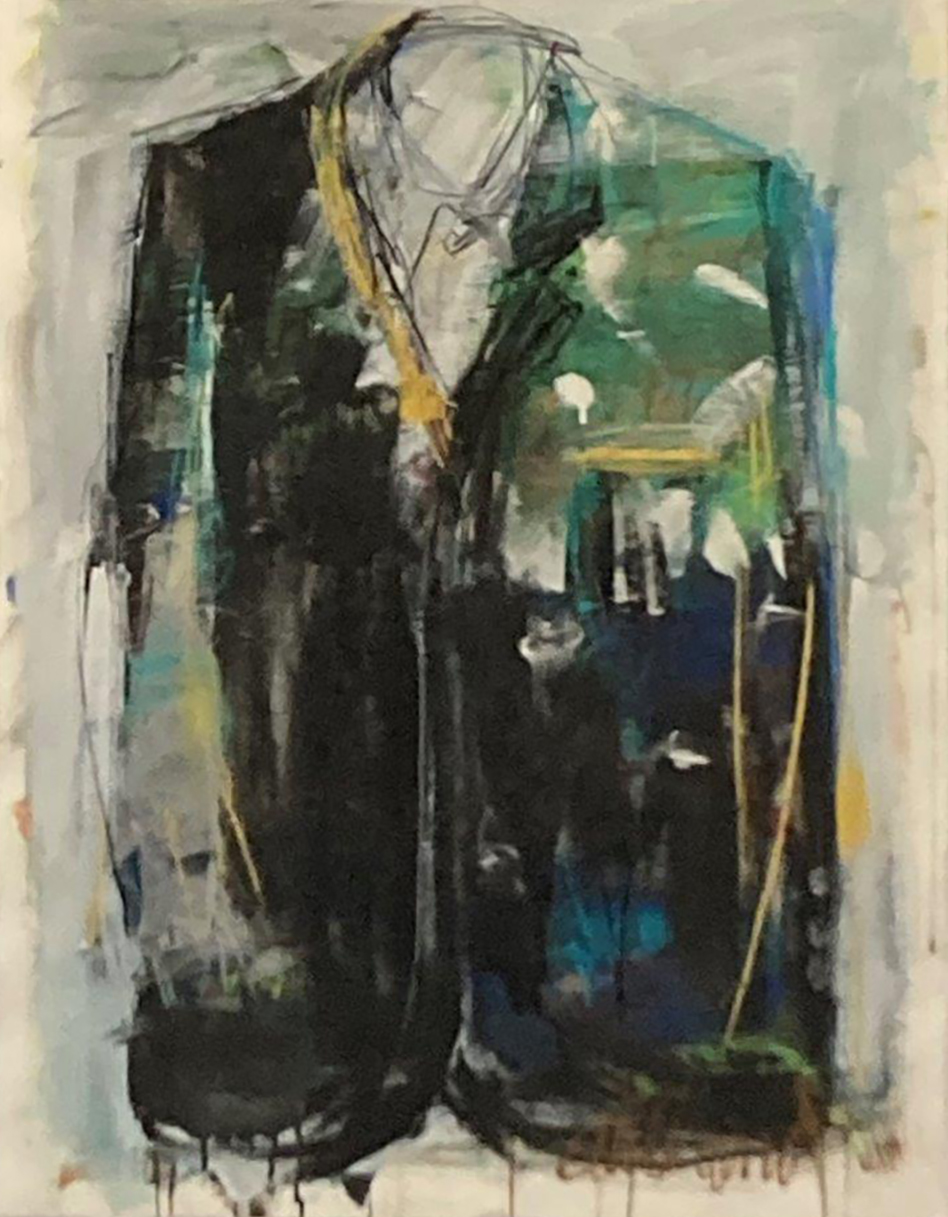
Black Suit, undated
India ink, pastel, acrylic on paper | 42 x 34 in

